
In 2026, the beauty industry has moved beyond simple mass production into the era of “Technological Parity” and “Clean Label” dominance. As consumer demand for personalized shades and sustainable ingredients skyrockets, owning a flexible lipstick production facility has become a core strategic move for brands and investors alike.
However, building a compliant and efficient lipstick factory is a complex puzzle. Based on 2026 market standards, we’ve broken down the costs into four key dimensions: Infrastructure, Intelligent Equipment, Soft Assets, and Operating Capital.
Phase 1: Infrastructure & Regulatory Compliance (The Entry Barrier)
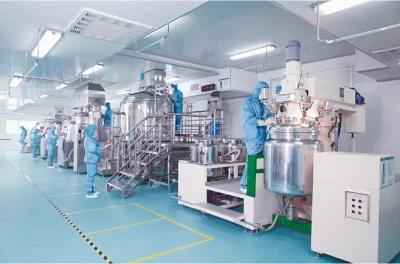
In today’s regulatory climate, your facility isn’t just a building; it’s a controlled environment that must meet GMPC and ISO 22716 standards.
-
Site Selection & Leasing:
-
Space Requirement: ~800–1,200 $m^2$ for startups; 3,000+ $m^2$ for medium-to-large scales.
-
Cost: Varies by region. In major industrial hubs, expect annual rents between $50,000 – $120,000 USD.
-
-
Cleanroom Construction (Class 100,000 / ISO 8):
-
Lipsticks require a sterile environment. This includes sandwich panels, epoxy flooring, and specialized HVAC systems.
-
Cost: In 2026, the average cost ranges from $200 – $350 per $m^2$.
-
-
Environmental & Safety Systems:
-
Waste management for pigments and oils is strictly monitored. Initial investment for “three-waste” treatment: $25,000 – $60,000 USD.
-
Phase 2: Intelligent Production Equipment (The Core Investment)
The trend for 2026 is “Automation over Manpower.” Traditional manual molds are being replaced by high-speed silicone mold lines and AI-driven color matching.
| Equipment | Description | Estimated Price (USD) |
| Vacuum Emulsifying Mixer | Melts and blends oils, waxes, and pigments under vacuum. | $12,000 – $30,000 / unit |
| Three-Roll Mill | Ensures the fineness and dispersion of pigments. | $5,000 – $12,000 / unit |
| 12-Nozzle Automated Line | Includes pre-heating, filling, cooling, and auto-demolding. | $55,000 – $130,000 / line |
| AI Visual Inspection | Uses cameras to detect scratches, bubbles, or off-center cores. | $15,000 – $30,000 / unit |
| Lab & R&D Tools | Colorimeters, viscometers, and stability chambers. | $25,000 – $45,000 / set |
Phase 3: Soft Assets & Working Capital
-
Product Registration & Testing:
-
Current regulations require toxicological assessments and patch testing for every SKU. Registration per shade: $800 – $1,800 USD.
-
-
R&D and Formulation:
-
Hiring senior chemists or purchasing patented “clean beauty” formulas requires an annual budget of at least $30,000 – $50,000 USD.
-
-
Initial Raw Materials & Packaging:
-
Sourcing high-quality Carnauba wax, botanical oils, and premium tubes. Initial inventory buffer: $80,000 – $150,000 USD.
-
2026 Investment Summary (Three-Tier Model)
| Investment Level | Total Estimated Budget | Capacity (8hrs/day) | Target Market |
| Boutique / Startup | $120k – $250k | 1,000 – 3,000 pcs | Influencer brands, bespoke luxury, niche DIY. |
| Standard Industrial | $450k – $900k | 10,000 – 25,000 pcs | Mid-market OEM/ODM, regional brands. |
| Smart Mega-Factory | $2M+ USD | 80,000+ pcs | Global brand hubs, supply chain giants. |
FAQ: Top 5 Investor Concerns
Q1: What is the biggest policy risk in 2026?
A: Carbon Footprint Tracking. Many regions now require factories to disclose the carbon emission per lipstick produced. We recommend investing in energy-efficient machinery from day one.
Q2: Does “Clean Beauty” require special equipment?
A: Yes. Formulations without silicones or synthetic preservatives are more sensitive. You need high-grade CIP (Clean-in-Place) systems to prevent cross-contamination.
Q3: Metal molds vs. Silicone molds?
A: In 2026, Silicone molds are the winner. While they have a higher replacement cost, they allow for complex 3D carvings and “embossed” lipstick designs that are currently trending.
Q4: What are the average profit margins?
A: OEM manufacturing typically sees 15%–25% margins. However, if you own the formula and sell to brands directly, margins can jump to 40%–60%.
Q5: Can I buy used equipment to save money?
A: Be careful. Older machines often lack digital interfaces (IoT) needed for 2026 ERP systems. Maintenance for obsolete parts often costs more than the initial savings.
Expert Insider Tips: How to Reduce Startup Costs?
-
Phased Scaling: Design the factory for full capacity, but start with one production line. Scale as your order book grows.
-
Lease in Specialized Beauty Parks: Industrial parks dedicated to cosmetics often provide centralized waste treatment and pre-cleared environmental permits, saving you up to 30% in setup time and costs.
-
Digital Waste Reduction: Implement a lightweight MES (Manufacturing Execution System) to track raw material usage. Reducing “spillage” by just 5% can save thousands of dollars annually.
Do you need a localized “Lipstick Factory Feasibility Report”?
We maintain the most up-to-date 2026 supplier database and can provide:
-
A comparison of top equipment manufacturers (2026 Pricing)
-
Compliance checklists for EU, US, and Asian markets
-
Formulation templates for the top 50 global bestsellers
👉 [Click here to schedule a free 15-minute consultation with our industry experts]