
Why Are Top Beauty Brands Turning to Custom Cosmetics Manufacturers?
In today’s highly personalized consumer market, Custom Cosmetics Manufacturers are becoming a strategic force that the beauty industry cannot ignore. From international luxury brands to emerging DTC beauty companies, more and more businesses are realizing that partnering with professional custom cosmetics manufacturers can not only optimize the supply chain but also create unique market differentiation advantages.
The Wave of Personalized Consumption Drives Manufacturing Model Transformation
The global beauty market is undergoing a profound shift from “mass production” to “on-demand customization.” Statistics show that over 68% of consumers are willing to pay a premium for personalized beauty products. This demand has fueled the rapid development of the custom cosmetics manufacturing industry. Professional Custom Cosmetics Manufacturers not only provide basic services such as formula development and production filling but also become an extension of a brand’s innovation capabilities, helping brands respond quickly to market trends and shorten time-to-market.
From Contract Manufacturing to Co-Creation: The Emergence of New Partnership Models
Modern custom cosmetics manufacturers have evolved beyond traditional OEM/ODM models into brands’ “innovation labs.” Top manufacturers like Italy’s INTERCOS and Korea’s Cosmax invest huge amounts in R&D annually, collaborating with brands to develop cutting-edge formulas and technologies. This deep cooperation model allows small and medium-sized brands to access R&D capabilities comparable to industry giants, truly realizing “democratized innovation” in the beauty industry.
How to Select the Ideal Custom Cosmetics Manufacturer: 5 Key Assessment Dimensions
Choosing the right partner is a critical decision for a brand’s success. The wrong manufacturer can lead to unstable product quality, delivery delays, or even legal risks, while an excellent partner can accelerate brand growth.
In-Depth Analysis of R&D Capabilities and Technical Expertise
True custom manufacturing begins with strong R&D capabilities. Focus on the following when evaluating a manufacturer:
-
Formula Development Capability: Check if the manufacturer has an independent R&D center, a professional team, and a formula database. Excellent manufacturers typically have a library of 3,000+ mature formulas and can quickly adapt and innovate based on brand needs.
-
Investment in Technological Innovation: Understand the manufacturer’s layout in new technology areas, such as clean beauty formulations, sustainable ingredient applications, and biotechnology. These cutting-edge capabilities will directly impact the market competitiveness of the brand’s products.
Professional Evaluation of Production Qualifications and Quality Control Systems
Production quality is directly related to brand reputation and must be rigorously examined:
-
Completeness of Certification Systems: Ensure the manufacturer holds international certifications such as ISO22716, GMPC, and FDA registration. These certifications are not just entry barriers but proof of quality control capability.
-
End-to-End Quality Control Ability: From raw material traceability to finished product release, excellent manufacturers implement over 200 quality checkpoints. Inquire about their supplier audit processes, in-process inspection frequency, and finished product release standards.
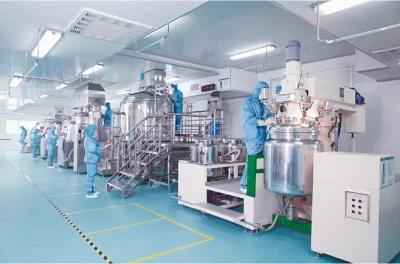
Technology-Driven Custom Cosmetics Manufacturing: Frontier Trends and Innovative Practices
Technological innovation is reshaping every aspect of custom cosmetics manufacturing, creating unprecedented possibilities for brands.
Innovations in the Application of AI and Big Data in Formula Development
Leading custom cosmetics manufacturers are integrating AI technology to optimize the entire product development process:
-
Intelligent Formulation Systems: Analyze tens of thousands of ingredient combinations through machine learning to predict formula stability, texture, and efficacy, reducing development time from the traditional 6-12 months to just weeks.
-
Demand Prediction Algorithms: Analyze consumer preference changes based on market data, helping brands proactively plan product lines, reducing inventory risks while capturing emerging market opportunities.
Flexible Production Systems and Sustainable Development Solutions
The integration of modern manufacturing equipment and environmental concepts creates new competitive advantages:
-
Modular Production Lines: Support flexible production models for small batches and multiple varieties, with minimum order quantities as low as 1,000-5,000 pieces, significantly lowering the entry barrier for new brands.
-
Green Manufacturing Systems: From recyclable packaging and water circulation systems to carbon footprint tracking, environmentally friendly production capacity has become an important standard in selecting a manufacturer. Understand specific metrics like the proportion of RSPO-certified ingredients and the factory’s energy structure.
From Concept to Market: The Complete Collaboration Process in Custom Cosmetics Manufacturing
Understanding the manufacturing process helps brands collaborate more effectively with manufacturers, ensuring smooth project progression.
Deep Collaboration Models in the Product Development Stage
Successful custom projects begin with clear communication and phased management:
-
Requirement Definition Workshops: Excellent manufacturers organize cross-departmental workshops to help brands clarify target customers, price positioning, core selling points, and differentiation factors, translating these market needs into specific technical parameters.
-
Prototype Development and Testing Cycles: A typical development cycle includes 3-5 rounds of sample adjustments, each involving lab stability tests, small-scale user blind tests, and professional evaluations to ensure the product reaches its optimal state before launch.
Professional Handover for Scaling Production and Supply Chain Management
The transition from sample to mass production is a critical turning point:
-
Pre-Production Validation Process: Includes process validation, equipment qualification, and pilot batches to ensure quality consistency in large-scale production. Detailed quality standard documents should be established during this phase as the basis for subsequent production.
-
Building Supply Chain Transparency: Modern brands require complete supply chain traceability. Ask what level of detail (batch-level/item-level) the manufacturer’s traceability system provides and how they handle emergency supply chain disruptions.
Case Studies of Success: How Custom Manufacturers Help Brands Achieve Breakthrough Growth
How Emerging Brands Quickly Capture Niche Markets Through Custom Manufacturing
Take the example of the rapidly rising clean beauty brand “Dewy.” By partnering with a custom manufacturer specializing in natural formulas, the brand completed the entire process from concept to star product launch within 12 months. The manufacturer not only provided a formula platform meeting “EWG Verified” standards but also assisted in developing unique fermented active ingredient extraction technology. This helped the product stand out in the competitive sensitive skin market, achieving first-year sales exceeding $20 million.
Strategic Practices in Localized Customization for International Brands
When a European luxury beauty brand entered the Asian market, it faced the challenge of product textures不适应 humid climates. They collaborated with a top Korean Custom Cosmetics Manufacturer to develop a “Regional Limited Series,” adjusting the product’s oil system and film-forming agent combination to better suit the local climate while maintaining the brand’s core efficacy. This series became the brand’s fastest-growing product line in Asia, with an annual growth rate of 45%.
Future Outlook: The Evolution Direction and Strategic Advice for the Custom Cosmetics Manufacturing Industry
Technology Integration and the Breakthrough of Personalization Limits
In the next 5 years, custom cosmetics manufacturing will show the following trends:
-
Hyper-Personalization Development: Truly “one-size-fits-one” customized products based on DNA testing and skin microbiome analysis will move from concept to commercialization. Manufacturers will need to build corresponding micro-production and rapid-switch capabilities.
-
Deepening Digital Integration: AR try-on data will feed directly into formula development, virtual product testing will significantly reduce physical sample production costs, and digital twin technology will enable full-process visual monitoring of production.
Strategic Selection Advice for Beauty Brands
Based on industry development trends, we advise brands to consider the following when selecting and collaborating with a Custom Cosmetics Manufacturer:
-
Establish a Long-Term Partnership Perspective: Avoid selection driven solely by price. Focus more on the manufacturer’s innovation capability and growth potential. Consider signing strategic cooperation agreements to ensure priority support during capacity constraints.
-
Invest in Joint Capability Building: Send teams for on-site training, participate in the manufacturer’s training programs, and deeply understand production processes and technical limitations. This will significantly improve communication efficiency and project success rates for both parties.
-
Build a Resilient Supply Chain Network: Establish relationships with 2-3 manufacturers with complementary expertise to diversify risks while gaining broader technical support.
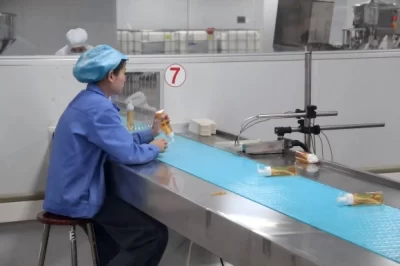
have evolved from simple contractors into the core engine of innovation for beauty brands. In an increasingly segmented market, choosing the right manufacturing partner is not only about product quality and cost control but also directly affects a brand’s innovation speed, market responsiveness, and long-term competitiveness. Brands that can establish deep collaboration and co-innovation with manufacturers will gain a decisive advantage in the era of personalized consumption.
For brands planning to enter or expand their beauty business, now is the optimal time to reassess manufacturing strategies and build strategic manufacturing partnerships. In the field of custom cosmetics manufacturing, the most successful collaborations are always those that view manufacturing as co-creation rather than simple outsourcing.