
Fusion Innovation: Traditional Botanicals Meet Modern Science
Modern Applications of Traditional Chinese Herbal Ingredients
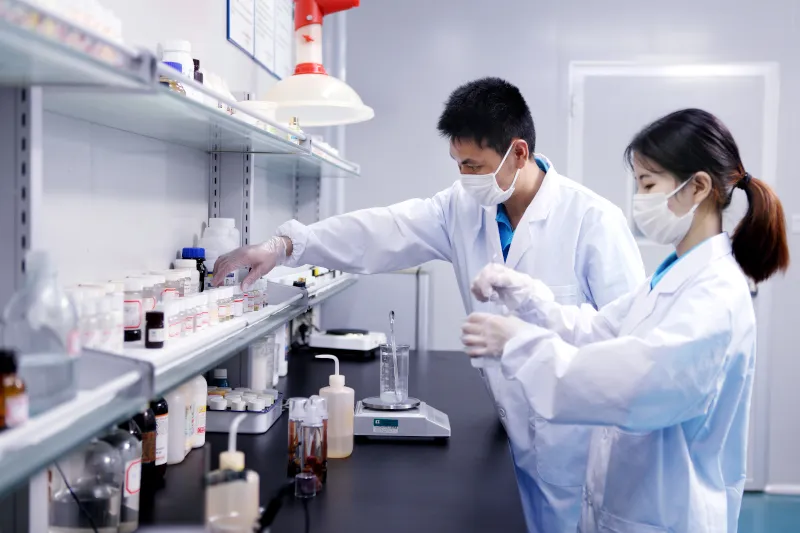
Chinese skincare manufacturers are perfectly integrating millennia-old herbal wisdom with modern technology. Companies like Yunnan Baiyao and Inoherb have established “Herbal Ingredient Databases” cataloging over 3,000 Oriental plant ingredients with skincare potential. Through advanced technologies like supercritical extraction and bio-fermentation, the active ingredient preservation rate has increased from less than 40% with traditional methods to over 85%.
A leading Shanghai manufacturer developed “Ginseng Polypeptide Extraction Technology,” successfully tripling the absorption rate of ginseng’s anti-aging components. Related products have gained recognition in premium markets like France and Japan. This “scientification of Oriental botanicals” path has become a unique competitive advantage distinguishing Chinese manufacturers from their European and American counterparts.
Leading the Way in Biotechnology and Synthetic Biology
Building on their dominant 75% global market share in hyaluronic acid, Chinese manufacturers like Bloomage Biotech and Freda are extending their technological edge to next-generation active ingredients like Ectoin and Ergothioneine. Utilizing synthetic biology, these companies have reduced the production cost of rare ingredients by 90%, truly democratizing access to high-end skincare components.
A domestic biotech company’s “Skin Microbiome Research Platform” has collected and analyzed over 100,000 skin microbiome samples from Asians, developing proprietary probiotic ingredients targeting the microbial balance of different skin types. The related technology has secured international patents and begun offering technical licensing to European skincare brands.
Intelligent Manufacturing and Quality Control Systems
End-to-End Digital Production Management
Leading Chinese skincare manufacturers have achieved full digital management from raw material traceability to finished product dispatch. A factory in Suzhou producing for international prestige brands, by introducing IoT technology, allows each production line to collect over 1,000 quality control data points per minute, achieving a 99.99% batch-to-batch consistency rate, far exceeding the industry average.
An “AI Visual Inspection System” implemented by a Guangdong manufacturer can detect product micro-defects invisible to the naked eye, with precision reaching 0.01 mm. This relentless pursuit of quality has driven the defect rate for Chinese-made skincare products down from 3% a decade ago to the current 0.05%, meeting the highest international standards.
Green and Sustainable Manufacturing Practices
Responding to global environmental trends, Chinese skincare manufacturers are actively adopting green manufacturing principles. A Zhejiang-based enterprise developed “Water-Free Formulation Technology” and “Concentrated Refill Designs,” reducing water consumption in the production process by 70% and plastic usage by 50%. The company’s carbon-neutral factory aims to achieve “zero carbon emissions” in production by 2025.
The Supply Chain Advantages of Chinese Skincare Manufacturers
A Complete and Highly Efficient Domestic Supply Chain System
Deep Vertical Integration of Raw Material Supply
The competitive advantage of Chinese skincare manufacturers stems significantly from their complete domestic supply chain. From rose cultivation bases in Xinjiang to alpine plant extraction centers in Yunnan, from hyaluronic acid fermentation plants in Shandong to innovative packaging material parks in Guangdong, China has formed the world’s most comprehensive skincare industry cluster.
This deep supply chain integration brings remarkable efficiency advantages: Chinese manufacturers‘ average new product development cycle is 3-6 months, compared to 12-18 months typically required by international brands; raw material procurement costs are 30-40% lower than in the European market; and logistics response times are 2-3 times faster than those of multinational supply chains.
Flexible Production to Meet Market Diversification
As consumer demand becomes increasingly fragmented, Chinese skincare manufacturers demonstrate exceptional flexible production capabilities. “Beauty Industry Parks” in areas like Baiyun District, Guangzhou, and Fengxian District, Shanghai, host hundreds of manufacturers capable of small-batch, rapid-response production. They offer flexible solutions for emerging brands with minimum order quantities as low as 500 units, significantly lowering the barrier to entry in the beauty industry.
A professional ODM company developed a “Modular Formulation System” containing over 2,000 market-validated efficacy modules. Brand owners can combine different functions like building blocks, receive customized samples within 7 days, and complete small-batch production within 14 days. This agility makes Chinese manufacturers the “testing ground” and “accelerator” for global beauty innovation.
Deep Collaboration Between Chinese Manufacturers and Global Brands
The Evolutionary Path from OEM to ODM to OBM
The relationship between Chinese skincare manufacturers and international brands is undergoing a fundamental shift. The early model dominated by OEM (Original Equipment Manufacturing) is gradually upgrading to ODM (Original Design Manufacturing) and even joint R&D collaborations. Groups like Korea’s Amorepacific and France’s L’Oréal have established R&D centers in China, partnering with local manufacturers to develop exclusive product lines for the Asian market.
More notably, some leading Chinese manufacturers have begun entering the global market via the OBM (Original Brand Manufacturing) model. Winona, a brand under the Betani group, successfully entered markets like Singapore and Malaysia through clinical validation and medical endorsements. Yatsen Global, parent company of Perfect Diary, is reverse-integrating global R&D resources through acquisitions like that of the Galénic brand.
Chinese Standards Going Global
With enhanced technological prowess, Chinese skincare manufacturers are beginning to participate in, even lead, the formulation of international industry standards. The industry standard “Sodium Hyaluronate for Cosmetics” drafted by China has been adopted by multiple ASEAN countries; the “Chinese Guideline for Sensitive Skin Assessment” is being widely referenced by international dermatologists.
Future Trends: The Next Decade for Chinese Skincare Manufacturers
Deep Integration of Personalized Skincare and Digital Technology
AI Skin Diagnosis and Customized Production Systems
Chinese skincare manufacturers are collaborating with tech companies to develop next-generation personalized skincare solutions. One company’s “AI Skin Analyzer + Cloud Formulation System” performs multi-dimensional skin analysis via a smartphone camera. Cloud algorithms match personalized formulas, and data is transmitted directly to flexible production lines, delivering bespoke products within 72 hours.
This integrated “detection-formulation-production” model transforms skincare from a standardized industrial product into a personalized health solution, achieving a remarkable repurchase rate of 68%, far exceeding the industry average of 25%.
Skin Wearables and Long-term Monitoring
Cutting-edge manufacturers are developing skin sensors that interact with skincare products, such as electronic patches monitoring skin hydration, pH, and barrier function. The long-term data collected by these devices feeds back into the manufacturers’ R&D systems, continuously optimizing product formulations, enabling truly “data-driven skincare innovation.”
Global Layout and Localized Innovation
Establishing Global R&D Networks
Leading Chinese skincare manufacturers are no longer content with domestic R&D and are building global research networks. Bloomage Biotech established R&D centers in Japan and France, focusing on high-end fermentation technology and formulation innovation. Jala Group set up a plant research institute in France, alongside design centers in Shanghai, Tokyo, and Milan, integrating global aesthetic and technological resources.
This “Global R&D, Intelligent Manufacturing in China, Worldwide Sales” model enables Chinese manufacturers to rapidly absorb consumer insights and technological trends from different markets, developing products with genuine global competitiveness.
Building Cultural Confidence and Brand Storytelling Capability
The new generation of Chinese skincare manufacturers is shifting from “product thinking” to “brand thinking” and “cultural thinking.” Premium domestic brands like Dong Bian Ye Shou (“Beasts of the East”) and Wen Xian (“Documents of Scent”) are delving deep into Chinese philosophy, aesthetics, and cultural elements. Combined with top-tier R&D and design, they create high-end product lines with unique Eastern narratives, successfully attracting global attention from young consumers.
This fusion of cultural confidence and technological strength marks a new developmental stage for Chinese skincare manufacturers—not merely as product producers, but as integrative innovators of culture, technology, and aesthetics.
Conclusion
The rise of Chinese skincare manufacturers is a microcosm of the transformation and upgrade of Chinese manufacturing. From relying on low-cost advantages to building technological barriers, from following international trends to leading global innovation, Chinese manufacturers are redefining the value of “Made in China” with solid R&D strength, flexible supply chains, and profound cultural heritage.
For global brand owners and consumers, Chinese skincare manufacturers are no longer merely outsourcing options but indispensable innovation partners and providers of high-quality products. Looking ahead, with continuous technological breakthroughs and deeper globalization, Chinese skincare manufacturers are destined to play an even more central role in the global beauty industry landscape, bringing more beauty innovations originating from China to the world.