
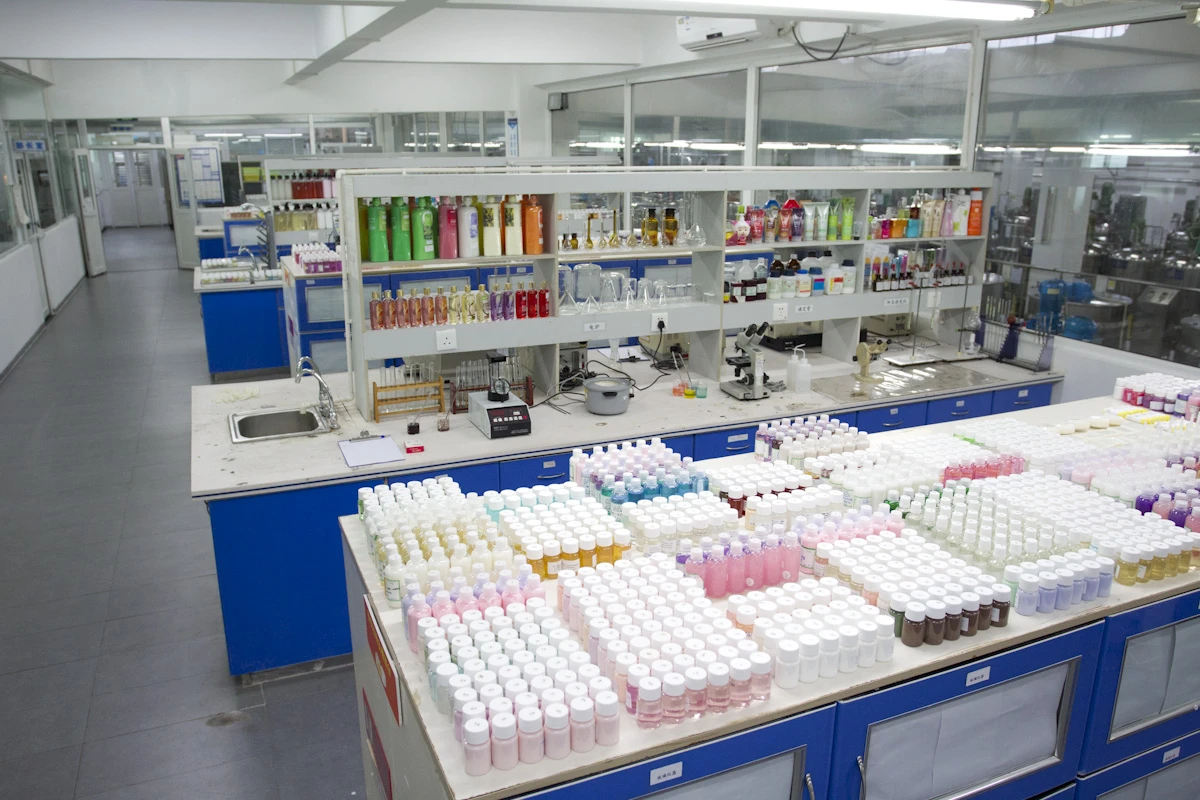
Introduction: Why Brands Must Understand the Fundamental Differences Between OEM and ODM
In today’s thriving global cosmetics market, an increasing number of brands are seeking partnerships with professional manufacturers to reduce production costs, shorten R&D cycles, and ensure product quality. However, when selecting partners, many brand decision-makers often find themselves confused by the specialized terms “OEM” and “ODM.” Understanding the core differences between these two models is not only related to cost control and product development efficiency but also directly impacts brand positioning, market competitiveness, and long-term development strategy. From the perspective of high-quality cosmetic manufacturers, this article provides a deep analysis of the essential distinctions between OEM and ODM, offering brands a scientific framework for selecting cooperation models.
I. Basic Concept Analysis: Redefining Cosmetic OEM and ODM
What is Cosmetic OEM?
Cosmetic OEM (Original Equipment Manufacturing) refers to a cooperation model where the brand owner possesses the complete product formulation, design concept, and specification requirements. The manufacturer solely conducts production and processing according to the specific plans provided by the brand. In this model, the brand owner typically completes preliminary tasks such as market research, product positioning, formula development, and packaging design. The manufacturer acts more as a “precision executor.”
The core competencies of high-quality cosmetic OEM manufacturers are reflected in production precision, quality control standards, supply chain management, and large-scale production capacity. For instance, when an international brand decides to launch a serum containing special active ingredients, it provides the OEM manufacturer with the complete formula verified in the laboratory, production process parameters, packaging specifications, and othertechnical documents. The manufacturer strictly adheres to these documents for production, ensuring each batch of products is完全 consistent with the brand’s laboratory samples.
What is Cosmetic ODM?
Cosmetic ODM (Original Design Manufacturing) is a more comprehensive cooperation model where the manufacturer is responsible not only for production but also participates in or even leads product development, formula design, packaging creativity, and other phases. The brand owner primarily market demands, product concepts, and positioning requirements, while the manufacturer provides complete solutions from concept to finished product based on its own R&D capabilities and technical积累.
Leading cosmetic ODM manufacturers typically possess strong R&D teams, extensive formula databases, market trend analysis capabilities, and innovative technology reserves. Based on conceptual demands from brands—such as “developing a vegan anti-aging serum targeting Generation Z consumers”—they can independently create a complete product system, including core formulations, efficacy verification, packaging design, cost optimization, and other solutions. The brand owner only needs to give final approval and apply its own商标 before launching the product to market.
II. In-Depth Comparison of Core Differences: A Seven-Dimensional Analysis Beyond Surface Understanding
R&D Ownership and Intellectual Property Rights
Fundamental Differences in R&D Ownership: In OEM cooperation, R&D ownership rests entirely with the brand owner. The brand’s laboratory or partnered R&D institutions handle all technological innovation and formula development, with the manufacturer not involved in creative work. In the ODM model, R&D ownership is partially or fully transferred to the manufacturer, with the brand owner acting more as the and.
Clear Division of Intellectual Property Rights: This is the most critical commercial distinction between OEM and ODM. Under the OEM model, all intellectual property rights—including formula technology, packaging design, and trademarks—belong to the brand owner. The manufacturer use them in products for other clients. In ODM, two scenarios exist: for independently developed “public” products by the manufacturer, intellectual property typically belongs to the manufacturer, and the brand purchases finished products or方案使用权; for customized “private” products for specific brands, intellectual property ownership must be clearly defined in the contract, often shared by both parties or exclusively acquired by the brand.
Cooperation Process and Brand Involvement
Linear Cooperation Process in OEM: Brand owner’s market research → independent product development → formula confirmation → packaging design → OEM manufacturer → technical document transfer → sample confirmation → production. The brand owner is deeply involved at every stage, maintaining strong control but requiring significant time and resource investment.
Collaborative Development Process in ODM: Brand owner conceptual → manufacturer’s market analysis → providing multiple→ brand owner selection and adjustments → sample optimization → confirmation → production. The brand owner’s involvement focuses on definition and selection, relying more on the manufacturer’s professional expertise.
Strategic Trade-offs in Involvement: Emerging brands or those rapidly expanding product lines often prefer ODM to reduce R&D pressure and accelerate time-to-market. Mature brands emphasizing core technological barriers and unique brand identity tend to opt for OEM to ensure product distinctiveness and technical control.
Cost Structure and Timeliness Comparison
Analysis of Initial Investment and Total Costs: OEM entails higher initial R&D investment, but per-unit production costs are relatively controllable. ODM saves initial R&D costs, but manufacturers typically include R&D in unit prices. Long-term, if product sales are, OEM’s total costs may be lower. For small-batch trial products, ODM’s comprehensive cost advantages are more apparent.
Differences in Product Time-to-Market: The ODM model typically shortens product time-to-market significantly, as manufacturers can directly adapt formulas from existing libraries, saving R&D time from scratch. High-quality cosmetic ODM manufacturers can generally compress product development cycles to 45–90 days. Under OEM, even with complete formulas, transferring technology to stable mass production usually requires 60–120 days.
III. Strategic Selection Guide: Choosing the Cooperation Model Based on Brand Development Stage
Decision Logic for Startup Brands and Product Line Expansion
Preferred Path for Resource-Limited Startup Brands: For new cosmetic brands with limited funds and lacking R&D teams, ODM is the most practical choice. Excellent ODM manufacturers not only provide成熟 product solutions but also offer product planning suggestions based on market data, helping brands avoid market pitfalls and quickly establish an initial product.
Startup brands are advised to adopt a strategy of “ODM first, gradually transitioning to OEM”: first use ODM to launch market-validation products, accumulating capital and market recognition. When single-product sales reach a certain scale (e.g., annual sales exceeding 500,000 units) and brand positioning becomes clearer, switch core products to OEM to build unique product barriers.
Efficient Solutions for Mature Brand Product Line Expansion: Even large brands with independent R&D capabilities often use ODM when expanding into全新 categories or launching experimental products for细分 markets. For example, skincare-focused brands entering the cosmetics领域 can significantly reduce trial-and-error costs and quickly gain market feedback by partnering with professional cosmetics ODM manufacturers.
Mode Preference Analysis for Different Product Categories
Mode Tendencies for Efficacy Products: For skincare products emphasizing specific efficacy (e.g., anti-aging, whitening, acne treatment), brands tend to prefer OEM, as the core competitiveness of such products lies in exclusive active ingredient combinations and efficacy verification data, requiring strict protection of technical secrets. High-quality cosmetic OEM manufacturers need specialized expertise in stability processing, transdermal absorption technology, etc.
Mode Selection for Mass-Market Products: For relatively standardized products like cleansers, basic moisturizers, and cosmetics, ODM’s economic and advantages are evident. These categories have relatively technology, with differentiation marketing and branding. Using ODM’s solutions ensures quality stability while enabling quick responses to market trends.
Risk Control and Supply Chain Security Considerations
Homogenization Risks in ODM: The primary risk is that different brands may obtain similar product solutions from the same ODM manufacturer, leading to market product homogenization. To counter this, forward-thinking brands require a degree of customization in ODM cooperation or select high-quality manufacturers with strict policies.
Technical Leakage Risks in OEM: Despite confidentiality clauses in contracts, providing complete formulas to manufacturers still carries technical leakage risks. Brand owners should select reputable, well-managed high-quality cosmetic OEM manufacturers and mitigate risks through measures like formulas and pre-mixing core components.
Supply Chain Stability Evaluation: Regardless of the chosen model, the manufacturer’s production capacity stability, quality consistency, and compliance records are essential factors for rigorous evaluation. High-quality cosmetic manufacturers should possess international certifications like ISO22716 and GMPC, with stable raw material supply chains and complete quality traceability systems.
Conclusion: Finding the Optimal Cooperation Strategy in Dynamic Balance
Cosmetic OEM and ODM are not about superiority or inferiority but represent cooperation models different business needs. Truly astute brand managers do not adhere to a single model but establish flexible combinations between the two based on product strategic positioning, resource constraints, and market timing.
The value of high-quality cosmetic manufacturers lies not only in production capabilities but also in their ability to provide customized cooperationsuggestions for brands. Excellent manufacturing partners should help brands find the optimal balance between OEM’s depth of control and ODM’s efficiency advantages, based on an understanding of the brand’s development stage, target market, and product planning.
As the cosmetics industry advances toward greater specialization, segmentation, and rapid iteration, the boundaries between OEM and ODM are gradually giving rise to hybrid models like “ODM+” and “OEM++” . Future successful brand-manufacturer partnerships will必然 be founded on deep collaborative innovation built on mutual trust. Understanding the essential differences between these cooperation models is the first step in establishing such strategic.