
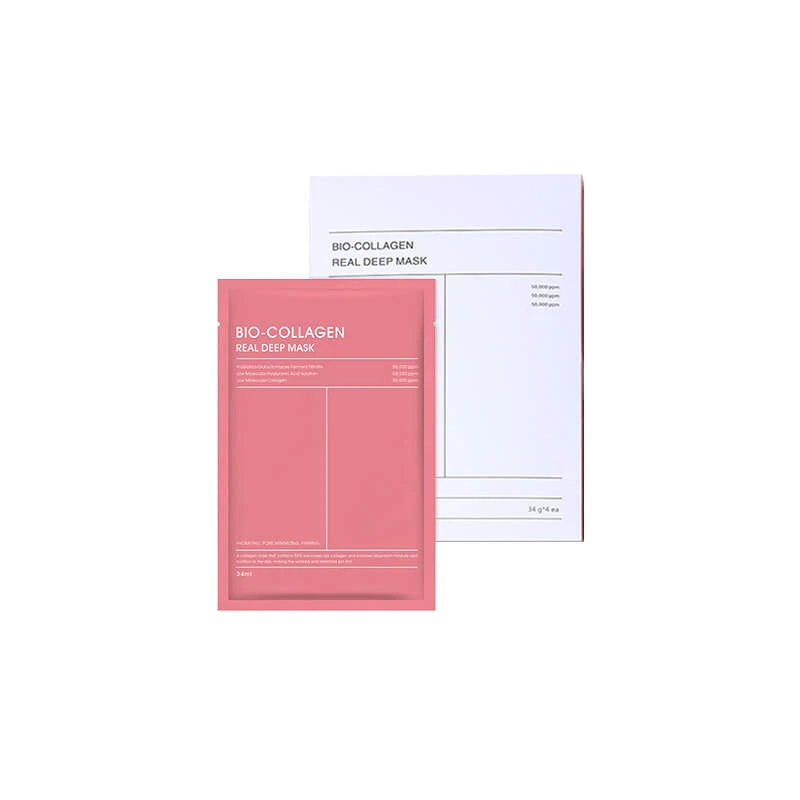
When you linger before dazzling cosmetic counters, captivated by exquisitely packaged skincare and makeup products with various efficacies, have you ever considered the creators behind these items? Cosmetic manufacturers are the true engine of this multi-hundred-billion dollar industry. They not only transform scientific formulas into tangible beauty products but are also key forces driving industry innovation, quality upgrades, and sustainable development. Behind this seemingly glamorous industry, manufacturers are engaged in a profound contest involving technology, ethics, and business acumen.
I. The Industry Role and Evolution of Cosmetic Manufacturers
From OEM to ODM: The Strategic Transformation of the Manufacturer’s Role
Traditional cosmetic manufacturers were often seen as simple “contract factories,” executing formulas and production instructions provided by brands (OEM model). However, as market competition intensifies and consumer demands become increasingly complex, leading manufacturers have successfully transformed into comprehensive solution providers (ODM model).
Modern top manufacturers not only provide production facilities but have also established complete R&D and innovation systems. They possess independent laboratories, experienced formulation teams, and consumer insight departments, offering clients one-stop services from market trend analysis, formula development, and packaging design to scaled production. This shift has turned manufacturers from passive executors into strategic innovation partners for brands, especially favored by emerging brands and cross-industry entrants.
Global Layout and Regional Specialization: The Geographic Code of the Manufacturing Map
The cosmetic manufacturing industry exhibits distinct characteristics of clustering and regional specialization. Asia (particularly South Korea, Japan, and China) has become a crucial hub for global cosmetic manufacturing, known for its innovation speed, flexible production, and cost-effectiveness. European manufacturers occupy a unique position in the high-end market, leveraging centuries-old craftsmanship, strict quality standards, and advantages in natural ingredient R&D.
Manufacturers in different regions have developed their own competitive edges: Korean manufacturers excel at rapidly translating trends into products; Japanese manufacturers are about texture and detail; Chinese manufacturers stand out in supply chain integration and digital production; European manufacturers adhere to traditional techniques and natural formulations. This diverse landscape offers global brands a rich array of manufacturing choices.
II. Analysis of the Core Competitiveness of Top Cosmetic Manufacturers
R&D Innovation: The Perfect Fusion of Technology and Aesthetics
True industry leaders treat R&D as their lifeline. Top cosmetic manufacturers invest 5-10% of their annual revenue in R&D, building a complete innovation system covering basic research, application development, and testing verification.
Cutting-edge Ingredients and Formulation Technology have become the main battleground for manufacturer competition. From active ingredients extracted via bio-fermentation technology to nano-carrier technology enhancing ingredient penetration, and plant stem cell cultivation enabling sustainable raw material supply, technological innovation is redefining cosmetic possibilities. Leading manufacturers focus not only on ingredient efficacy but also the synergistic effects between ingredients, creating “1+1>2” formulation solutions.
Green Chemistry and Sustainable Development are reshaping R&D directions. Manufacturers are actively developing biodegradable formulation systems, natural exfoliating particles as alternatives to microplastics, and production processes that reduce water footprint. This eco-innovation from the source not only responds to consumer demand for clean beauty but also represents the future direction of the industry.
Intelligent Manufacturing and Quality Control: The Manufacturing Revolution in the Digital Age
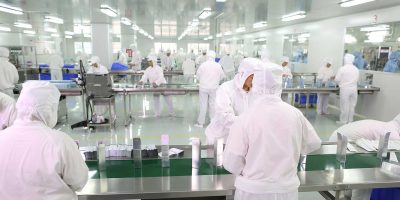
Modern cosmetic manufacturing has moved far beyond traditional workshop production, entering a new stage of intelligence and digitalization. Leading manufacturers build competitive advantages through the following methods:
Full-process Digital Control Systems enable end-to-end traceability from raw material intake to finished product outbound. Using IoT sensors, blockchain technology, and AI algorithms, manufacturers can monitor production line status in real-time, predict equipment failures, optimize production parameters, and ensure the consistency and stability of every product batch.
Flexible Production and Personalized Customization capabilities have become manufacturers’ new trump cards. Through modular production line design and rapid mold-changing technology, manufacturers can efficiently switch between different products on the same line, even achieving flexible production of small batches and multiple varieties. This allows brands to respond more swiftly to market changes, test new product concepts, and reduce inventory risks.
III. How to Select and Evaluate Cosmetic Manufacturers
Qualification Certification and Compliance Capability: The Non-Negotiable Baseline
When selecting a cosmetic manufacturer, brands must first examine its compliance qualifications. Major global markets have strict cosmetic regulations: China requires Cosmetic Production Licenses and product registration; the US follows FDA cosmetic regulations; the EU must comply with Regulation (EC) No 1223/2009.
International Certification Systems are important benchmarks for measuring a manufacturer’s management level. ISO 22716 (Cosmetics Good Manufacturing Practices) is the globally recognized standard for cosmetic production quality management. Additionally, certifications like GMPC (US, EU Good Manufacturing Practice for Cosmetics) and ISO 9001 Quality Management System reflect a manufacturer’s overall strength. Forward-thinking manufacturers also proactively obtain special qualifications like Halal certification and Organic certification, paving the way for clients to explore diverse markets.
Collaboration Models and Communication Efficiency: From Transaction to Partnership
Cosmetic manufacturing is not just about product production but also an extension of brand value. Therefore, the collaboration model between manufacturer and brand is crucial.
A Transparent and Open Communication Mechanism is the cornerstone of successful cooperation. Excellent manufacturers establish dedicated customer service teams with multilingual project managers to ensure accurate and timely information transfer. Regular factory visits, video conferences, and digital collaboration platforms allow brands to stay informed about project progress and participate in key decisions in real-time.
Intellectual Property Protection Systems are a top concern for brands. Professional manufacturers have strict non-disclosure agreement protocols, partitioned R&D environments, and permission management systems to ensure clients’ formulas, designs, and business information are fully protected. Establishing this trust is the foundation for long-term collaboration.
IV. Future Trends and Challenges in Cosmetic Manufacturing
Sustainable Development: From Ethical Choice to Business Necessity
Environmental pressures and policy regulations are forcing the cosmetic manufacturing industry towards a green transformation. Leading manufacturers are building sustainable competitiveness in three areas:
Green Factories and Cleaner Production are becoming the new standard. Manufacturers invest in solar power systems, water recycling facilities, and waste heat recovery technology, significantly reducing the carbon footprint of production processes. Some cutting-edge factories have even achieved “zero waste to landfill” goals, converting production by-products into valuable resources.
Eco-friendly Packaging Innovation is accelerating. Manufacturers collaborate with materials scientists to develop refillable packaging, bio-based plastic alternatives, and solid cosmetics requiring no outer packaging. These innovations not only reduce environmental burden but also become unique selling points for brand marketing.
Personalization and Digital Integration: The Next Revolution in Beauty Manufacturing
As consumer demand for personalized products grows, cosmetic manufacturing faces new opportunities for transformation.
On-Demand Customization and Flexible Supply Chains will become the industry’s new normal. Using AI algorithms to analyze consumer skin data, manufacturers can produce truly personalized formulas in small batches. 3D printing technology allows for the creation of unique packaging designs and color combinations. This shift from mass standardization to personalization will reshape the entire manufacturing logic.
Smart Quality Control and Predictive Analytics are enhancing manufacturing precision. Utilizing machine vision systems to detect product appearance defects, big data analysis to predict raw material quality fluctuations, and AI to optimize formula stability—these digital technologies not only improve product quality but also significantly reduce waste and costs.
Conclusion: Cosmetic Manufacturers—The True Shapers of the Beauty Industry
From obscure behind-the-scenes roles to core drivers of innovation in the beauty industry, the status of cosmetic manufacturers has undergone a fundamental transformation. They are not only producers of products but also practitioners of technological innovation, promoters of sustainable development, and shapers of the industry’s future.
For brands looking to enter or already in the beauty industry, choosing the right manufacturing partner is not just a production decision but a strategic choice. An excellent manufacturer can translate brand philosophy into market-competitive products, helping brands establish genuine differentiation in fierce market competition.
For consumers, understanding the role and value of cosmetic manufacturers enables us to make more informed beauty choices, appreciating the science, ethics, and innovation stories behind products. In this sense, cosmetic manufacturers are not only creators of beauty but also vital bridges connecting science and aesthetics, commerce and ethics, globalization and localization.
As technology advances and consumer perceptions evolve, cosmetic manufacturing will continue to transform. However, one thing is certain: manufacturers that can balance innovation and responsibility, efficiency and quality, commercial value and social value will occupy a central position in the future beauty industry landscape, continuing to shape humanity’s understanding and pursuit of beauty.