
In today’s thriving skincare industry, skincare manufacturers play a crucial role in bridging innovative technology with consumer needs. These manufacturers are not just producers of products; they are pioneers in research and development, guardians of quality, and leaders of industry trends. This article will delve deeply into the ecosystem, core competencies, selection criteria, and future trends of skincare manufacturers, providing a comprehensive analysis of the supporting force behind this beautiful industry.
The Core Value and Industry Position of Skincare Manufacturers
R&D Innovation: The Scientific Power Behind Beauty
The core competitiveness of modern skincare manufacturers lies in their R&D innovation capabilities. Leading manufacturers possess laboratories equipped with advanced instruments and gather talents from various fields such as chemists, biologists, and dermatologists. They conduct in-depth research on key topics like skin physiology, active ingredient stability, and transdermal absorption technology, transforming cutting-edge scientific research into practical products.
True innovation goes beyond the discovery of new ingredients; it is reflected in breakthroughs in formulation technology. For example, nano-encapsulation technology can improve the stability and penetration of active ingredients; liposome technology enables precise delivery of nutrients; and sustained-release systems can prolong the action time of ingredients. The application of these technologies elevates skincare products from simple “application” to “precision delivery,” significantly enhancing product efficacy.
Production Standards: Every Detail of Quality Control
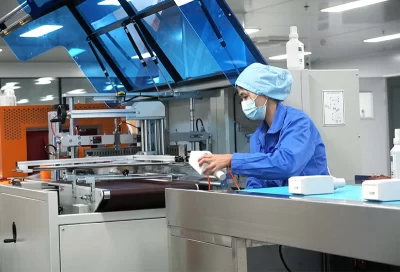
High-quality skincare manufacturers adhere to strict production standard systems, including GMP (Good Manufacturing Practice), ISO quality management systems, and specific cosmetic production regulations in various countries. From raw material procurement to finished product shipment, each step involves precise quality control processes.
Raw material screening is the first checkpoint for quality. Leading manufacturers establish rigorous supplier audit systems, conducting multiple tests on raw material purity, safety, and sustainability. During production, air cleanliness, temperature and humidity control, and equipment cleaning procedures in clean rooms are clearly defined. Each batch of products must undergo stability testing, microbial testing, safety assessments, and other multiple inspections to ensure the product remains stable and safe throughout its shelf life.
How to Choose a Reliable Skincare Manufacturer?
Five Key Indicators for Evaluating Manufacturers
When selecting a skincare manufacturer, businesses should consider the following five key dimensions:
R&D Capability and Patent Portfolio: Examine the manufacturer’s laboratory configuration, the background of the R&D team, and the quantity and quality of patents obtained. Manufacturers with independent intellectual property rights and core technologies offer greater long-term collaboration value. For instance, some manufacturers have deep expertise in plant extraction technology, fermentation processes, or research on specific active ingredients, which can become the differentiated advantages of a brand’s products.
Production Qualifications and Compliance: Verify whether the manufacturer possesses the necessary production licenses and complies with the regulatory requirements of the target market (such as China’s Cosmetic Production License, the EU’s CPNP notification, or FDA registration in the U.S.). Compliant manufacturers can help brands enter different markets more smoothly and reduce regulatory risks.
Quality Control System: Understand the manufacturer’s quality management processes, testing equipment standards, and handling mechanisms for non-conforming products. You can request to visit the production facility, review quality records, or even send samples to third-party testing. High-quality manufacturers typically proactively provide complete quality documentation, including raw material inspection reports, production records, and finished product inspection reports.
Production Capacity and Flexible Manufacturing Capabilities: Assess whether the manufacturer’s production capacity matches the brand’s needs and evaluate its ability to handle order fluctuations. Mature manufacturers should balance large-scale production with flexible customization, ensuring stable supply for large orders while accommodating small-batch trial production orders.
Collaboration Cases and Market Reputation: Research the brands the manufacturer has served, particularly those with positioning similar to your own. Understand the manufacturer’s market reputation and collaboration experience through industry exchanges, customer reviews, and other channels. Manufacturers with successful case studies and a good reputation are generally more trustworthy.
Comparative Analysis of Different Types of Manufacturers
Skincare manufacturers are primarily divided into three types: OEM (Original Equipment Manufacturing), ODM (Original Design Manufacturing), and OBM (Original Brand Manufacturing):
OEM Manufacturers focus on production according to the formulas and specifications provided by the brand, suitable for brands with mature product concepts and formulas. In this collaboration, the brand is responsible for product development, market testing, and other preliminary work but retains full control over the product.
ODM Manufacturers provide one-stop services from R&D to production, requiring the brand only to propose needs and concepts. This approach is suitable for start-up brands or enterprises looking to launch new products quickly, significantly shortening the product development cycle. However, the brand’s control over product uniqueness is relatively weaker.
OBM Manufacturers operate both their own brands and contract manufacturing businesses. Such manufacturers typically have stronger market insights and complete industrial chain capabilities. Collaborating with OBM manufacturers may provide brands with more market experience and resource support, but it is also important to avoid conflicts with the manufacturer’s own brands.
When choosing, brands should weigh their options based on their stage of development, R&D capabilities, and resource investment. Start-up brands may be more suited to the ODM model for a quick launch, while mature brands may prefer the OEM model to maintain product uniqueness.
Future Trends and Innovation Directions in Skincare Manufacturing
Sustainable Manufacturing and Green Chemistry
As consumer environmental awareness increases, sustainable manufacturing has become a significant trend in the skincare industry. Leading manufacturers are driving green transformation across multiple dimensions:
Sustainable Raw Material Sourcing: More and more manufacturers are establishing traceable raw material supply chains, prioritizing organically certified, fair trade, or wild-harvested plant ingredients to reduce damage to ecosystems. Some innovators are beginning to use upcycled ingredients, such as converting by-products from the food industry into skincare components, achieving resource recycling.
Green Production Processes: Manufacturers are optimizing production processes to reduce energy and water consumption, adopting clean energy, and treating and recycling wastewater. In packaging, they are developing recyclable, biodegradable, or reusable solutions to reduce plastic usage.
Application of Green Chemistry: Developing safer synthetic ingredients with better biodegradability to replace traditional chemical components that may be harmful to the environment. Simultaneously, improving formulations to reduce the use of additives like preservatives without compromising product stability.
Manufacturing Innovations for Personalization and Precision Skincare
Personalized skincare is the industry’s next growth point, placing new demands on manufacturers’ flexible production capabilities:
Small-Batch Flexible Production: Manufacturers need to adjust production lines to efficiently handle small-batch, multi-variety orders. This requires modular production equipment, intelligent production management systems, and flexible supply chain support.
On-Demand Manufacturing: Combining digital technology, manufacturers may develop faster response models. After consumers complete online skin tests, manufacturers produce according to personalized formulas in real-time, shortening the time from order to delivery.
Customizable Active Ingredient Modules: Manufacturers develop flexible active ingredient modules that can be quickly combined and adjusted according to different skin type needs. This “Lego-like” manufacturing model meets personalized needs while maintaining certain economies of scale.
Technology-Driven Manufacturing Upgrades
Smart Manufacturing and Digitalization: Advanced manufacturers are introducing IoT devices, artificial intelligence, and big data analytics to optimize production processes. Smart sensors monitor production parameters in real-time, AI algorithms predict equipment maintenance needs, and digital twin technology simulates and optimizes production layouts, comprehensively improving efficiency and quality stability.
Application of Bioengineering Technology: Utilizing biotechnologies such as synthetic biology and microbial fermentation to produce skincare ingredients. These methods are often more sustainable and yield high-purity active substances. For example, using genetically edited microbial fermentation to produce specific peptides or antioxidants, replacing traditional extraction or chemical synthesis methods.
Advanced Delivery System R&D: Continuously developing more efficient ingredient delivery technologies, such as porous microspheres, liquid crystal carriers, and peptide-guided delivery, to improve the stability, targeting, and bioavailability of active ingredients. Breakthroughs in these technologies will redefine the boundaries of skincare efficacy.
Conclusion
Choosing the right skincare manufacturer is a key factor in a brand’s success. An excellent manufacturer is not just a production partner but also a strategic ally in R&D innovation, quality assurance, and sustainable development. As the industry moves toward greater scientific precision, personalization, and sustainability, the role of manufacturers will become even more diverse and critical.
Brands should comprehensively evaluate the manufacturer’s overall capabilities and establish long-term collaboration mechanisms based on transparency and mutual trust. In this rapidly changing industry, only manufacturers that can continuously innovate, uphold quality, and embrace change will grow together with brands and gain a sustained advantage in the fierce market competition.
Whether you are a start-up brand seeking a partner or an established enterprise considering supply chain optimization, a deep understanding of the skincare manufacturer ecosystem and the latest trends will provide valuable insights for your decision-making. In this field where beauty and science intertwine, choosing the right manufacturing partner lays the strongest foundation for your brand.