
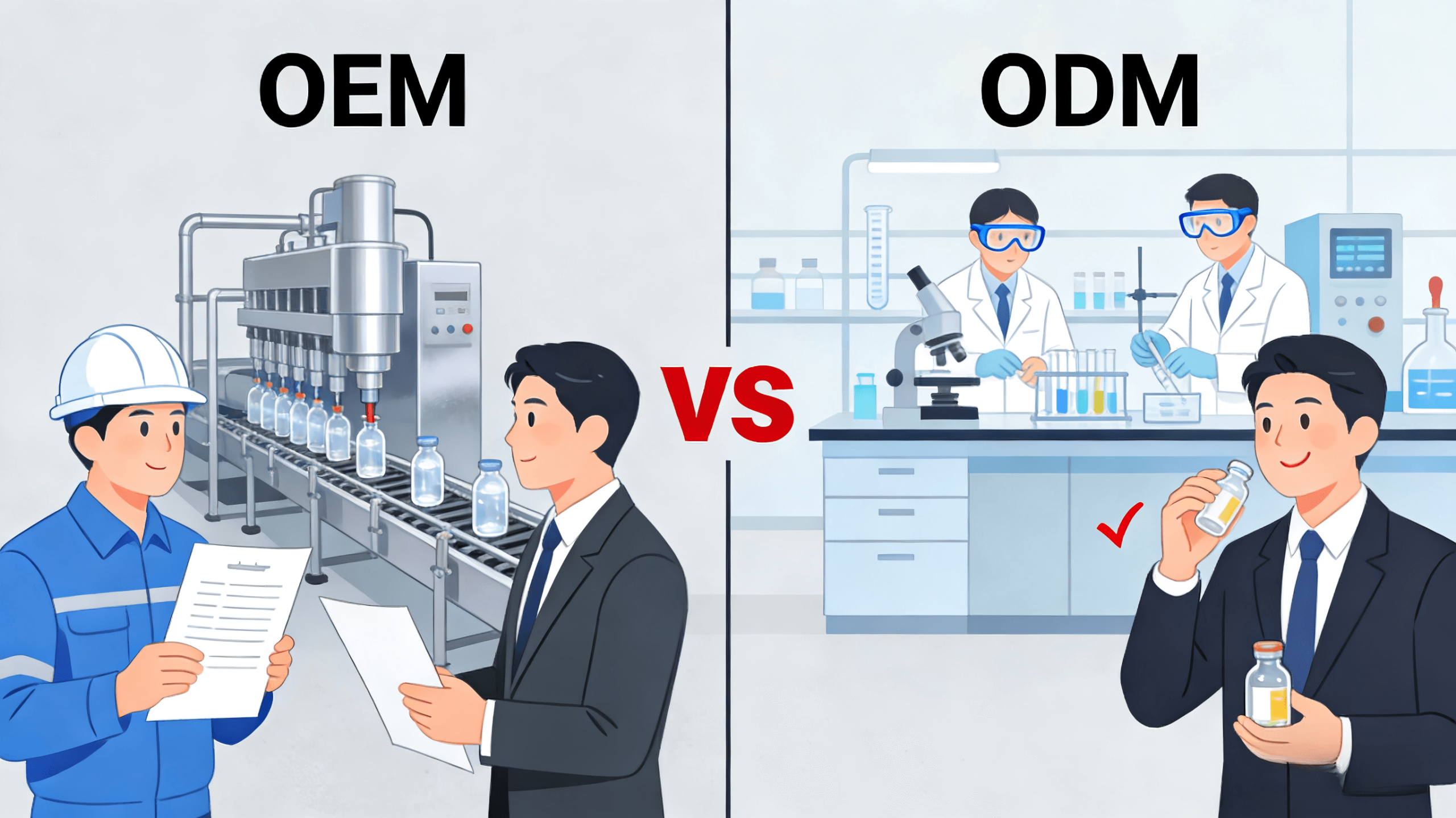
Introduction: The Technological Revolution Behind Cream Manufacturing
In today’s booming beauty industry, consumer demand for face creams has extended far beyond basic moisturization. As a bridge connecting technological innovation and skin health, professional Face Cream Manufacturers are quietly driving an industry transformation. These manufacturers are not just product producers; they are designers of skin solutions, explorers of ingredient innovation, and practitioners of sustainable beauty. Every step—from laboratory research and development to production line optimization—embodies a deep understanding of skin science and an ultimate pursuit of quality.
As consumers increasingly focus on ingredient transparency, product efficacy, and environmental values, leading face cream manufacturers are integrating biotechnology, nanotechnology, and green chemistry into product development through interdisciplinary collaboration. This revolution, led by manufacturers, is not only redefining the possibilities of face creams but also shaping the future direction of the entire beauty industry.

Global Face Cream Market Trends and Manufacturers’ Strategic Layout
The Convergence of Clean Beauty and Sustainable Manufacturing
In recent years, “clean beauty” has evolved from a marketing concept to an industry standard, driving Face Cream Manufacturers to fundamentally rethink product formulations and production processes. Leading manufacturers are implementing three major strategic shifts: First, establishing transparent and traceable ingredient supply chains to ensure raw material purity and ethical sourcing from the outset. Second, developing innovative natural preservative-alternative systems to reduce reliance on traditional preservatives. Third, investing in carbon-neutral production facilities to integrate sustainability into the entire manufacturing process.
Internationally renowned manufacturers like Korea’s Cosmax and Japan’s Kolmar have pioneered the establishment of “green factories,” reducing environmental impact by over 40% through solar power, water recycling systems, and biodegradable packaging. Simultaneously, they have developed smart production systems based on big data analytics to precisely control energy consumption, balancing production efficiency with environmental goals. These practices not only respond to consumer demand for eco-friendly products but also create long-term cost advantages and brand value.
The Rise of Personalized Skincare and Flexible Production Systems
The trend toward “made-to-measure” personalized skincare is reshaping manufacturers’ production capacity layouts. Advanced Face Cream Manufacturers are transitioning from large-scale standardized production to flexible smart manufacturing systems. By integrating AI skin analysis data, 3D printing technology, and modular production lines, manufacturers can achieve efficient small-batch, multi-variety production to meet customized needs for different skin types, concerns, and regional climates.
For example, a European high-end manufacturer has launched a “real-time customization” service platform: after consumers complete a skin analysis via professional equipment, the data is directly transmitted to the production system, and a personalized face cream tailored to their skin condition is delivered within 24 hours. The success of this model relies on significant manufacturer investment in microemulsion technology, stabilizer systems, and flexible filling equipment. Personalized manufacturing not only enhances product added value but also establishes deep data connections and loyalty relationships between brands and consumers.
Core Technological Breakthroughs: The R&D Code of Top Manufacturers
Precision Delivery Systems for Bioactive Ingredients
The core efficacy of a face cream lies in whether active ingredients can effectively penetrate and act on target skin layers. Top-tier Face Cream Manufacturers are investing in interdisciplinary research to develop next-generation delivery technologies. Among these, nanocarrier technology, liposome encapsulation, and microencapsulation processes have become focal points of competition. These technologies protect sensitive ingredients (such as Vitamin C and retinol) during production and storage and control their release rate on the skin, extending their action time.
Recent breakthroughs include “smart-responsive nanocapsules” that release contents based on skin pH, temperature, or enzymatic activity, and “multi-layered liposome structures” that mimic skin cell membranes to improve the simultaneous delivery efficiency of both hydrophilic and lipophilic ingredients. Research by Korean manufacturer Amorepacific shows that its patented “cellular-level microcapsule technology” increased active ingredient absorption by 300% while reducing the proportion of free ingredients that may cause irritation. These technological breakthroughs not only enhance the credibility of product claims but also pave the way for clinical-grade skincare development.
Innovations in Skin Microbiome and Prebiotic Skincare Manufacturing
With advances in skin microbiome research, regulating skin flora balance has become a new direction for anti-sensitivity, anti-acne, and barrier repair products. Forward-thinking Face Cream Manufacturers are collaborating with microbiological research institutions to develop selective antimicrobial ingredients, prebiotic complexes, and postbiotic fermentation filtrates that do not harm beneficial bacteria.
The manufacturing challenge lies in maintaining the stability of these bioactive ingredients. Leading manufacturers have adopted a combination of low-temperature fermentation processes, freeze-drying technology, and sterile filling systems. For instance, a French manufacturer has successfully industrialized “live bacteria pause technology,” placing probiotic spores in a dormant state until activated by contact with skin moisture. Simultaneously, manufacturers are redesigning preservation systems, adopting gentler polyol combinations and natural antimicrobial peptides to avoid “carpet bombing” of the skin microbiome. Innovation in this field marks a paradigm shift in face cream manufacturing from chemical to biological skincare.
How to Identify and Choose High-Quality Face Cream Manufacturers
Full-Chain Transparency in Certification Systems and Quality Control
When selecting partners, brands should go beyond basic production capacity evaluation and deeply assess manufacturers’ quality control systems and certification integrity. Top Face Cream Manufacturers typically hold multiple certifications such as ISO 22716 (Cosmetics Good Manufacturing Practices), GMPC (Cosmetics GMP), ISO 14001 (Environmental Management), and ISO 45001 (Occupational Health and Safety). However, the real difference lies in the depth of execution: Do they conduct DNA testing on each batch of raw materials to ensure authenticity? Have they established a “digital twin” tracking system for raw materials and finished products? Do they possess independent stability testing laboratories?
Notably, leading manufacturers are implementing “open lab” policies, allowing clients to remotely view real-time monitoring data from key production control points. Furthermore, they use advanced equipment such as gas chromatography-mass spectrometry, high-performance liquid chromatography, and in vitro 3D skin models for efficacy verification, replacing traditional animal testing. These investments not only ensure product safety but also provide scientifically credible data support for brand marketing.
R&D Collaboration Capabilities and Innovation Response Speed
The value of a quality manufacturer lies not only in production execution but also in the ability to solve problems collaboratively with brands. Evaluation should focus on: Does the manufacturer have an interdisciplinary R&D team (including dermatologists, biologists, chemists, and data scientists)? Has it established a consumer insight analysis system to quickly translate market trends into formulation innovation? Does it provide end-to-end support from concept to market launch, including packaging compatibility testing, regulatory filing, and supply chain optimization?
The most competitive manufacturers have evolved into “innovation platforms,” regularly publishing ingredient white papers and technology roadmaps to guide industry trends. They establish open innovation networks with universities and research institutions, sharing early-stage research results. For example, an Asian manufacturer hosts quarterly “brand co-creation workshops,” inviting clients to participate in product line planning for the next 12–18 months. This deep collaboration model can significantly shorten new product development cycles (from an industry average of 18 months to 9–12 months), helping brands seize market opportunities.
Future Outlook: The Next Wave of Drivers Transforming Face Cream Manufacturing
Deep Integration of Artificial Intelligence and Predictive Manufacturing
The next generation of Face Cream Manufacturers will be data-driven intelligent enterprises. Artificial intelligence is already permeating every stage from R&D to production: machine learning algorithms analyze tens of thousands of ingredient combinations to predict optimal efficacy formulas; computer vision monitors production lines in real time to identify potential quality issues in advance; products are iterated based on consumer feedback data, achieving a “manufacture-use-optimize” closed loop.
Forward-looking manufacturers are building “digital formula libraries,” decomposing successful formulas into recombinable functional modules for rapid response to market demands. Even more revolutionary is “predictive stability testing,” which uses algorithmic models to simulate product changes under various storage conditions, shortening traditional stability tests that take 3–6 months to just a few weeks. These technologies not only improve efficiency but also create possibilities for product innovation unattainable by traditional methods.
Regenerative Beauty and Circular Economy Manufacturing Models
The core focus of future face cream manufacturing will shift from “reducing harm” to “active regeneration.” Leading Face Cream Manufacturers are exploring three main directions: developing upcycled ingredients (e.g., converting by-products from the food industry into skincare actives); designing fully recyclable or reusable packaging systems; and establishing product networks to transform used products into new raw materials.
In Europe, some manufacturers are piloting “face cream subscription systems”: returned empty bottles are professionally cleaned, sterilized, and refilled, reducing packaging waste by 80%. Concurrently, manufacturers collaborate with agricultural cooperatives to grow原料 plants using regenerative farming methods, enhancing soil carbon sequestration. This “cradle-to-cradle” manufacturing philosophy transforms environmental responsibility from a cost center into a core element of brand narrative and consumer connection.
Conclusion: The Evolution of the Manufacturer’s Role from Executor to Industry Co-creator
In the current landscape of beauty industry value reconstruction, the role of Face Cream Manufacturers has fundamentally changed. They are no longer merely production units fulfilling orders but have become extensions of brands’ innovation capabilities, setters of industry standards, and co-builders of a sustainable future. Choosing a manufacturer is, in essence, choosing a long-term innovation partner, a technological backbone, and a values ally.
Manufacturers that successfully integrate cutting-edge technology, ethical responsibility, and market insight are helping brands establish product moats that are difficult to replicate in fierce market competition. For beauty brands, deeply understanding the logic of transformation on the manufacturing end and establishing strategic-level partnerships with manufacturers is no longer an optional supply chain optimization but a core strategy determining future survival and development.