
In today’s globally booming beauty market, competition among brands has extended from mere marketing battles to supply chain capabilities. For businesses looking to rapidly capture market share, expand their product lines, or build a beauty brand from scratch, finding a reliable manufacturing partner is the absolute key to success.
This is exactly why an increasing number of global beauty brands are turning their eyes to the East, actively seeking a high-quality cosmetics oem manufacturer china. This article will delve into the core advantages of partnering with a Chinese cosmetics OEM factory and how to select the most suitable long-term partner for your brand.
Why are Global Brands Searching for a Cosmetics OEM Manufacturer China?
China is not only one of the world’s largest consumer markets for cosmetics but also the central hub for global beauty manufacturing. By collaborating with premium Chinese OEM manufacturers, B2B buyers can gain the following unparalleled strategic advantages:
1. Ultimate Cost Efficiency & Scalable Production
China boasts highly mature industrial clusters. From raw material sourcing and packaging production to final filling and assembly, the complete upstream and downstream supply chain enables Chinese OEM factories to provide high-quality products at highly competitive prices. Whether it’s a small-batch trial run for a startup brand or mass production for an established company, Chinese contract manufacturers can offer highly flexible production capacities.
2. World-Class R&D and Formulation Innovation
The outdated “factory of the world” label has long been upgraded. Today, top-tier cosmetics oem manufacturer china possess modern laboratories, experienced chemical engineers, and extensive formula libraries that keep pace with international trends. Whether you are looking for trending “Clean Beauty,” “Vegan Cosmetics,” or high-efficacy skincare, Chinese OEMs can provide mature formulas or even exclusive customized R&D (ODM services).
3. Strict Quality Control and International Certifications
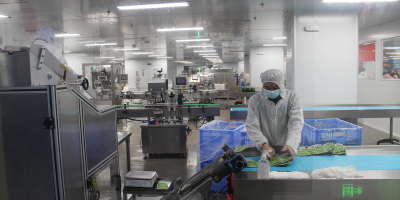
High-quality Chinese cosmetics factories deeply understand the importance of compliance for brands expanding globally. They strictly adhere to international standards during the production process, typically featuring 100,000-class (or higher) dust-free cleanrooms, and hold the following core certifications:
-
GMPC (Good Manufacturing Practice of Cosmetics)
-
ISO 22716 Cosmetics – Good Manufacturing Practices
-
Compliance with US FDA and European CPNP registration and testing requirements.
B2B Buyer’s Guide: How to Evaluate and Choose the Right Chinese Cosmetics Factory?
Filtering through numerous suppliers to find the one that best fits your brand positioning is crucial. When evaluating a potential cosmetics oem manufacturer china, be sure to focus on these core metrics:
-
Track Record & Industry Reputation: Understand what types of brands they have manufactured for in the past. If they have experience serving brands with similar positioning to yours or internationally recognized names, it usually indicates mature quality control.
-
MOQ (Minimum Order Quantity) Flexibility: Different factories have vastly different MOQ requirements. For new brands, finding a factory willing to support lower MOQs to reduce trial-and-error costs is a smart move; for large brands, you need to assess the factory’s maximum daily production capacity.
-
Packaging & Design Support: An excellent OEM does more than just provide the bulk formula; they offer a Turnkey Solution, helping you resolve issues with bottles, color boxes, and even brand visual design.
-
Communication Efficiency & Language Skills: In cross-border B2B cooperation, communication is the lifeline. Having a professional B2B sales and project management team fluent in foreign languages can save you significant time and prevent production errors caused by miscommunication.
The Collaboration Process: From Concept to Shelf in Four Steps
Collaborating with a mature Chinese OEM factory usually follows a highly standardized process:
-
Requirement Communication & Formula Confirmation: You propose the product concept (texture, efficacy, target audience, budget), and the factory recommends mature formulas or creates custom samples.
-
Sample Testing & Packaging Finalization: Upon receiving the samples, you conduct tests for skin feel, stability, and packaging compatibility. Once approved, the final formula and packaging design are locked in.
-
Contract Signing & Mass Production: After the advance payment is made, the factory enters the raw material procurement and production scheduling phase. Quality factories will provide transparent production progress reports.
-
Quality Inspection & Global Logistics: After production is completed, a strict outgoing Quality Control (QC) is conducted. The factory then assists you with customs clearance documents and arranges for international sea/air freight delivery.
Frequently Asked Questions (FAQ)
Q1: What is the typical MOQ for a cosmetics OEM manufacturer in China?
A: MOQs can vary significantly depending on the product type and packaging. Generally, standard MOQs range from 3,000 to 10,000 pieces per SKU. However, many manufacturer-partners today are willing to support indie brands with lower MOQs (e.g., 500 to 1,000 pieces) using standard packaging to help them test the market.
Q2: What is the difference between OEM and ODM?
A: * OEM (Original Equipment Manufacturer): You provide the exact formula, design, and specifications, and the factory simply manufactures the product for you.
-
ODM (Original Design Manufacturer): The factory provides the R&D, formula, and design based on your concept, and then manufactures the product under your brand name (Private Label). Most top-tier Chinese manufacturers offer both.
Q3: How can I ensure my formula and intellectual property (IP) are protected?
A: Before sharing any sensitive information, always sign a Non-Disclosure Agreement (NDA) or a Non-Disclosure, Non-Use, and Non-Circumvention (NNN) agreement, which is highly enforceable in China. Choosing a reputable factory with a proven track record is also vital for IP security.
Q4: How long does the manufacturing process usually take?
A: The lead time depends on the project’s complexity. Generally, custom formulation and sampling take 2-4 weeks. Once the sample and packaging are approved and the deposit is paid, mass production typically takes 30 to 45 days.
Conclusion
In the fiercely competitive beauty industry, your supply chain capabilities dictate your brand’s vitality. Choosing a reliable cosmetics oem manufacturer china is not just about finding a production workshop; it’s about finding a strategic partner that can grow with your brand and provide technological empowerment.
Ready to turn your beauty concepts into best-selling products? Start evaluating your potential Chinese OEM partners today and leverage their manufacturing excellence to create your next hit beauty item!
WhatsApp:+86 134 8026 8601