
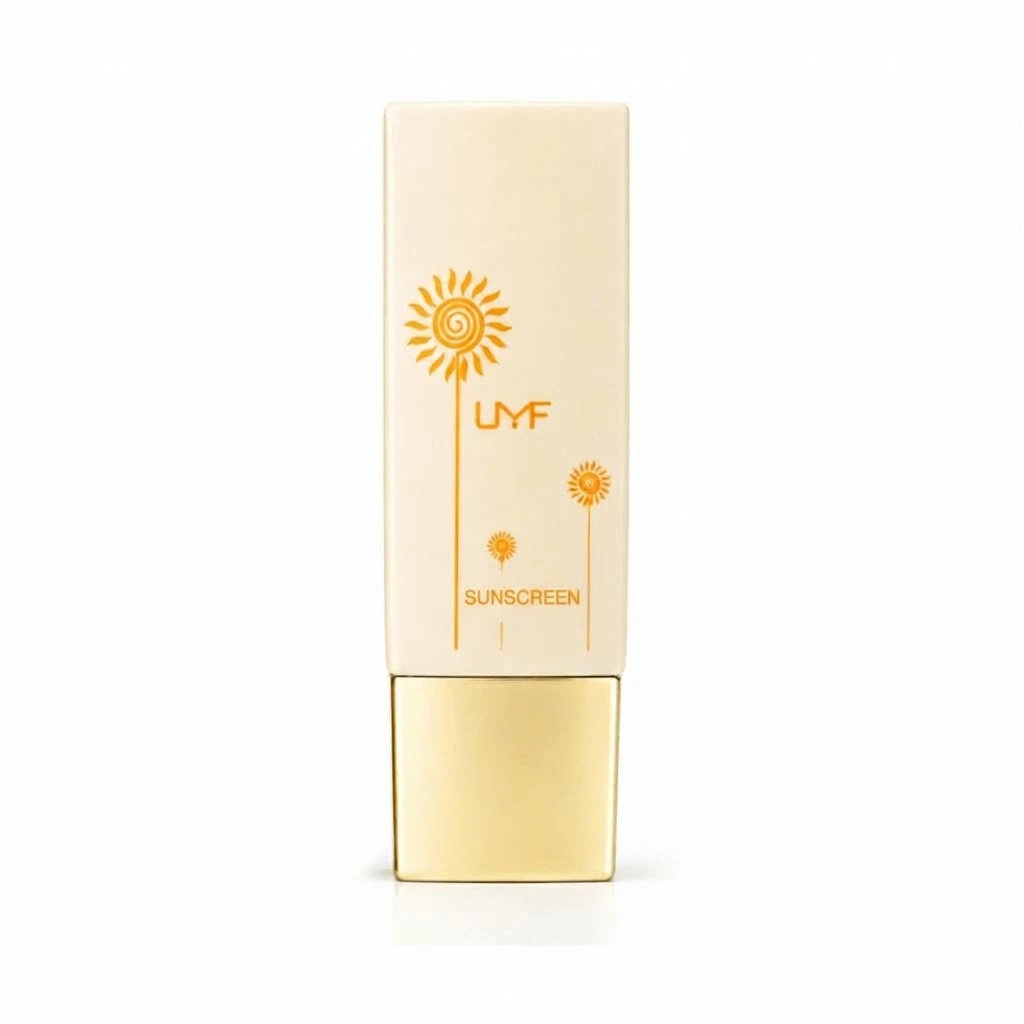
Why Sunscreen Is the Fastest-Growing Category for Private-Label Skincare
Sun care used to be a seasonal afterthought. In 2026 it is a daily-skincare staple, worn year-round and layered under makeup, serums, and moisturizers. If you are evaluating a sunscreen manufacturer for a private-label line, Guangzhou is one of Asia’s deepest skincare OEM/ODM clusters, with the labs, emulsification lines, and SPF testing partnerships needed to build compliant sun care at scale. This guide explains how a Guangzhou sunscreen manufacturer takes your concept from formula to a broad-spectrum SPF product ready for the US, EU, and APAC shelves.
What a Guangzhou Sunscreen Manufacturer Brings to the Table
A serious sunscreen manufacturer is first and foremost a formulation and stability specialist. Sunscreen is one of the hardest products to get right: UV filters must be evenly dispersed, the emulsion must stay stable for years, and the claimed SPF must survive independent lab testing. A private-label cosmetics manufacturer in Guangzhou typically offers both chemical (organic) and mineral (physical) filter systems, in-house homogenization, and relationships with accredited SPF testing labs.
The benefit of sourcing from a single private label sunscreen partner is coordination. Your serum, moisturizer, and sunscreen can share the same fragrance-free base philosophy, which keeps your brand story coherent across the regimen.
Private Label, OEM, or ODM for Sun Care
As with any skincare category, choose your model before you request a quote:
- Private label – adopt a proven sunscreen base and brand it. Fastest and lowest-risk entry.
- OEM – you own the formula spec; the factory produces it. Common for brands with a chemist.
- ODM – the factory develops the product concept and formula; you apply your brand. Best for non-technical founders.
For sun care, ODM or private label is usually wise for a first launch because SPF claims carry regulatory weight, and an experienced sunscreen manufacturer has already navigated filter compatibility and testing.
Sunscreen Formats You Can Source in 2026
A capable Guangzhou sunscreen manufacturer supports multiple formats, each with a different buyer:
- Face sunscreen cream/lotion – lightweight, non-comedogenic, often worn under makeup.
- Body sunscreen – higher volume, often SPF 30–50, water-resistant.
- Mineral sunscreen – zinc-oxide or titanium-dioxide based; “clean” and reef-aware positioning.
- Spray and stick formats – convenient reapplication for sports and travel.
- Hybrid SPF serums and gels – the fastest-growing segment, pairing protection with a private-label serum feel.
You can bundle SPF with a day cream manufacturer program or a brightening skincare line to build a complete morning routine.
SPF Claims, Broad Spectrum, and Testing
This is where sunscreen diverges from ordinary skincare. Your sunscreen manufacturer must support:
- In-vitro and in-vivo SPF testing at an accredited lab (the gold standard is human-panel testing).
- Broad-spectrum validation (UVA protection, e.g., critical wavelength or PPD/PA rating).
- Water-resistance claims (40 or 80 minutes) where applicable.
- Stability and accelerated aging to support the stated shelf life.
Do not accept a supplier that cannot show SPF test reports. The claim on your label is a legal promise, and regulators in the US (FDA) and EU treat sunscreen as a regulated product, not a cosmetic.
The Sunscreen Manufacturing Process
A typical private-label sunscreen run follows this path:
- Base selection – chemical, mineral, or hybrid, matched to your texture brief.
- Filter system design – dispersion of UV filters for even protection.
- Emulsification and homogenization – high-shear mixing for a stable lotion or cream.
- Filling – tube, bottle, airless pump, or aerosol, depending on format.
- Stability and SPF testing – in-house checks plus third-party validation.
- Labeling and export packing – with market-specific claims and warnings.
A facial mist manufacturer or exfoliant manufacturer in the same group lets you assemble a full regimen without juggling multiple vendors.
MOQ, Lead Time, and Cost Structure
Private-label sunscreen MOQs generally start around 1,000–5,000 units per SKU, higher than basic creams because of filter costs and testing. Lead time from approved sample to shipment is usually 30–55 days, extended if new SPF testing is required. Our skincare contract manufacturing cost breakdown details per-unit economics, testing fees, and freight so you can price confidently.
Budget for three lines: formula and filling, compliant packaging (UV-protective where needed), and testing documentation. Testing is non-negotiable and should never be the line item you cut.
Compliance Across Markets
A trustworthy sunscreen manufacturer helps you navigate regional rules: FDA monograph and labeling for the US, EU Regulation 1223/2009 and SPF/ UVA claims for Europe, and local notifications for ASEAN and the Middle East. Reef-safe and “clean” positioning is increasingly requested—discuss filter choices early if you want oxybenzone- and octinoxate-free claims, especially for men’s skincare or sports lines aimed at beach markets.
How to Brief Your Sunscreen Manufacturer
A clear brief prevents costly reformulation. Include:
- Target SPF and format (cream, gel, serum, spray, stick).
- Filter preference (mineral, chemical, or hybrid) and “reef-safe” needs.
- Texture and finish (matte, dewy, invisible, tinted).
- Markets and required claims (broad spectrum, water resistance).
- Packaging direction and budget.
If you are new to cross-border sourcing, our guide to working with a China cosmetics manufacturer remotely covers sampling, payments, and quality control from abroad.
Texture and Claim Trends Shaping Sun Care in 2026
The sunscreen manufacturer you choose should be fluent in what buyers actually want this year. The dominant trends are invisible, no-white-cast mineral formulas; lightweight gel-creams that double as makeup primers; and \u201cskincare-plus-SPF\u201d hybrids infused with niacinamide, peptides, or Centella asiatica. Tinted SPF is also surging as consumers replace foundation with protective, skin-perfecting coverage. Brief your Guangzhou sunscreen manufacturer around these preferences so the formula you launch feels current rather than dated on arrival.
Reef-safe and allergen-conscious positioning is no longer a niche. Many beach and resort markets restrict certain chemical filters, so offering an oxybenzone-free, octinoxate-free mineral option widens your distribution and supports cleaner brand storytelling. This pairs naturally with a brightening skincare manufacturer or a facial mist manufacturer for a cohesive \u201cclean morning routine\u201d narrative that shoppers recognize instantly.
Do not overlook family and men\u2019s skincare angles either. Sport and daily-face SPFs for men are an underserved, high-margin niche, and kid-friendly mineral sticks are perennial bestsellers. A flexible Guangzhou sunscreen manufacturer can spin these variants from the same base, letting you extend the line without rebuilding the formula from scratch.

Common Pitfalls When Launching a Private-Label Sunscreen
Three mistakes sink sun care launches. First, underestimating testing time\u2014independent SPF validation can add weeks, so start the process early rather than rushing it before a seasonal deadline. Second, mismatched packaging: some UV filters degrade in clear bottles, so specify UV-protective or opaque containers from the outset. Third, vague or unsupported claims\u2014stating \u201cSPF 50\u201d without broad-spectrum support invites regulatory action and retailer rejection. A disciplined sunscreen manufacturer will flag all three during formulation, not after production has begun, protecting both your compliance and your launch date.
Ready to Launch Your Private-Label Sunscreen?
The right sunscreen manufacturer turns a regulated, high-stakes product into a smooth launch. A full-service Guangzhou sunscreen manufacturer combines formulation depth, SPF testing support, and the scale to grow with you from pilot batch to full container. Reach out to our team today for a private-label sunscreen quote, share your target market and SPF claim, and receive a sample-ready brief within one business day.