
Starting a skincare brand has never been more accessible, thanks to the rise of cosmetic OEM (Original Equipment Manufacturing) and ODM (Original Design Manufacturing) partnerships. Whether you’re an entrepreneur, an established retailer, or a beauty influencer, this comprehensive guide will walk you through every step of launching your private label skincare line with a trusted manufacturing partner.
What is Cosmetic OEM/ODM? Your Gateway to the Beauty Industry
At its core, cosmetics OEM/ODM represents a turnkey solution for brand creation. OEM refers to a manufacturer producing products based on your exact specifications—using your formulations, packaging designs, and brand guidelines. ODM takes this further by offering pre-developed, market-ready formulations and designs that you can customize and brand as your own.
Why does this matter? Contract manufacturing for cosmetics eliminates the need for massive capital investment in equipment, R&D facilities, and regulatory expertise. The key difference between OEM and ODM skincare lies in control versus convenience: OEM offers complete customization, while ODM provides efficiency and faster market entry. Leading partners offer a hybrid approach—what we call a “white-glove” turnkey solution—handling everything from initial concept to final shipment.
How to Choose the Right Skincare Manufacturer: Avoiding Costly Mistakes
Selecting the wrong manufacturing partner can derail your brand before it launches. Here are the non-negotiable criteria for identifying a reliable skincare manufacturer in China or elsewhere:
1. Research & Development Capabilities
A manufacturer’s R&D lab is the heart of innovation. Look for:
-
Dedicated chemists and cosmetic scientists
-
Ability to create custom formulation facial serums for specific concerns (hydration, anti-aging, brightening)
-
Access to premium, clinically-backed ingredients
-
Prototyping speed and flexibility
-
2. Certifications and Compliance
Never compromise here. Essential certifications include:
-
GMPC certified cosmetics factory (Good Manufacturing Practice for Cosmetics)
-
ISO 22716 (Cosmetics Quality Management Systems)
-
FDA registration (for US market access)
-
Cruelty-free and vegan certifications if targeting those markets
3. Production Scale and Flexibility
Your manufacturer should match your business stage:
-
Low MOQ private label options for startups (often 500-1,000 units per product)
-
Dedicated production lines for different product types (e.g., separate lines for body lotion OEM and facial creams to prevent cross-contamination)
- Scalability to grow with your brand
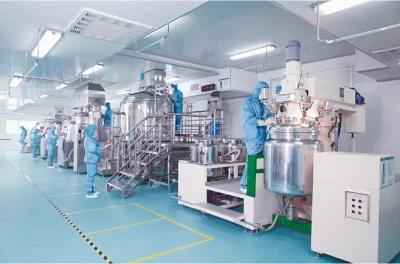
The Core Private Label Process: From Concept to Customer
Step 1: Formulation Development
This is where your vision becomes chemistry. Work with your partner’s R&D team to develop:
-
Custom formulation facial serums targeting specific concerns (vitamin C brightening, hyaluronic acid hydration, retinol anti-aging)
-
Specialized barrier repair cream for sensitive skin
-
Vegan skincare private label formulations free from animal derivatives
-
Texture profiles that align with your brand identity
Step 2: Texture & Scent Selection
Sensory experience defines luxury skincare. For body lotion OEM, you might choose between:
-
Lightweight, fast-absorbing textures for daily use
-
Rich, buttery formulations for extra-dry skin
-
Cooling gels with menthol for post-sun care
-
Fragrance-free or custom scent profiles (from floral to citrus to therapeutic aromatherapy blends)
[Insert your factory’s body lotion production image here with Alt Text: “Private label body lotion manufacturer factory producing moisturizing cream”]
Step 3: Packaging Design & Customization
Your packaging is your silent salesperson. Considerations include:
-
Private label sheet masks with custom printed sachets
-
Wholesale face cream jars and bottles with premium finishes (matte, gloss, metallic)
-
Eco-friendly options: glass bottles, PCR materials, biodegradable pouches
-
Functional designs that enhance user experience (airless pumps, droppers, hygienic dispensers)
[Insert your sheet mask packaging image here with Alt Text: “Custom private label sheet masks with eco-friendly materials”]
Step 4: Rigorous Quality Control & Testing
Safety is non-negotiable. Every batch undergoes:
-
Stability testing for toner and emulsion products
-
Microbial testing to ensure preservation system effectiveness
-
Challenge testing to validate shelf life
-
Patch testing for irritation potential
-
Final inspection before shipping
2026 Skincare Market Trends: What Your Brand Needs
Stay ahead by aligning with these emerging trends:
1. Skin Barrier Science
The post-pandemic focus on skin health continues with barrier repair cream formulations featuring:
-
Ceramide complexes
-
Cholesterol and fatty acid ratios matching skin’s natural composition
-
Pre- and post-biotics to support skin microbiome
2. Conscious Beauty Evolution
Clean beauty manufacturing now means:
-
Full ingredient transparency (“free-from” lists aren’t enough)
-
Vegan skincare private label with certified plant-based ingredients
-
Carbon-neutral production commitments
-
Eco-friendly mask materials like bamboo fiber or biodegradable substrates
3. Multifunctional Minimalism
Consumers want fewer products that do more:
-
Serums that combine treatment with hydration
-
Moisturizers with SPF protection
-
Overnight masks that replace multiple treatment steps
4. Provenance and Storytelling
Ingredients with geographical authenticity:
-
Mediterranean olive extracts
-
Korean fermented components
-
Amazonian botanical oils
How to Start Your Skincare Project: Your Roadmap to Launch
Ready to transform your vision into reality? Follow this actionable roadmap:
-
Define Your Niche: Identify your target customer and their unmet needs.
-
Budget Realistically: Account for development, minimum orders, packaging, and compliance.
-
Prepare Your Brief: Create detailed concept documents including desired ingredients, textures, packaging references, and brand story.
-
Schedule Consultations: Meet with potential partners to assess compatibility.
At [Your Company Name], we’ve helped hundreds of brands navigate this journey successfully. Our factory combines state-of-the-art technology with artisan attention to detail, ensuring your products stand out in a crowded market.

Ready to build your skincare empire?
Contact our expert team today for a free custom skincare formulation consultation. We’ll help you navigate every decision—from selecting between OEM vs ODM skincare approaches to choosing the perfect private label sheet masks packaging.
Let’s create something beautiful together.
Explore our products in our gallery to see the quality and variety we offer our partners.