
Introduction: The Rising Demand for Effective Anti-Aging Solutions
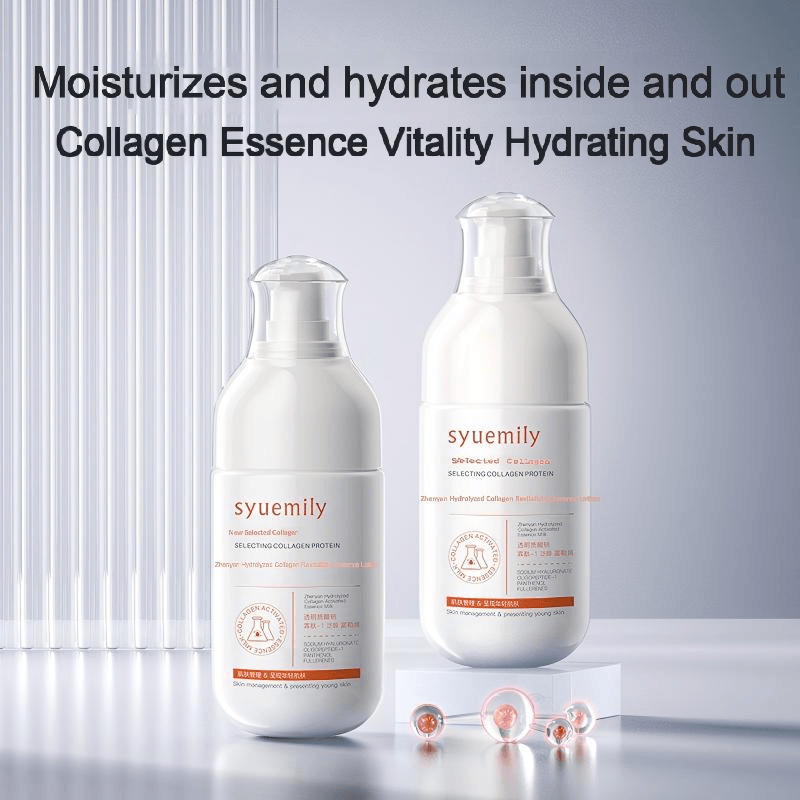
The global anti-aging skincare market is experiencing unprecedented growth, driven by an increasingly informed consumer base seeking scientifically-backed, results-oriented solutions. For emerging and established beauty brands, this presents a tremendous opportunity. However, the bridge between a market-ready concept and a shelf-worthy product is built by a critical partner: a specialized anti-aging serum OEM manufacturer. Unlike generic cosmetic producers, these manufacturers possess the precise expertise in advanced formulations, bioactive ingredient stability, and delivery systems necessary to create serums that truly perform. This comprehensive guide delves deep into the world of OEM manufacturing for anti-aging serums, providing the insights needed to select a partner who can transform your vision into a clinically effective, commercially successful, and brand-defining product.
Understanding the OEM Model in Premium Skincare
Navigating the landscape of skincare production begins with a clear understanding of the Original Equipment Manufacturer (OEM) model and its distinct advantages for brands in the competitive anti-aging sector.
What is an Anti-Aging Serum OEM Manufacturer?
An OEM manufacturer is a specialized company that designs, formulates, and produces finished skincare products according to a client brand’s specifications, market requirements, and brand identity. The client brand then markets and sells the product under its own label. In the context of anti-aging serums, this goes far beyond simple mixing and filling. It involves a synergistic partnership where the manufacturer provides:
-
R&D Expertise: Scientific knowledge of actives like retinoids, peptides, growth factors, antioxidants (Vitamin C, Ferulic Acid, EGCG), and exfoliating acids (AHAs, PHAs).
-
Advanced Formulation Technology: Mastery in creating stable, bioavailable, and synergistic blends of these potent ingredients.
-
Regulatory Compliance: Guidance and execution in meeting the cosmetic regulations of target markets (e.g., FDA, EU Cosmetics Regulation, ASEAN).
-
Scale Flexibility: Ability to produce batches ranging from small pilot runs for market testing to large-scale commercial volumes.
OEM vs. ODM vs. Private Label: Choosing Your Path
It’s crucial to distinguish between different manufacturing models:
-
OEM (Original Equipment Manufacturing): This is a collaborative, custom process. You bring your specific serum concept, ingredient list, packaging design, and performance targets. The OEM partner provides the scientific and production capabilities to execute it. You retain full intellectual property (IP) over the custom formulation.
-
ODM (Original Design Manufacturing): Here, the manufacturer offers a catalog of their own existing, “off-the-shelf” formulations and products. You can select a serum, potentially make minor adjustments (like fragrance or color), and brand it as your own. It’s faster and cheaper but offers less differentiation.
-
Private Label: This typically refers to putting your brand name on a completely standard, stock product with no customization.
For brands aiming to lead in the anti-aging niche with a unique value proposition, OEM is the definitive choice. It allows for innovation, proprietary blends, and a product that is an authentic extension of your brand’s promise.
The Hallmarks of a Top-Tier Anti-Aging Serum OEM Partner
Not all manufacturers are created equal. The following capabilities separate the industry leaders from the basic commodity producers.
Advanced R&D and Bioactive Ingredient Mastery
The core of any effective anti-aging serum is its active ingredient complex. A premier manufacturer must demonstrate:
-
Stability Engineering: Potent actives like L-ascorbic acid (Vitamin C), retinoids, and many peptides are notoriously unstable. Top OEMs invest in stabilization technologies (e.g., encapsulation, anhydrous formulations, advanced chelating agents, oxygen-barrier packaging) to ensure the serum remains potent until the last use.
-
Penetration Enhancement: An active ingredient is useless if it cannot penetrate the stratum corneum. Expertise in penetration enhancers (like liposomes, niosomes, or ethosomes) and delivery systems (transdermal, cellular targeting) is non-negotiable.
-
Synergistic Formulation: Knowing that Vitamin C and Vitamin E work synergistically, or that a multi-peptide complex can target different aspects of collagen synthesis, is the science behind superior efficacy. The manufacturer should be a partner in designing these intelligent complexes.
State-of-the-Art Production and Quality Assurance
The best formulation can be ruined by poor production. Excellence in this area is characterized by:
-
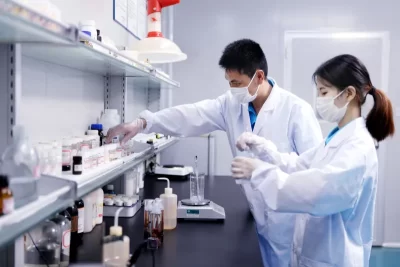
cGMP-Compliant Facilities: Adherence to current Good Manufacturing Practices ensures cleanliness, consistency, and traceability throughout the production process.
-
In-House Stability Testing: Conducting accelerated stability tests (under varying temperature and light conditions) to validate shelf-life claims and packaging suitability.
-
Rigorous QC Protocols: This includes testing raw materials, in-process batches, and finished products for microbial content, heavy metals, pH, viscosity, and active ingredient concentration. HPLC (High-Performance Liquid Chromatography) analysis is often standard for verifying active potency.
-
Clinical Trial and Efficacy Testing Partnerships: The ability to arrange or conduct controlled in-vitro (lab-based) and in-vivo (human clinical) studies to substantiate anti-aging claims like “reduces wrinkle depth,” “improves skin elasticity,” or “enhances hydration.”
A Step-by-Step Guide to the OEM Development Process
Understanding the journey from concept to crate is key to a smooth partnership.
Phase 1: Discovery, Briefing, and Feasibility
The process initiates with deep collaboration:
-
Comprehensive Brief: You provide a detailed brief covering target demographic, desired key actives and their concentrations (% w/w), texture, scent, primary claims, price point, and packaging vision.
-
Technical Feasibility Review: The OEM’s R&D team assesses the brief for formulation stability, ingredient compatibility, regulatory constraints, and cost feasibility. They provide expert feedback and alternatives if needed.
-
Quotation & Agreement: A formal quote covering all costs (R&D, raw materials, testing, production, MOQ) and a project timeline is issued. Upon approval, a contract safeguarding IP and terms is signed.
Phase 2: Formulation, Sampling, and Validation
This is the iterative, scientific heart of the process:
-
Lab Sample Development: The R&D team creates initial lab samples (50-100ml). Multiple variants with slight adjustments may be produced.
-
Sample Evaluation: You receive and evaluate the samples for sensory attributes (feel, smell, absorption), preliminary efficacy, and packaging compatibility.
-
Refinement & Stability: Feedback is incorporated. The selected sample undergoes initial stability testing. A pilot batch (a small production-run batch) is often made to confirm the formula scales correctly from lab beaker to production tank.
Critical Questions to Vet Your Potential OEM Manufacturer
Arm yourself with these essential questions during the selection process:
Questions on Capabilities and Expertise
-
“Can you provide case studies or examples of anti-aging serums you have developed, specifically with actives like retinoids, stable Vitamin C, or peptide complexes?”
-
“What is your process for ensuring the stability of oxygen- and light-sensitive active ingredients?”
-
“Do you have in-house efficacy testing capabilities or partnerships with accredited clinical testing labs? Can you help us design a study for our claims?”
-
“What is your minimum order quantity (MOQ) for a custom serum, and is it flexible for launch phases?”
Questions on Compliance, Quality, and IP
-
“Are your facilities certified to international standards (e.g., ISO 22716, cGMP)? Can we conduct an audit?”
-
“What is your full quality control pipeline, from raw material sourcing to finished goods release?”
-
“How do you handle regulatory documentation for different markets (INCIs, MSDS, PIFs for the EU, etc.)?”
-
“What is your contractual protocol for guaranteeing our formulation’s intellectual property (IP) remains exclusively ours?”
Beyond Production: Value-Added Services for Brand Success
Leading anti-aging serum OEM manufacturersact as strategic partners, offering services that extend beyond the factory floor.
Regulatory and Market Access Support
Navigating global regulations is complex. A true partner provides:
-
Dossier Preparation: Compiling the complete Product Information File (PIF) required for the EU and UK markets.
-
Claim Substantiation Strategy: Advising on the level of evidence needed for claims like “anti-wrinkle,” “firming,” or “clinically proven,” based on target market regulations.
-
Ingredient Compliance Screening: Pre-vetting formulations against the regulatory databases of the USA, EU, China, Japan, etc., to avoid costly reformulations later.
Packaging Sourcing and Sustainability Consulting
The serum’s packaging is functional and brand-critical.
-
Integrated Sourcing: Many OEMs offer turnkey solutions, sourcing or recommending compatible airless pumps, UV-protective bottles, and droppers that protect the formula.
-
Sustainable Solutions: Expertise in recommending and sourcing post-consumer recycled (PCR) materials, recyclable monomaterials, and refillable systems aligns with modern consumer values and brand positioning.
Future Trends: What Your OEM Partner Should Be Preparing For
The anti-aging market is dynamic. Your manufacturer must be forward-thinking.
The Rise of ‘Skinimalism’ and Multifunctional Actives
Consumers seek simplified, potent routines. This drives demand for serums that combine multiple validated benefits. Look for OEMs experienced in formulating with “smart” actives like:
-
Bakuchiol: A plant-based retinoid alternative with comparable anti-aging benefits but less irritation.
-
Niacinamide: A multifunctional powerhouse addressing aging, pores, uneven tone, and barrier function.
-
Next-Generation Peptides: Beyond matrixyl, look for signal peptides, neurotransmitter-inhibiting peptides (like Argireline), and carrier peptides.
Precision Skin Care and Personalized Formulations
The future is personalized. Advanced OEMs are investing in platforms that allow for:
-
Modular Formulation: Creating a base serum that can be supplemented with single-use ampoules of concentrated actives (e.g., extra retinol, targeted peptide) chosen by the consumer.
-
On-Demand Manufacturing: Smaller, agile production lines capable of producing bespoke batches based on specific consumer data or needs, supported by robust digital infrastructure.
Conclusion: Forging a Partnership for Timeless Success
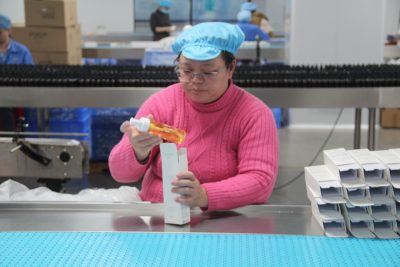
Selecting the right anti-aging serum OEM manufacturer is the most consequential decision a skincare brand can make. It is not merely a vendor transaction but the formation of a strategic alliance. The ideal partner combines the soul of a scientist, the rigor of a quality controller, the foresight of a trend analyst, and the dedication of a true business partner. They empower you to bring a product to market that is not just another serum, but a credible, effective, and innovative solution that stands the test of time in a crowded marketplace.
By prioritizing advanced R&D, uncompromising quality assurance, transparent communication, and a shared vision for the future of skincare, you lay the foundation for a brand that doesn’t just promise younger-looking skin, but delivers it—batch after trusted batch. Begin your vetting process with depth, ask the critical questions outlined here, and choose a manufacturer that is invested in making your anti-aging vision a remarkable and commercially viable reality.