
Introduction: Why China is the Premier Choice for Global Cosmetics Manufacturing
China has emerged as a core hub for global cosmetics manufacturing, occupying a critical position in the worldwide supply chain. Statistics indicate that China’s cosmetics market scale exceeds 600 billion RMB, with a sustained annual growth rate of around 12%. For brand owners, selecting the right Chinese manufacturer is not only about cost control but also directly impacts product quality, compliance, and market success. However, facing thousands of manufacturers claiming to be “professional,” making an informed choice becomes a key challenge. This article will provide an in-depth analysis of comprehensive best practices for selecting a cosmetics manufacturer in China, offering systematic guidance from screening to collaboration.
The complexity of China’s cosmetics manufacturing industry lies in its multi-tiered structure: from large-scale ODM/OEM enterprises meeting international standards, to medium-sized factories specializing in niche segments, down to small workshops driven primarily by low cost. Understanding the operating principles of this ecosystem is the first step to establishing a successful supply chain. This guide will help you avoid common pitfalls and build long-term, stable, and high-quality partnerships.
I. Comprehensively Assessing Manufacturer Compliance and Certification Qualifications
Understanding China’s Cosmetics Regulatory Framework
Since January 1, 2021, China has implemented the new “Cosmetics Supervision and Administration Regulations,” marking a comprehensive upgrade of the regulatory system. A compliant manufacturer must hold a “Cosmetics Production License,” and the license should clearly indicate the categories of cosmetics it is approved to produce. It is important to note that China classifies cosmetics into two major categories: special-use cosmetics and general cosmetics, with significantly different approval processes and regulatory requirements.
When selecting a manufacturer, the first step is to verify whether its production license is valid and whether its permitted scope covers your product type. The authenticity of the license can be checked via the National Medical Products Administration (NMPA) official website. Furthermore, since 2022, all filings for domestic general cosmetics must be completed through the new registration and filing platform. Manufacturers should be familiar with this process and able to demonstrate successful case histories.
Dual Consideration of Key International Certifications and China-Specific Standards
In addition to China’s local GMPC (Good Manufacturing Practice for Cosmetics) certification, the internationally recognized ISO 22716:2007 is an important standard for measuring a cosmetics manufacturer‘s quality management level. Excellent manufacturers typically hold multiple certifications simultaneously: ISO 9001 Quality Management System, ISO 14001 Environmental Management System, and certifications for specific markets like HALAL for halal cosmetics or Kosher certification.
However, certifications alone are just the starting point. In-depth assessment should focus on the practical implementation of these certifications: request to see the non-conformities and corrective actions from the most recent audit report; inquire about the frequency of internal audits and the quality control process; understand the employee training system and record-keeping practices. Truly professional manufacturers will proactively showcase their quality control laboratories, microbial testing capabilities, and stability testing equipment.
II. Deep Evaluation of Production Capabilities and Quality Control Systems
On-Site Verification of Production Facilities and Technical Level
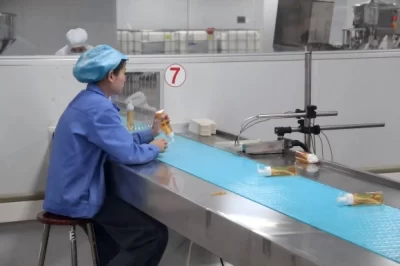
“Seeing is believing” is particularly important when selecting a manufacturer. Even if an in-person visit is constrained by distance, request a virtual factory audit via live video. Focus on the following key facilities: production workshops with cleanliness levels of 100,000 grade or higher, automated filling lines, temperature and humidity control systems for raw material and finished product warehouses, and water treatment systems (especially for products claiming to be “preservative-free”).
Advanced manufacturers have begun integrating smart manufacturing technologies: MES (Manufacturing Execution Systems) to track the entire production process; ERP systems to manage the supply chain; some leading companies even employ AI visual inspection for product defects. Inquire about the manufacturer’s equipment renewal cycle and the proportion of R&D investment, as this reflects their long-term commitment and technical foresight.
End-to-End Quality Control from Raw Materials to Finished Products
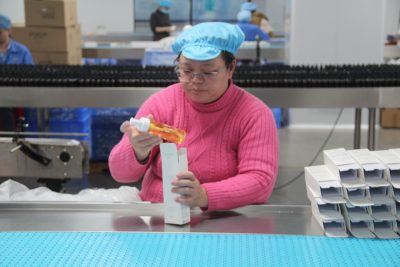
Quality control should not be merely final product inspection but should run through the entire production process. An excellent manufacturer should possess: 1) Strict raw material incoming inspection procedures, including supplier audits and verification of COA (Certificate of Analysis) for each batch; 2) Monitoring of in-process control points during production; 3) Comprehensive physical, chemical, and microbiological testing of finished products.
Pay special attention to the manufacturer’s control capabilities over lists of prohibited substances, such as strictly restricted hormones, antibiotics, and heavy metals in China. Request to see testing report templates and actual cases to understand how they handle non-conforming batches. Inquire about their cooperative relationships with third-party testing laboratories like SGS and Intertek, which enhances the objectivity of test results.
III. Assessing R&D Innovation Capability and Product Suitability
R&D Team Strength and Formulation Library Depth
An OEM/OEM factory’s R&D capability directly impacts product competitiveness. When evaluating the R&D team, look not only at the number of personnel and their educational background but also understand the diversity of their professional expertise: Does it cover multidisciplinary talents in cosmetic science, skin biology, chemical engineering, traditional Chinese medicine, etc.? The industry experience years of core R&D personnel and their past success cases are particularly crucial.
Request to see the scope and update mechanisms of the manufacturer’s formulation library. Leading manufacturers not only provide standard formulation options but can also develop customized formulations based on your needs. Inquire about their experience with new raw material applications, such as research on Chinese-characteristic plant ingredients or stabilization technologies for popular active ingredients (like hyaluronic acid, niacinamide, Vitamin A derivatives, etc.).
Ability to Realize Products from Concept
An excellent manufacturer should offer complete services from concept to shelf. Assess the maturity of their product development process: Do they conduct systematic market trend analysis? Do they have a standardized sensory evaluation system? Is packaging compatibility testing thorough? Does stability testing cover real-use conditions (like light exposure, temperature cycling, vibration, etc.)?
Pay special attention to the manufacturer’s ability to adapt to regulatory changes. For example, China has strict lists limiting sunscreen agents, hair colorants, etc. Does the manufacturer update formulations promptly to comply with new regulations? Can they provide product solutions that meet the requirements of multiple regions like the EU, US, and Southeast Asia? This flexibility is crucial for brands planning global expansion.
IV. Transparent Analysis of Supply Chain Stability and Cost Structure
Reliability and Sustainability of the Raw Material Supply Chain
The consistency of cosmetics quality highly depends on the stability of the raw material supply chain. Gain a deep understanding of the manufacturer’s raw material sourcing strategy: Are there backup suppliers for key ingredients? How do they manage supply chain risks (like natural disasters, trade policy changes)? For natural ingredients, is there a traceability system to ensure reliable sources?
Environmental and ethical considerations are increasingly important. Inquire whether the manufacturer prioritizes raw material suppliers certified by RSPO (Roundtable on Sustainable Palm Oil), ECOCERT, etc. Do they offer ethical options like “vegan” or “cruelty-free”? These factors not only affect brand image but may also be conditions for market access in some regions.
Understanding True Cost Composition and Pricing Models
“Low price” often hides risks. Request the manufacturer to provide a transparent cost breakdown: the proportion of raw material costs, calculation method for processing fees, basis for Minimum Order Quantity (MOQ), and cost-sharing mechanism for mold fees, etc. Be wary of manufacturers whose quotes are far below the industry average, as they may compromise on raw material quality, production conditions, or compliance.
A wise approach is to request tiered quotations for different order volumes and understand the key factors affecting costs: packaging complexity, formulation specificity, certification requirements, etc. Simultaneously, inquire about payment terms, delivery lead times, and breach of contract clauses, as these reflect the manufacturer’s business reputation and operational efficiency.
V. Communication Efficiency and Cultural Compatibility in Customer Service
Professional Support to Overcome Language and Cultural Barriers
Effective communication is the cornerstone of a successful partnership. Assess the manufacturer’s international business team: How fluent is the project manager in English (or your native language)? Do they understand the expectations and working styles of Western brand owners? Are communication channels diverse and responsive (WeChat, email, phone, video conferences, etc.)?
Cultural differences can lead to misunderstandings. Excellent manufacturers will proactively learn about the client’s cultural background and adapt to different decision-making styles and time perceptions. They should provide clear project timelines, offer regular progress updates, and proactively propose solutions rather than conceal problems when issues arise. Request to communicate directly with the core members of your future project team to gauge if communication flows smoothly.
After-Sales Support and Potential for Long-Term Collaboration
The manufacturer’s role should extend beyond just production. Assess their value-added service capabilities: Do they provide market trend consulting? Can they assist in preparing technical documentation to meet importing country requirements? Do they continue to provide stability monitoring support after product launch?
The potential for long-term collaboration deserves special attention. Inquire about the manufacturer’s capacity expansion plans and technology upgrade roadmap. If possible under confidentiality, visit their existing long-term partners or request reference letters. Observe their attitude when problems arise: Do they shirk responsibility or actively seek solutions? This cultural trait often determines how far the partnership can go.
VI. Key Steps for On-Site Audits and Final Decision-Making
Systematic Factory Audit Checklist and Execution
Regardless of distance, arranging an on-site audit is worth the investment. Prepare a comprehensive audit checklist covering: 1) Document and Record Review; 2) Facility and Equipment Inspection; 3) Production Floor Observation; 4) Employee Interviews; 5) Sample Evaluation. Pay special attention to easily overlooked details: Are production batch records complete and traceable? Is the cleaning validation procedure scientific? How are non-conforming products handled?
Arranging an unannounced audit or at least a surprise check of some areas better reflects daily management standards. Also, visit the manufacturer’s R&D center and testing laboratory to assess equipment utilization and maintenance status. Talk to frontline operators to understand their awareness and execution of quality standards.
The Decision-Making Value of Sample Testing and Small-Batch Trial Production
Before finalizing your decision, sample evaluation and small-batch trial production are essential. Sample testing should simulate real-use conditions and consider the environmental characteristics of the target market (e.g., enhanced stability testing for high-temperature, high-humidity regions). Besides lab tests, organizing sensory evaluations with real consumers is equally important.
Small-batch trial production (typically 30-50% of the MOQ) is the only reliable way to test the manufacturer’s large-scale production capability. Observe the manufacturer’s cooperation level, problem-solving ability, and time management during the trial run. Compare the quality consistency between trial products and samples to assess their process stability. This is a critical step to mitigate partnership risks and should not be omitted due to time pressure.

Conclusion: Building Long-Term Partnerships Based on Value, Not Just Price
Choosing a cosmetics manufacturer in China is a multi-dimensional strategic decision, extending far beyond simple price comparison. The most successful partnerships are built on mutual value recognition, transparent communication, and shared growth. As China’s cosmetics regulations become increasingly stringent and manufacturing technologies continue to advance, those manufacturers that prioritize compliance, invest in innovation, and adhere to quality will stand out.
A phased collaboration strategy is recommended: start with smaller orders and gradually expand the scope of cooperation. Conduct regular performance reviews and establish a continuous improvement mechanism based on Key Performance Indicators (KPIs). Ultimately, the most suitable manufacturer is not just a supplier but also the guardian of your brand’s product quality and a partner on the path of innovation.
In this rapidly changing industry, maintaining flexibility is crucial. Regularly re-evaluate your manufacturing partners to ensure they keep pace with your brand’s development. By following the best practices outlined in this article, you will significantly increase your chances of finding the ideal cosmetics manufacturer in China, establishing a solid and reliable supply chain foundation for your brand.