
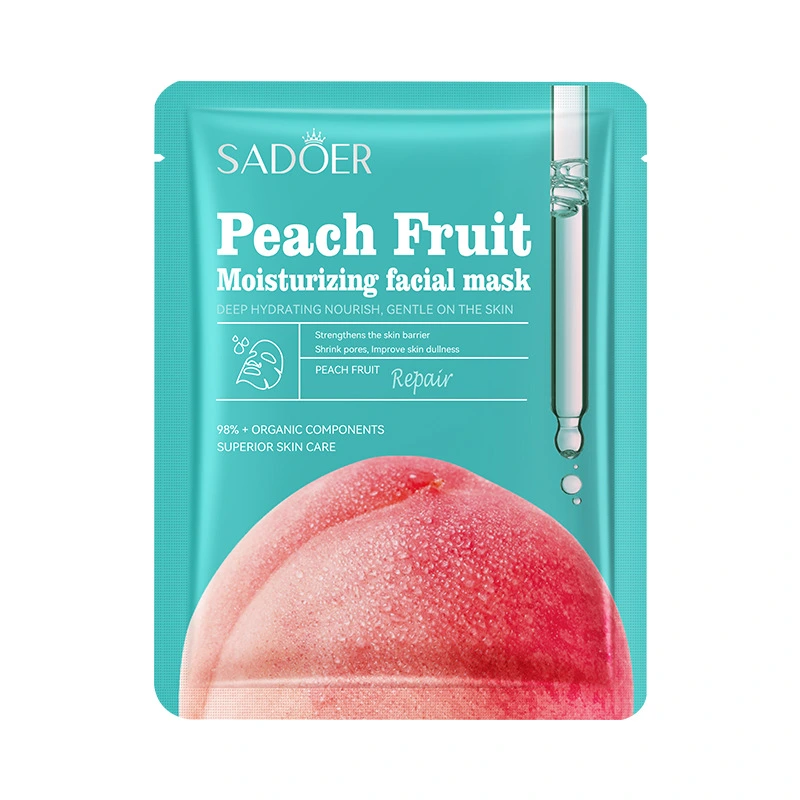
In the 2026 global beauty landscape, “Made in China” has completed its transformation from a low-cost manufacturing hub to a powerhouse of high-tech, high-efficiency, and high-compliance production. If you are searching for a Chinese cosmetics factory, you are not just looking for a supplier; you are seeking a strategic partner for supply chain optimization and R&D innovation.
This guide provides an in-depth analysis of the Chinese cosmetics manufacturing sector, helping your brand navigate the complexities of sourcing, compliance, and the latest technological trends.
1. Why Partner with a Chinese Cosmetics Factory in 2026?
China is currently the world’s second-largest cosmetics market and its most prolific production base. By 2026, the Chinese beauty manufacturing sector is projected to maintain a Compound Annual Growth Rate (CAGR) of $6.8\%$, driven by digital transformation and advanced biotechnology.
1.1 Unmatched Supply Chain Integration
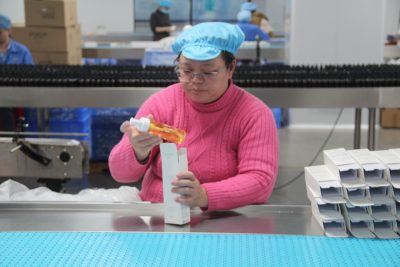
China boasts the world’s most complete cosmetics industrial chain. From raw material extraction and formula R&D to packaging design and container manufacturing, every step can be completed within a 50-kilometer radius in major hubs. This “cluster effect” allows factories to achieve record-breaking lead times—moving from concept to finished product in as little as 15 to 30 days.
1.2 R&D Transformation through Synthetic Biology
Leading factories in 2026 are no longer just “mixing ingredients.” By integrating Synthetic Biology and AI-driven formula simulation, Chinese factories are developing exclusive patented ingredients, such as recombinant collagen and novel botanical extracts. This allows brands to secure “exclusive formulas” with high barriers to entry rather than selling generic, homogenized products.
2. Core Industrial Clusters: Guangzhou vs. Shanghai
When sourcing a Chinese cosmetics factory, geography dictates your product’s positioning, cost structure, and speed to market.
2.1 Guangzhou (Baiyun District): The Hub of Agile Manufacturing
Guangzhou remains the epicenter of the industry, housing over half of China’s cosmetics enterprises.
-
Strengths: Extreme flexibility, lower Minimum Order Quantities (MOQs), and an incredibly dense ecosystem of packaging suppliers.
-
Best For: Fast-fashion beauty, E-commerce brands, and startups requiring rapid iteration.
2.2 Shanghai (Oriental Beauty Valley): High-End Science and Global Standards
Located in the Fengxian District, “Oriental Beauty Valley” is home to international giants and high-tech research facilities.
-
Strengths: Stringent quality control, focus on premium skincare, and sophisticated functional products. Many factories here operate their own dermatology labs.
-
Best For: Premium brands, clinical-grade skincare, and products requiring rigorous human efficacy testing.
3. Deep Dive into Business Models: OEM, ODM, and OBM
Choosing the right cooperation model is critical for balancing costs with brand control.
3.1 Navigating OEM and ODM Services
-
OEM (Original Equipment Manufacturer): The brand provides the formula and packaging; the factory handles production. Ideal for established brands with proprietary R&D.
-
ODM (Original Design Manufacturer): The factory provides a “one-stop” service, including formula R&D and packaging design. The brand simply adds its label. In 2026, this is the preferred route for most cross-border E-commerce brands.
3.2 The Rise of OBM and Micro-Customization
OBM (Original Brand Manufacturer) involves factories providing fully developed brand concepts ready for market. Furthermore, 2026 has seen the rise of “Micro-customization.” Brands can take a factory’s “hero formula” and tweak specific active ingredients or scents to create a unique product with minimal R&D risk.
4. Global Compliance: Your Passport to International Markets
In an era of tightening regulations, compliance is the most critical metric when auditing a Chinese cosmetics factory.
4.1 ISO 22716 and GMPC Certification
These are the fundamental requirements for entering the US and EU markets.
-
GMPC: Ensures the cleanliness of the production environment and the traceability of every batch.
-
ISO 22716: An international standard for Good Manufacturing Practices (GMP) specifically for the cosmetics industry.
4.2 Navigating NMPA, FDA (MoCRA), and EU Regulations
In 2026, top-tier Chinese factories act as regulatory consultants. They help you navigate:
-
US MoCRA: The Modernization of Cosmetics Regulation Act requires facilities to register with the FDA and provide serious adverse event reporting.
-
China NMPA: Stringent requirements for efficacy claims, often requiring third-party testing data.
5. How to Vet and Audit a Reliable Factory
Moving beyond Alibaba or Global Sources requires a systematic due diligence process.
5.1 Digital Screening and Background Checks
Before making contact, use the National Enterprise Credit Information Publicity System (China) to check for administrative penalties. Look for “High-Tech Enterprise” certifications and patent portfolios, which indicate a factory’s investment in innovation.
5.2 On-site Audit Checklist (Virtual or Physical)
If you cannot visit in person, request a live video tour focusing on these three areas:
-
Water Treatment System: Since cosmetics are $70\%-90\%$ water, the grade of the RO (Reverse Osmosis) deionized water system is paramount.
-
Emulsification Workshop: Are they using vacuum emulsifiers? Is the air quality at Class 100,000 cleanroom standards?
-
Sample Retention Room: Do they keep samples of every batch for at least three years? This is the core of quality dispute resolution.
6. Key Trends in Beauty Manufacturing for 2026
To stay competitive, your manufacturing partner must be aligned with these two major shifts.
6.1 Clean Beauty and Sustainable Manufacturing
-
Waterless Formulations: Reducing preservatives and lowering the carbon footprint of shipping.
-
Eco-friendly Packaging: Factories now offer PCR (Post-Consumer Recycled) plastics, sugarcane-based tubes, and mushroom-based secondary packaging.
6.2 Skin Pharmacology and Efficacy Evidence
Consumers in 2026 demand “Science-First” beauty.
-
In-house Efficacy Testing: Leading factories now offer VISIA image analysis and Transepidermal Water Loss (TEWL) testing to prove that a cream actually hydrates or reduces wrinkles.
-
Encapsulation Technology: Using liposomes to ensure unstable ingredients like Retinol or Vitamin C remain active until they penetrate the skin barrier.
7. Cost Structures: Getting a Competitive Quote
Understanding the math of cosmetics production helps in negotiations.
7.1 The Pricing Formula
The price of the formula is usually quoted per kilogram (kg). The percentage of “hero ingredients” (e.g., Pro-Xylane, Peptides) is the primary variable in price fluctuations.
7.2 Negotiating MOQs in 2026
While standard MOQs used to be 5,000+ units, the rise of Flexible Manufacturing has changed the game. Many factories now support “Small Batch, Quick Turnover” models, allowing MOQs as low as 1,000 units for specialized formulas, enabling brands to test the market with less capital risk.
8. The Future: AI and Personalized Manufacturing
AI is no longer a buzzword; it is a tool used daily by the modern Chinese cosmetics factory.
8.1 AI-Driven Formula Discovery
By analyzing global skin-type data and trending ingredient interactions, AI helps factories generate thousands of stable formula variations in seconds, drastically shortening the traditional R&D cycle.
8.2 Transparency via Blockchain and Digital Labels
In 2026, many factories utilize QR-coded digital labels. Consumers can scan a product to see the origin of raw materials, the production date, and the quality inspection report—providing the ultimate transparency that builds brand trust.
Conclusion
Selecting a Chinese cosmetics factory is a move toward technical symbiosis. From the efficiency of Guangzhou to the high-end R&D of Shanghai, and from traditional OEM to AI-driven personalization, the Chinese manufacturing sector is leading the global beauty frontier.
Are you ready to build your next viral beauty brand?
I can help you with the following next steps:
-
Would you like me to draft a Professional Request for Quotation (RFQ) email to send to potential factories?
-
Or, would you like a Specific Formulation Brief