
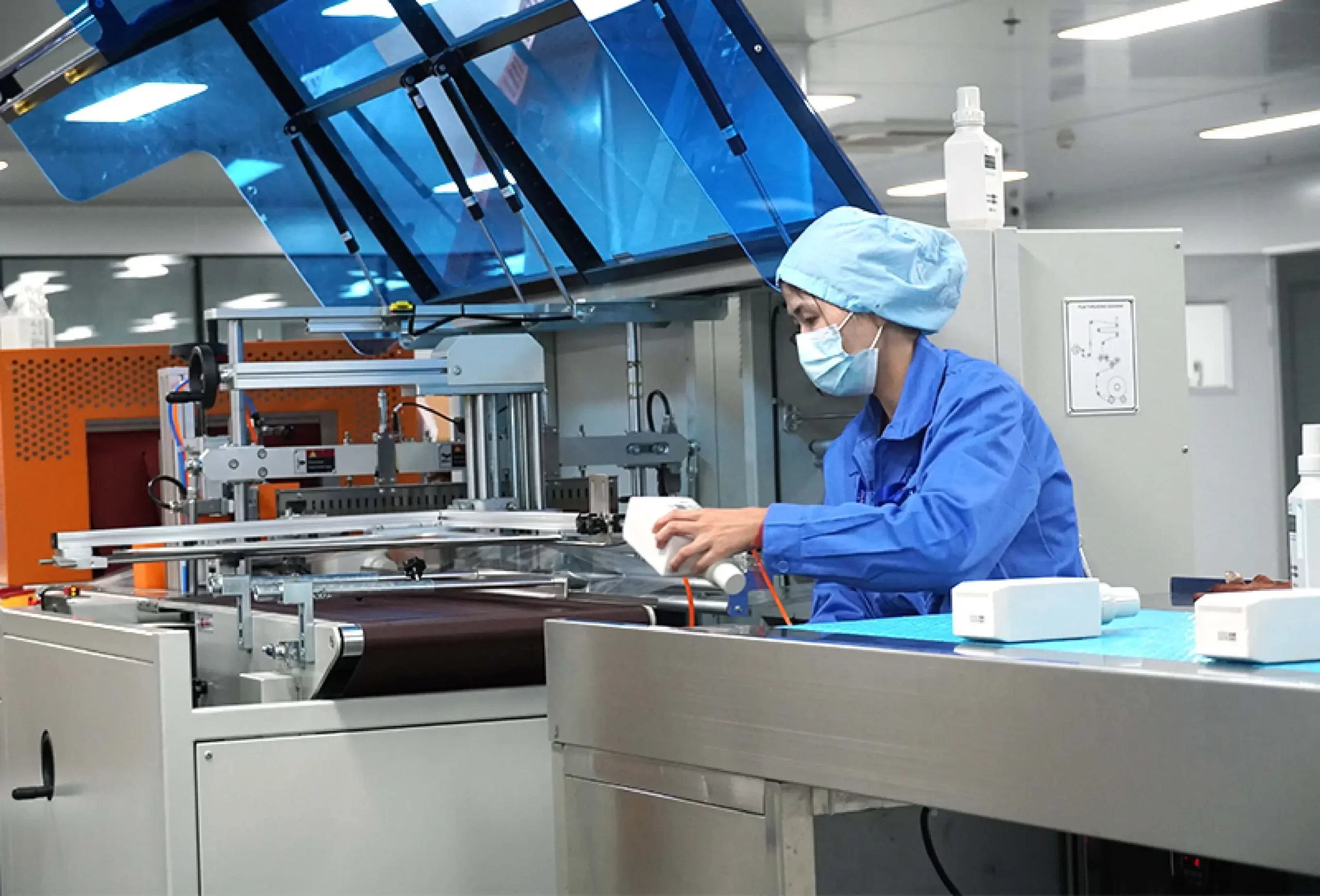
Deciding between in-house production or outsourcing? This in-depth guide analyzes why partnering with a cosmetics manufacturer (OEM/ODM) is the key to scaling your brand. Featuring cost-benefit tables, R&D insights, and time-to-market comparisons.
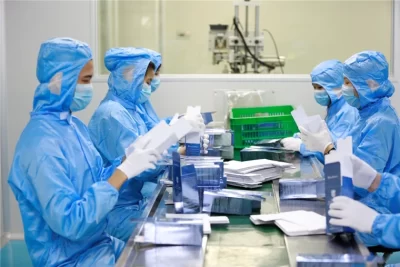
n today’s hyper-competitive global beauty market, brand founders face a classic strategic dilemma: Should you invest millions in building your own factory to control every aspect of production, or should you leverage the infrastructure of an established cosmetics manufacturer?
For 90% of growing and even mature beauty brands, the answer is becoming increasingly clear. Choosing the right partner is not just about “making products”—it is a sophisticated business strategy. It is no longer simple outsourcing; it is about asset allocation efficiency, acquiring technological moats, and market responsiveness. This article explores why selecting a professional cosmetics manufacturer is your best path to a market breakthrough.
Core Advantage: Achieving Asset-Light Operations through OEM/ODM Models
In the early and middle stages of brand development, cash flow is the lifeblood of the enterprise. Building a factory requires massive Capital Expenditure (CAPEX), which often drains the budget needed for marketing and channel expansion. Choosing a manufacturer essentially converts fixed costs into variable costs.
CAPEX vs. OPEX: A Deep Dive into Manufacturing Costs
To visualize the financial impact of these two models, we have compiled a comparison table. This helps CEOs and Founders evaluate capital efficiency.
| Dimension | In-House Manufacturing | Professional Manufacturer (Outsourced) | Business Impact Analysis |
| Initial Capital Investment (CAPEX) | Extremely High (Equipment, Land, GMP Cleanrooms) | Minimal (Only initial deposit/inventory costs) | Frees up millions in cash for customer acquisition and branding. |
| Fixed Operating Costs (OPEX) | High (Labor, Utilities, Maintenance regardless of orders) | Low (Pay-per-unit, no orders = no cost) | Significantly lowers the “death risk” during market downturns. |
| Compliance & Certification | Must apply for ISO, GMP, and Environmental permits (6–12 months) | Plug-and-play; utilize the factory’s existing global certifications. | Saves immense time and legal consultancy fees. |
| Supply Chain Scalability | Low (Limited by physical capacity of owned machines) | High (Ability to tap into unused production lines) | Essential for handling sudden viral spikes or “Black Friday” demand. |
Focus on Core Competencies: Marketing and Brand Equity
The essence of business is specialization. A beauty brand’s core asset is usually not the production line, but the consumer’s mindshare (Brand Equity).
When a brand tries to be both the “referee and the athlete,” management’s focus becomes fragmented. You end up managing raw material procurement and labor disputes instead of consumer insights. By choosing an OEM/ODM model, you offload the complex backend and allow your team to focus on:
-
Market Insights: Identifying the next Gen Z skincare trend.
-
Brand Narrative: Crafting compelling stories that resonate.
-
Channel Expansion: Dominating TikTok Shop or Sephora retail shelves.
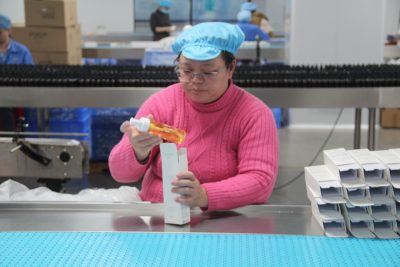
Technology and R&D: Leveraging the Manufacturer’s Intellectual Moat
A common misconception is that outsourcing means a lack of innovation. On the contrary, top-tier cosmetics manufacturers are often the “hidden champions” of industry technology, possessing R&D capabilities that far exceed those of a single brand.
H3: Strategic Choice: OEM vs. ODM Models
Choosing the right partnership model is critical to your brand’s DNA. The following table breaks down the differences and ideal use cases.
| Feature | OEM (Original Equipment Manufacturer) | ODM (Original Design Manufacturer) | Hybrid Model |
| Definition | Brand provides the formula; Factory produces it. | Factory provides the formula/design; Brand adds labels. | Use factory base formula + brand-exclusive active ingredients. |
| R&D Investment | High (Brand needs internal chemists). | Zero (Utilize factory’s existing R&D). | Moderate (Balance of unique IP and cost). |
| Speed to Market | Slower (Full testing required). | Extremely Fast (Proven, ready-to-go formulas). | Moderate. |
| Intellectual Property (IP) | Owned by the Brand. | Usually owned by the Factory. | Shared or defined by contract. |
| Best For | Established brands with secret proprietary formulas. | Startups, influencers, or fast-fashion makeup brands. | Emerging brands looking for “unique” yet stable products. |
Global Compliance and Market Access
Global cosmetics regulations are increasingly complex—from the EU’s CPSR to the USA’s FDA MoCRA. Professional manufacturers have dedicated Regulatory Affairs departments that ensure:
-
Formula Safety: Automatic screening for banned substances.
-
Documentation: Providing full PIF files, MSDS, and COA.
-
Export Readiness: Ensuring labels and ingredients meet the standards of the target country (e.g., NMPA for China or Halal for Southeast Asia).
Brand Growth Accelerator: Speed from Concept to Shelf
In the era of “Fast Beauty,” speed is survival. The brand that can transform a viral trend into a physical product the fastest wins the market share.
Product Development Lifecycle Comparison
Traditional in-house development can take 12 to 18 months. Utilizing a manufacturer’s Turnkey Solution can compress this significantly.
| Development Phase | In-House Team (Estimate) | Professional Manufacturer (Estimate) | Efficiency Logic |
| Concept & R&D | 3 – 6 Months | 2 – 4 Weeks | Use of existing “Formula Libraries.” |
| Ingredient Sourcing | 2 – 3 Months | 2 – 4 Weeks | Factories keep bulk stock of common actives (Hyaluronic acid, etc.). |
| Stability Testing | 3 Months (Mandatory) | 1 Month (or less) | Mature formulas already have historical stability data. |
| Regulatory Filing | 2 – 4 Months | 2 – 4 Weeks | Standardized processes with local authorities. |
| Total Time-to-Market | 10 – 16 Months | 3 – 6 Months | 60%+ Faster Launch |
How to Choose the Right Cosmetic Manufacturer? (The Audit Checklist)
Knowing “why” is the first step; knowing “how” to choose is where the success lies. Treat this as a partnership, not just a vendor relationship.
Manufacturer Capability Scorecard
When conducting a factory audit, use this scoring system to evaluate your potential partner.
| Evaluation Metric | Weight | Key Checkpoints | Ideal Standard |
| Certifications | 30% | GMPC, ISO 22716, FDA, Halal | Valid, up-to-date, and matching the production site. |
| Innovation (R&D) | 25% | Lab equipment (HPLC, Viscometers), No. of Patents | Launches 50+ new formulations per year. |
| Quality Control | 20% | Incoming inspection, in-line QC, Retention samples | Full batch traceability and microbiology labs. |
| Supply Chain Flex | 15% | MOQ (Minimum Order Quantity), Peak capacity | Supports small-batch testing (e.g., 1k-3k units). |
| Communication | 10% | PM responsiveness, English proficiency, transparency | 24-hour response time; proactive problem solving. |
Conclusion
Why choose a cosmetics manufacturer to promote brand growth? The answer lies in Efficiency and Leverage. In the modern business landscape, a successful brand is a resource orchestrator, not just a manufacturer.
By partnering with a professional manufacturer, you gain more than just a production line; you gain a robust backend system encompassing R&D, compliance, and global supply chain management. This allows your brand to remain agile, focusing every dollar of investment on the “Brand Lever” to achieve exponential growth.
Ready to accelerate your brand growth? Use the evaluation checklist above to find a strategic partner who truly understands your vision.
Recommended Next Step
Would you like me to generate a “Standard Operating Procedure (SOP) for First-Time Manufacturing Partnerships”? This would include specific email templates for RFQs (Request for Quotes) and the legal clauses you must include in your Manufacturing Agreement to protect your Brand IP.