
In the global beauty ecosystem, the role of a cosmetics manufacturer in China has undergone a tectonic shift. Once viewed primarily as “low-cost workshops,” these entities have evolved into “global innovation hubs,” offering international brands everything from advanced biotechnological R&D to hyper-flexible supply chain empowerment.
For beauty brands aiming for success in 2026 and beyond, understanding the deep-seated value of Chinese manufacturing is the key to unlocking premium positioning and rapid market expansion.
1. The Industrial Cluster Effect: Moving from “Supply Chain” to “Value Chain”
The prowess of China’s beauty manufacturing lies not just in the sheer volume of factories, but in the sophisticated maturity of its industrial clusters.
Guangzhou and Shanghai: The Dual-Core Innovation Engines
The Pearl River Delta (centered in Guangzhou’s Baiyun District) and the Yangtze River Delta (centered around Shanghai’s “Oriental Beauty Valley”) form the two poles of Chinese cosmetic production. The Guangzhou cluster is renowned for its extreme turnover efficiency and comprehensive ecosystem (packaging, raw materials, logistics), making it ideal for fast-paced color cosmetics. Meanwhile, the Shanghai cluster attracts global talent and leads in high-end skincare R&D and international regulatory compliance.
Empowering Startups via Agile Manufacturing
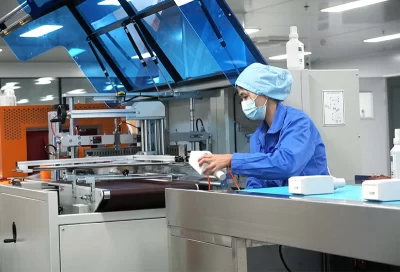
Modern Chinese manufacturers have shattered the constraints of traditional mass production. By implementing flexible production lines, many industry leaders now support the “small-step, fast-run” model. This allows brands to test the market with low Minimum Order Quantities (MOQs) and rapidly restock based on real-time sales data. This agility serves as an “asymmetric weapon” for startups competing against global conglomerates.
2. Generational Leaps in R&D: Functional Skincare and Synthetic Biology
Today’s cosmetics manufacturer in China is investing heavily in scientific research, aiming to lead from the level of foundational molecular logic.
Applications of Synthetic Biology in Raw Materials
China is at the forefront of synthetic biology. Many manufacturers utilize bio-fermentation technology to mass-produce core ingredients such as Recombinant Collagen and Ergothioneine. These ingredients offer higher purity and superior transdermal absorption. By partnering with these facilities, brands can access exclusive patented ingredients, building a formidable “moat” in the functional skincare sector.
The Compliance Transition to Clean Beauty
In response to global sustainability trends, Chinese manufacturers have fully aligned with international standards regarding minimalist formulations, biodegradable packaging, and animal testing-free policies. Whether it is CPNP registration for the EU or FDA MoCRA requirements for the US, top-tier Chinese factories provide one-stop compliance services from formulation to final safety testing.
3. Core Advantage Analysis: China vs. Other Global Regions
To illustrate why global brands continue to pivot toward China, the following table provides a comprehensive comparative analysis:
Comprehensive Comparison of Global Cosmetic Manufacturing Hubs
| Metric | Cosmetics Manufacturer in China | European Manufacturers (Italy/France) | SE Asian Manufacturers (Vietnam/Thailand) |
| R&D Speed | Extreme (Sampling in 2-4 weeks) | Slower (2-3 months) | Moderate (4-6 weeks) |
| Cost Efficiency | Excellent (Economy of Scale) | High (Premium Pricing) | Low (But lacks ecosystem) |
| Tech Adoption | Leading (AI Formulas/Synthetic Bio) | Traditional (Craft-focused) | Basic (Processing only) |
| MOQ Flexibility | High (Supports Customization) | Low (Requires large scale) | Moderate |
| Supply Chain | Closed-loop (All-in-one) | Dispersed (Cross-border sourcing) | Fragmented (Import dependent) |
4. Quality Control Systems: Building a Fortress of Trust
Quality is the bedrock of brand equity. Premier Chinese manufacturers now invest in Quality Assurance (QA) and Quality Control (QC) at levels comparable to pharmaceutical standards.
Standardized Production via International Dual Certification
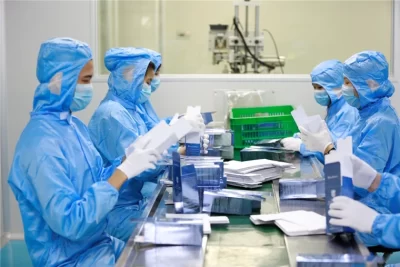
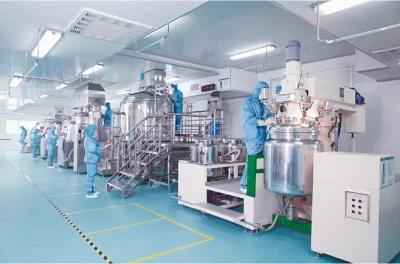
Most export-oriented Chinese factories hold both ISO 22716 and GMPC certifications. This ensures that every step—from raw material entry to filling and sealing—occurs in temperature-controlled, dust-free, and fully traceable environments. This rigor ensures product stability regardless of whether the final destination is the freezing climate of North America or the humid heat of Southeast Asia.
The Rise of the Digital “Transparent Factory”
Leading manufacturers have digitalized their production lines in real-time. Brand owners can now use remote monitoring systems to check production progress, microbial test results, and packaging waste rates. This transparency grants brands unprecedented control over their offshore supply chain, fostering a partnership built on data rather than just promises.
5. Trend Forecasting: The Future of Beauty Manufacturing in 2026
Supplier Comparison: How the Main Options Stack Up
When brands evaluate strategic guide: how a cosmetics manufacturer in china can r suppliers, they tend to compare factory scale first and overlook the variables that actually decide whether a launch goes well. The table below weights the six factors we score, and shows where each type of supplier tends to win and lose.
| Factor | What good looks like | Large factory | Mid-size specialist | Small workshop |
|---|---|---|---|---|
| Formula flexibility | Adaptation without re-running a full R&D cycle | Low | High | High |
| Minimum order quantity | Low enough for a first commercial run | High | Low–medium | Low |
| Compliance documentation | Certificates and COAs match the legal entity | Strong | Adequate | Weak |
| Communication and lead time | Named contact, replies within 24 hours | Slow (multiple layers) | Fast | Fast but variable |
| Export experience | Ships to your destination market regularly | High | Medium | Low |
| Pricing at volume | Lowest per unit once MOQ is met | Best | Competitive | Not competitive |
Scale is not the same as fit. A mid-size specialist will usually beat a large factory on your first three production runs, because the commercial terms are set for brands rather than for corporate tender volume.
Want numbers for your own product? Send us your target category,
packaging preference and estimated annual volume, and we will come back with a written quotation and MOQ options —
usually within one business day.
Choosing a forward-thinking cosmetics manufacturer in China means gaining access to a “market intelligence station.”
Integrating C-Beauty Aesthetics with Global Trends
Chinese manufacturers possess an innate talent for capturing trends on social platforms like TikTok and Instagram. From pH-changing lipsticks to freeze-dried powder technology, Chinese factories are often the first to iterate on viral prototypes. By co-creating with them, brands can merge the “skin-nourishing” philosophy of Eastern beauty with the high-efficacy ingredients of the West.
Sustainability and Green Energy Integration
As carbon neutrality goals advance, more Chinese factories are adopting solar power and closed-loop water systems. Offering PCR (Post-Consumer Recycled) plastics and FSC-certified paper has become a standard configuration. Partnering with such suppliers directly improves a brand’s ESG (Environmental, Social, and Governance) score, winning over the increasingly eco-conscious Gen Z and Alpha demographics.
Conclusion: A Strategic Partner, Not Just a Vendor
When searching for a cosmetics manufacturer in China, brands must move beyond a “price-only” mindset. The goal is to identify a strategic partner capable of providing R&D premiums, regulatory security, and trend-driven insights. The depth, breadth, and velocity of China’s beauty manufacturing sector are the secret weapons for any brand seeking exponential growth in the global arena.