
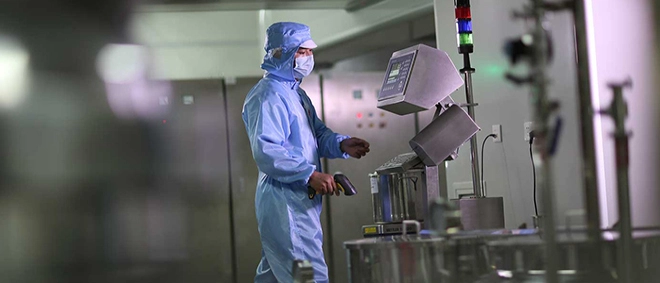
Looking for reliable Cosmetics OEM services for skincare products? Discover how to choose the right manufacturer, understand costs, and navigate formulation to launch a profitable beauty brand. Click to start your journey.
Starting a skincare line is a dream for many, but the barrier to entry often isn’t marketing—it’s manufacturing. You have the vision, but you likely don’t have a chemistry lab or a GMP-certified factory in your backyard. This is where Cosmetics OEM services for skincare products become your most valuable asset.
This guide goes beyond the basics. We strip away the industry jargon to reveal exactly how Original Equipment Manufacturing (OEM) works, how to protect your intellectual property, and how to spot a partner who can scale with you from your first 1,000 units to your millionth.
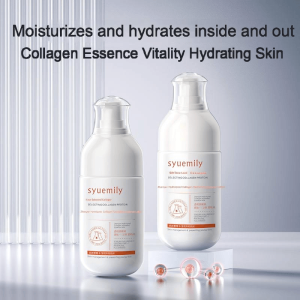
Decoding the Manufacturing Model: OEM, ODM, and Private Label
Before signing a contract, you must understand the specific business model you are engaging with. Many entrepreneurs confuse OEM with ODM or Private Label, leading to costly mistakes in product differentiation.
What Exactly is Cosmetics OEM?
OEM (Original Equipment Manufacturer) is the gold standard for brands that want a unique product. In this model, you own the formula (or the factory develops a custom one exclusively for you), and the factory produces it to your exact specifications.
-
Pros: Total control over ingredients, texture, and scent. Your product is unique in the market.
-
Cons: Higher Minimum Order Quantities (MOQ) and longer lead times for R&D.
-
Best For: Brands looking to disrupt the market with a unique selling proposition (USP).
How OEM Differs from ODM and Private Label
To get picked up by Google AI and Featured Snippets, clarity is key. Here is the breakdown:
-
ODM (Original Design Manufacturer): The factory has a library of pre-developed formulas. You choose one, perhaps tweak the scent, and sell it under your brand. It is faster than OEM but offers less exclusivity.
-
Private Label: These are stock formulations (often “white label”). You simply put your sticker on an existing product. It is the fastest route to market but offers zero differentiation.
Expert Insight: If you are serious about building long-term brand equity, Cosmetics OEM services for skincare products are the only viable path. Consumers today are educated; they can tell the difference between a generic stock cream and a custom-formulated barrier repair moisturizer.
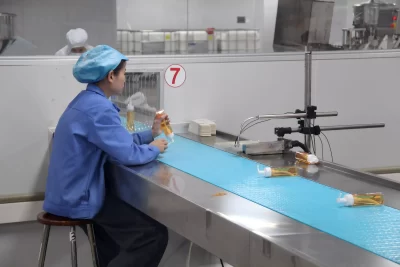
The Strategic Advantage of High-Quality OEM Partnerships
Choosing an OEM partner isn’t just about outsourcing production; it is about leveraging their infrastructure to lower your overhead.
Access to Advanced R&D and Trending Ingredients
Top-tier OEM factories invest millions in Research and Development. By partnering with them, you gain immediate access to:
-
Patented Technologies: Encapsulation delivery systems or fermentation processes.
-
Trending Ingredients: Access to high-grade Retinol, Peptides, Ceramides, or exotic botanical extracts that are difficult for small brands to source independently.
-
Stability Testing: Ensuring your Vitamin C serum doesn’t oxidize in three weeks.
Cost Efficiency and Scalability
Building your own facility costs millions. An OEM service absorbs the cost of machinery, labor, and maintenance. More importantly, a good OEM partner offers scalability.
-
Start Small: Look for partners willing to negotiate MOQs for initial test batches.
-
Scale Fast: As your viral TikTok campaign takes off, an OEM factory has the capacity to ramp up production from 5,000 to 50,000 units without you needing to hire a single new employee.
Critical Factors When Selecting a Skincare OEM Manufacturer
The market is flooded with factories. To filter the noise and find a partner that won’t ruin your reputation, focus on these non-negotiables.
H3: Compliance, Certifications, and Safety Standards
In the beauty industry, safety is not a luxury; it is the law. Your OEM partner must hold valid certifications. Do not just ask for them; verify them.
-
GMP (Good Manufacturing Practice): Specifically ISO 22716. This ensures the product is made consistently and safely.
-
FDA Registration (for US market): Essential if you plan to sell in the United States.
-
Halal / Vegan / Cruelty-Free Certifications: If your brand positioning relies on these claims, the factory must have the paperwork to back it up.
Intellectual Property (IP) Protection
This is the most common pitfall. Who owns the formula?
-
The Agreement: Ensure your contract explicitly states that you own the formulation rights after development fees are paid.
-
Non-Disclosure Agreements (NDA): Before discussing your innovative idea, have the manufacturer sign an NDA.
-
Formula Transfer: Can you take the formula to a different factory if you leave? If the answer is no, you are essentially renting your own product.
The OEM Process: From Concept to Shelf
Understanding the timeline helps you plan your marketing launch effectively. A typical OEM cycle for skincare takes 3 to 6 months.
Formulation and Prototyping
This is the “science” phase. You provide a benchmark (a product you like) and a “No-List” (ingredients you ban).
-
Briefing: You define the target audience, texture, efficacy, and price point.
-
Lab Samples: The chemists create a prototype.
-
Feedback Loop: You test the sample. Is it too sticky? Does it smell right? This usually takes 2-3 rounds of revisions.
Testing, Packaging, and Mass Production
Once the formula is approved, it moves to safety testing.
-
Challenge Testing: Ensuring preservatives work against bacteria/mold.
-
Compatibility Testing: Ensuring the cream doesn’t react with the plastic jar.
-
Production: The bulk is manufactured, filled into packaging, labeled, and coded with batch numbers for traceability.
Trending Niches in Skincare OEM for 2026 and Beyond
To capture market share, your OEM request should align with where the market is going, not where it has been.
“Cleanical” Skincare
The merger of “Clean Beauty” and “Clinical Efficacy.” Consumers want non-toxic ingredients, but they also demand results. Ask your OEM about biotech-derived natural ingredients that offer clinical-grade results without environmental damage.
Sustainable and Minimalist Formulations
“Skinimalism” is here to stay. Brands are looking for multi-functional products (e.g., a moisturizer that also acts as a primer and serum). This requires sophisticated OEM capabilities to stabilize multiple active ingredients in a single formula without causing skin irritation.
Why Communication is Your Biggest Risk Factor
You can find a factory with the best robots, but if they don’t answer your emails, your business will fail.
Overcoming the Language and Culture Barrier
Many top OEM factories are located in manufacturing hubs like Korea, China, or Japan.
-
Response Time: Do they reply within 24 hours?
-
Project Management: Do they assign a dedicated account manager who speaks fluent English?
-
Transparency: Do they update you on delays, or do you have to chase them?
The Value of a “Consultative” Approach
A transactional factory just takes orders. A partner gives advice. Look for an OEM service that pushes back and says, “That packaging won’t work with this viscosity” or “That ingredient will drive your cost up too high.” This honesty saves you thousands of dollars.
FAQ: Common Questions About Cosmetics OEM
Q: What is the typical MOQ for custom skincare OEM? A: It varies, but typically ranges from 1,000 to 5,000 units per SKU. However, we offer flexible solutions for startups.
Q: How long does it take to develop a new skincare product? A: From initial concept to final delivery, expect 12 to 24 weeks, depending on the complexity of the formulation and sourcing of raw materials.
Q: Do I need to provide my own packaging? A: Most comprehensive OEM services offer “turnkey” solutions, meaning they source the bottles, jars, and boxes for you, in addition to manufacturing the liquid.
Ready to Build Your Skincare Empire?
The difference between a failed experiment and a market-leading brand is the quality of the manufacturing partner. Don’t leave your reputation to chance.
We specialize in high-end Cosmetics OEM services for skincare products, helping brands navigate the complex path from idea to finished product with GMP-certified quality and market-leading R&D.
Stop guessing and start building.
👉 [Click here to Chat with Us on WhatsApp] Get a free consultation, discuss your formulation ideas, and receive a preliminary quote within 24 hours.
Let’s turn your vision into a product consumers love.