
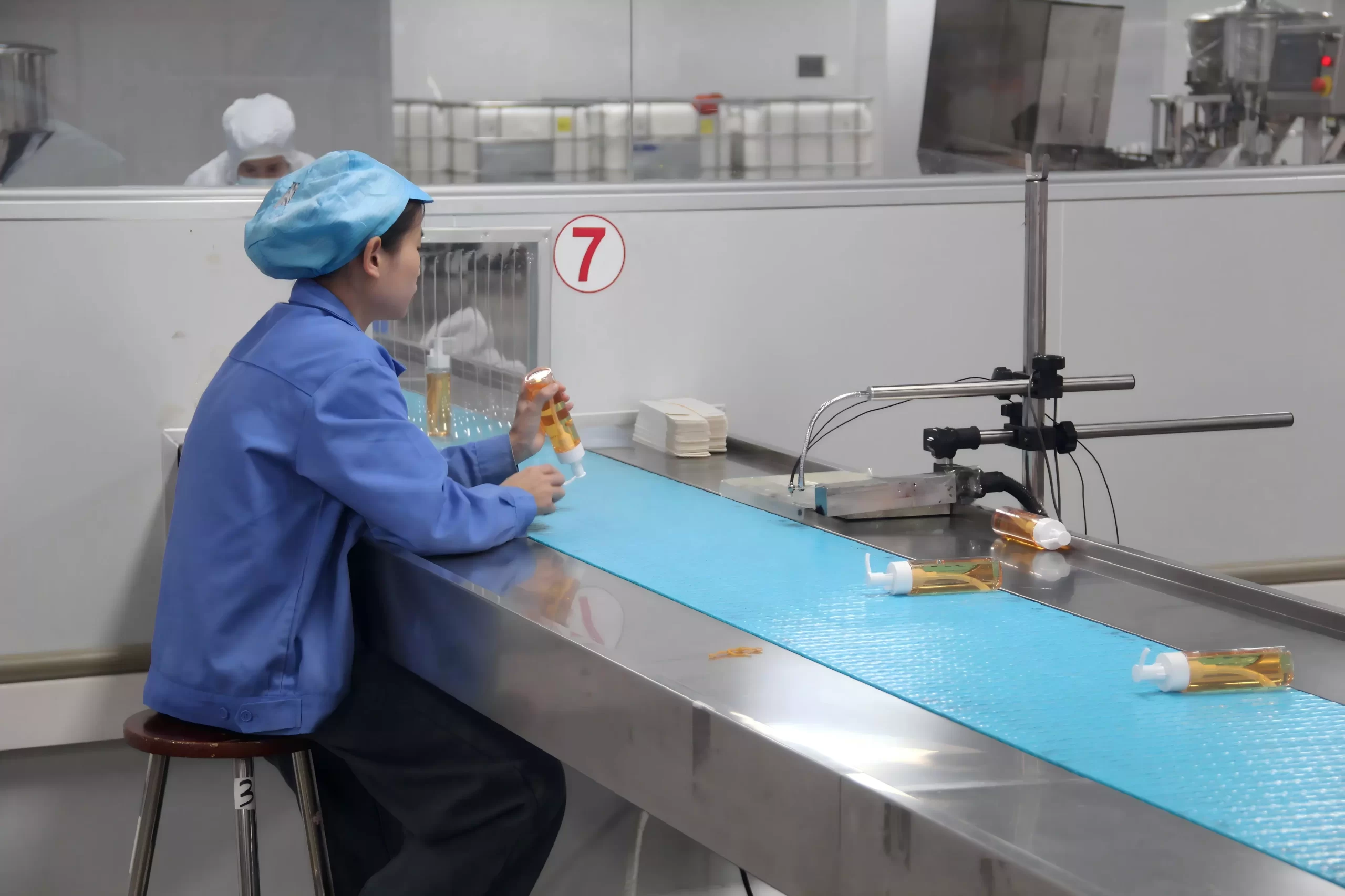
In the rapidly evolving beauty industry, the label “Made in China” has undergone a massive transformation. Today, a Chinese cosmetics factory is no longer just a low-cost manufacturing site; it is a hub of R&D innovation, sustainable packaging, and high-tech automation. Whether you are an indie brand founder or a global procurement manager, understanding the nuances of the Chinese manufacturing landscape is the key to scaling your brand profitably.
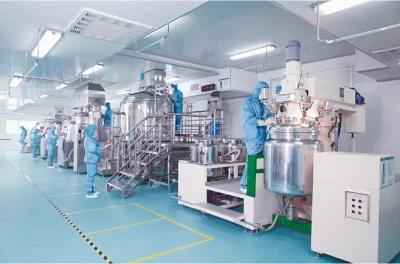
1. The Strategic Advantage of Partnering with a Chinese Cosmetics Factory
The global beauty market moves fast. China’s manufacturing ecosystem allows brands to go from “concept to shelf” in record time.
Unmatched Supply Chain Integration
One of the primary reasons to choose a Chinese cosmetics factory is the geographical clustering of the supply chain. In regions like Guangzhou (Baiyun District) and Zhejiang, a factory is often within a 30-minute drive of its packaging suppliers, raw material labs, and logistics providers. This proximity reduces lead times and allows for highly competitive pricing.
Advanced R&D and Formulation Capabilities
Modern Chinese factories invest heavily in “Clean Beauty” and “Science-backed” formulations. Many top-tier manufacturers now employ PhD-level chemists to develop patented ingredients, such as specialized peptides or fermented botanical extracts, giving your brand a unique selling proposition (USP) in a crowded market.
2. Navigating Quality Standards and Global Compliance
The biggest hurdle for international buyers is ensuring that products meet the regulatory standards of their home markets (FDA, EU, etc.).
Certifications You Must Verify
When auditing a Chinese cosmetics factory, the “Big Three” certifications are non-negotiable:
-
ISO 22716: The international standard for Good Manufacturing Practices (GMP) for cosmetics.
-
GMPC: Specifically tailored for the US and European markets.
-
BSCI/Sedex: Essential for ethical sourcing and social responsibility audits.
Ingredient Transparency and Testing
A high-quality factory will provide a comprehensive COA (Certificate of Analysis) for every batch. Furthermore, they should offer stability testing, challenge testing (for preservatives), and heavy metal analysis. If you are targeting the EU, ensure the factory is familiar with the Product Information File (PIF) requirements and can assist with CPNP registration.
3. How to Identify a High-Tier Manufacturer vs. a Trading Company
In your search for a “Chinese cosmetics factory,” you will encounter many middleman entities. While trading companies have their place, direct factory partnerships usually offer better margins and customization.
The “On-Site” Audit Checklist
If you cannot visit in person, request a live video tour via WhatsApp. Look for:
-
Cleanroom Standards: Are they operating in Class 100,000 (ISO 8) cleanrooms?
-
Automated Equipment: Do they use robotic filling machines or manual labor? High-end factories use automation to ensure consistency in filling weights and airless packaging.
Evaluating OEM vs. ODM Services
-
OEM (Original Equipment Manufacturer): You provide the formula; they provide the labor and equipment.
-
ODM (Original Design Manufacturer): They provide the “turnkey” solution—formula, packaging, and design. For new brands, ODM is often the fastest route to market, leveraging the factory’s pre-tested, “off-the-shelf” formulas.
4. Emerging Trends in Chinese Cosmetic Manufacturing for 2026
To stay ahead of the curve, you need a partner that understands where the industry is heading.
Sustainable and Waterless Beauty
Sustainability is no longer optional. Leading Chinese factories are now offering biodegradable packaging (PLA, Bamboo) and “Waterless” formulations (balms and powders) to reduce carbon footprints and shipping weights.
AI-Driven Customization
Some advanced factories are integrating AI to help brands predict color trends or analyze consumer data to suggest the next viral product. Ask your potential partner if they utilize AI in their R&D or trend forecasting processes.
5. Overcoming Communication Barriers and Logistics
The success of your partnership depends on clear communication and a robust “Paper Trail.”
Mastering the Sample Iteration Process
Never settle for the first sample. A professional Chinese cosmetics factory expects 2–4 rounds of revisions. Be specific with your feedback: “Increase the viscosity by 10%” or “Reduce the synthetic fragrance by 0.5%.” Precise language prevents costly production errors.
Managing Lead Times and Shipping
Standard lead times in China are typically 25–45 days after deposit and design confirmation. However, factor in “Golden Week” holidays and the Chinese New Year, which can shut down production for weeks. Always ask for a Production Timeline Chart before signing a contract.
6. Why “Cheap” Can Be Expensive: Avoiding Common Pitfalls
While China offers cost advantages, chasing the lowest possible price often leads to “Quality Fade.”
The Danger of “Quality Fade”
This occurs when the initial samples are perfect, but the mass production batch uses cheaper surfactants or diluted actives. To prevent this, hire a third-party inspection agency (like QIMA or SGS) to perform a “During Production” (DUPRO) inspection.
Intellectual Property (IP) Protection
Ensure your contract includes an IP clause. If you have a proprietary formula, have the factory sign an NNN agreement (Non-use, Non-disclosure, Non-circumvention) specifically drafted under Chinese law to be enforceable.
Conclusion: Start Your Brand Journey Today
Finding the right Chinese cosmetics factory is the difference between a brand that struggles with returns and a brand that scales to seven figures. By prioritizing compliance, R&D capability, and clear communication, you can leverage China’s manufacturing power to build a world-class beauty empire.