
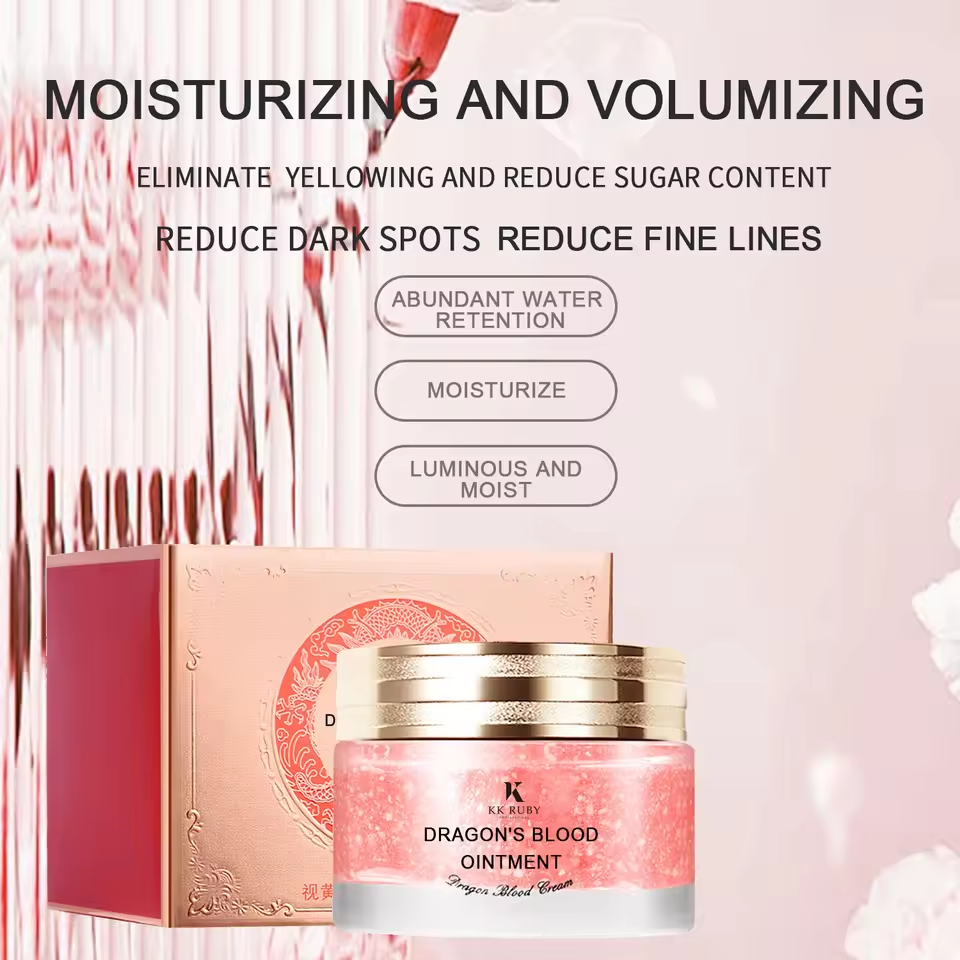
Within the global cosmetics supply chain, China is not only the “world’s factory” but also a rapidly rising hub of innovation and R&D. However, faced with thousands of manufacturers claiming to be “professional and reliable,” how can brands cut through the marketing noise and find a partner truly worthy of long-term trust? This decision is critical, impacting not just product success but also brand reputation and survival. This article provides a systematic, in-depth, and actionable framework to help you make an informed decision.
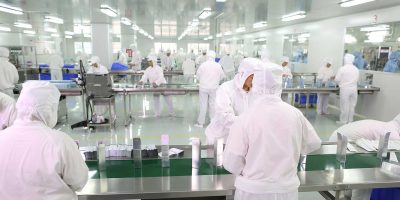
Understanding the Landscape of Cosmetics Manufacturing in China
China’s cosmetics manufacturing industry is not monolithic. It features significant regional variations, technological tiers, and business model differences. Understanding this macro landscape is the first step to avoid a fragmented view.
Analysis of Key Industrial Belts and Specialized Clusters
Cosmetics production in China is highly concentrated in several core regions, each with distinct characteristics:
-
The Pearl River Delta in Guangdong (Guangzhou, Shenzhen, Zhongshan, etc.): This is China’s largest base for cosmetics OEM/ODM, with an exceptionally complete supply chain. Its strengths are rapid response times, highly efficient supply chains, and flexible service, particularly excelling in large-scale production and fast adaptation for color cosmetics and skincare. It hosts all types of enterprises, from giants to small-medium factories, offering the most choices but also the most variable quality.
-
The Yangtze River Delta (Shanghai, Suzhou, Huzhou/Yiwu in Zhejiang): With Shanghai as the R&D leader, this region focuses more on mid-to-high-end products, biotechnology, and specialty ingredients. Companies here typically place greater emphasis on international standard certifications, possess stronger R&D capabilities, and often cater to domestic and international mid-to-high-end brands. The Zhejiang area is a global leader in packaging design and manufacturing.
-
Other Regions: Such as Shandong (advantages in some raw materials) and Fujian (detergents, personal care).
Actionable Advice: Preliminarily target regions based on your brand positioning and product specifics. For fast-iteration, cost-sensitive color cosmetics, focus on Guangdong. For mid-to-high-end brands emphasizing ingredient formulation and tech-driven skincare, pay more attention to R&D-focused enterprises in the Yangtze River Delta.
Market Evolution: The Leap from “Made in China” to “Intelligently Made in China”
In the past, “Made in China” was often associated with low cost and imitation. Today, leading manufacturers are transforming towards “Intelligently Made in China.” This evolution is evident in:
-
R&D Investment: Leading factories not only have GMP-standard production lines but also establish independent research institutes and laboratories. They collaborate with domestic and international universities and biotech companies, making in-depth advances in areas like synthetic biology, plant extraction, fermentation technology, and nano-delivery systems.
-
Compliance Awareness: Since the introduction of the new Cosmetics Supervision and Administration Regulations and related rules in 2021, the compliance threshold has risen significantly. Top manufacturers have made compliance capability a core competitive advantage, proactively assisting clients with product filing (registration) and providing full-chain raw material compliance reviews.
-
Sustainability and Ethics: An increasing number of manufacturers are focusing on ESG (Environmental, Social, and Governance), investing in green factories, offering eco-friendly packaging solutions, and ensuring ethical standards in their supply chains.
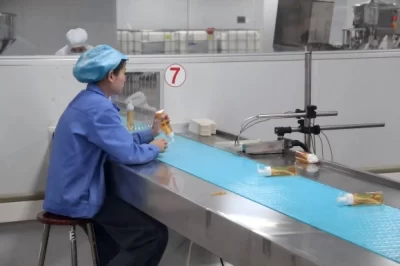
Core Criteria for Screening Reliable Manufacturers
With a macro understanding in place, you need a practical “microscope” to examine each potential partner. The following four criteria form the cornerstone of your screening process.
Certifications and Compliance: The Non-Negotiable Bottom Line
This is the first and most rigid filter. Compliance is the lifeline of your product.
-
Verification of Mandatory Qualifications:
-
Cosmetics Production License: Issued by the National Medical Products Administration (NMPA), this is the legal prerequisite for producing cosmetics within China. Verify that its permitted scope covers your intended product categories (e.g., skincare, color cosmetics, toothpaste).
-
NMPA Filing/Registration Capability: Confirm the manufacturer has a team and proven experience in successfully completing product filing (for general cosmetics) or registration (for special-use cosmetics). They should clearly explain the process and timeline.
-
-
International Quality System Certifications:
-
ISO 22716: The international Good Manufacturing Practice (GMP) standard for cosmetics. This is the gold standard for assessing whether their production environment, processes, and control systems are standardized. Request to see original certificates or clear copies, and verify them by tracing back to the issuing certification body’s official website.
-
ISO 9001: Quality Management System certification, fundamental proof of managerial standardization.
-
Other Pluses: Such as U.S. FDA registration, EU COSMOS organic certification, Halal certification, etc., depending on your target market.
-
Pitfall Avoidance: Be wary of factories that only provide vague pictures or verbal promises. Cross-verify critical certifications.
R&D Capability and Innovation Power: The Engine for Your Brand’s Future
Whether a manufacturer can upgrade from a “contract producer” to a “co-creation partner” depends on its R&D core.
-
Structure and Background of the R&D Team: Understand the educational background and industry experience of its core R&D staff, especially the formulators. Do they have a deep understanding of global ingredient trends and skin science?
-
Laboratory and Equipment Standards: Inspect the lab in person or via video. Is it equipped with key instruments like High-Performance Liquid Chromatography (HPLC), Gas Chromatography (GC), stability test chambers, and microbiological testing facilities? These are fundamental for raw material testing, efficacy verification, and shelf-life testing.
-
Patents and Proprietary Technologies: Inquire if they hold invention patents or exclusive formulation technologies. This directly determines their ability to provide you with differentiated, competitive products, rather than merely replicating market best-sellers.
Penetrative Assessment of the Quality Control System
Quality control should not be the final checkpoint but should permeate every step from raw material to finished product.
Transparency and Management of the Raw Material Supply Chain
Claims of “premium ingredients” must be backed by the supply chain.
-
Supplier Audits: Reliable manufacturers conduct strict audits of their raw material suppliers to ensure reliable sources and stable quality. You can request information on their key active ingredient suppliers (e.g., hyaluronic acid, niacinamide, plant extracts) and ask for Material Safety Data Sheets (MSDS) and Certificates of Analysis (COA)/Origin.
-
Raw Material Traceability System: In the event of a quality issue, can they quickly and accurately trace back to the specific batch of raw material, its supplier, and its inbound inspection records? This is a key indicator of system maturity.
End-to-End Testing and Validation Processes
-
Stability Testing: This is the scientific basis for determining product shelf life. Inquire about their testing protocol: Do they conduct long-term stability tests (e.g., 6-12 months) and accelerated stability tests (e.g., 1-3 months)? Are the testing conditions aligned with ICH guidelines? Relying solely on accelerated testing is insufficient to fully predict long-term stability.
-
Compatibility Testing: Ensures the formula does not react chemically with the selected packaging (bottles, pumps, caps), which could lead to product deterioration or package corrosion.
-
Testing Support for Efficacy Claims: If you plan to make efficacy claims like “whitening,” “anti-wrinkle,” or “sun protection,” does the manufacturer have the in-house capability or partnerships with third-party institutions to conduct human efficacy evaluation tests, in vitro tests, or consumer use tests? They should be able to provide scientifically rigorous testing plans and report templates to ensure your claims are compliant and evidence-based.
Building a Solid Strategic Partnership
Finding the right manufacturer is just the beginning. How you manage and develop this relationship determines its long-term value.
Effective Communication and Project Management: Bridging Culture and Distance
-
Dedicated Team and Language Proficiency: Confirm whether they assign a dedicated account manager and project manager who are proficient in your language (e.g., English) and understand the business. Communication barriers are a primary cause of project delays and errors.
-
Sample Development Process: Clarify the stages, costs, timelines, and number of revisions for sample development. Professional manufacturers view sampling as a crucial co-creation process, not merely a cost.
-
Intellectual Property Protection: Before collaboration begins, it is essential to sign strict Non-Disclosure Agreements (NDA) and Intellectual Property (IP) ownership agreements, clearly defining the ownership of outcomes like formulas and designs. This is the foundation of trust for cooperation.
Production Flexibility, Logistics, and Long-Term Cooperation Terms
-
Minimum Order Quantity (MOQ) and Flexibility: MOQ is a major hurdle for startups. Negotiate with the manufacturer: Can initial MOQ be reduced through methods like shared bases/creams or standard packaging? Also, understand their maximum capacity to assess fit for future growth.
-
Logistics and Delivery Terms: Clarify incoterms (e.g., FOB Shanghai, or DDP to your overseas warehouse). Understand their export experience. Can they assist with customs documentation? A reliable manufacturer should be a dependable link in the supply chain.
-
Transparency and Mutual Growth: When raw material prices fluctuate sharply or supply chains are disrupted, can the manufacturer communicate proactively and transparently to jointly find solutions? This attitude of shared risk and information transparency is the fundamental difference between a strategic partner and an ordinary supplier.
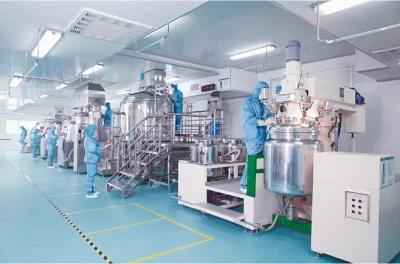
Conclusion
Choosing a reliable cosmetics manufacturer in China is a profound exercise combining rational investigation and strategic vision. There are no shortcuts. It requires you to invest time in on-site factory audits, in-depth interviews, and document reviews.
Remember, the cheapest quote often hides the highest long-term risks—which could manifest as unstable quality, compliance loopholes, or exorbitant communication costs.
View the manufacturer as an extension of your brand in the supply chain, the physical embodiment of your product’s potential. By using the framework provided in this article to systematically evaluate and screen candidates, you can not only avoid numerous pitfalls but also have the opportunity to find the true “Chinese partner” that can help your brand grow from zero to one, and from one to one hundred. Your prudent choice will be the most solid cornerstone of your brand’s future.