
The Rise and Transformation of China’s Skincare Manufacturing Industry
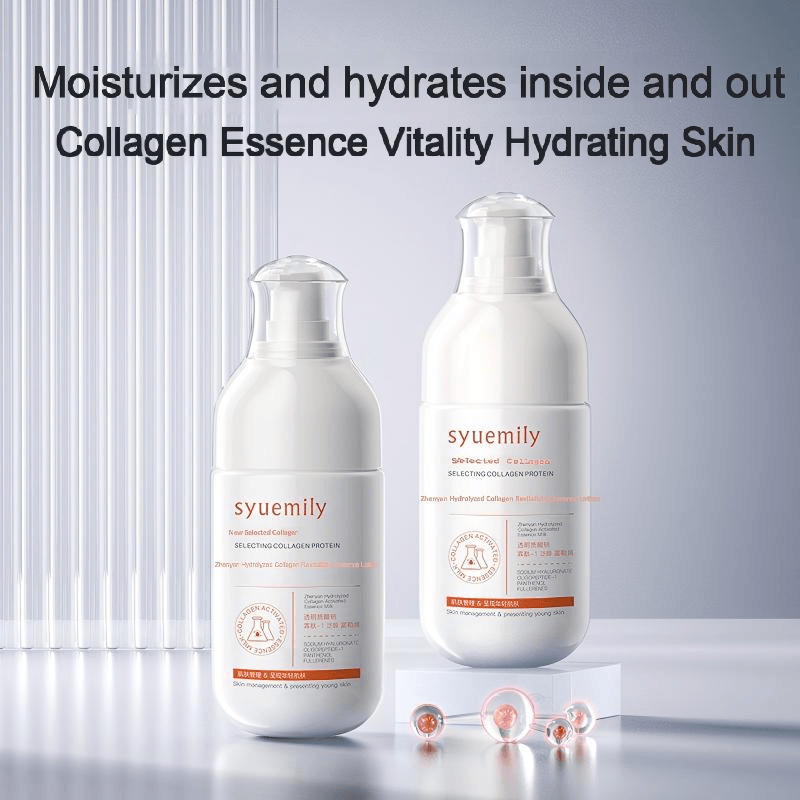
With the continuous expansion of the global beauty market, Chinese skincare manufacturers are transitioning from being the “world’s factory” to a “global beauty innovation hub.” This shift is not only reshaping the international skincare supply chain landscape but also providing unprecedented opportunities for brands. This article provides an in-depth analysis of the competitive advantages, technological breakthroughs, and collaborative value of Chinese skincare manufacturers, offering comprehensive insights for brands seeking quality manufacturing.
Guangzhou became the centre of Chinese skincare manufacturing for structural reasons — supplier density, formulation talent, logistics, and the cluster effect that makes custom work viable at small volumes. For what this means when you are selecting a supplier, see our skincare product manufacturer guide.
From OEM to Co-creation: The Evolution of the Chinese Manufacturer’s Role
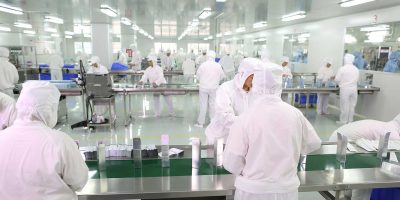
Over the past two decades, Chinese skincare manufacturers have undergone a fundamental transformation from simple contract manufacturing to collaborative research and development. The early model of attracting international orders with low-cost labor has now been upgraded to a comprehensive service model centered on technological R&D, ingredient innovation, and flexible supply chains. Behind this shift lies the Chinese manufacturers‘ acute sensitivity to consumer needs and their rapid response capability to global beauty trends.
Currently, China is home to over 5,000 skincare production enterprises of a certain scale. Among them, approximately 30% have established their own R&D laboratories, and 15% hold international patent technologies. This sustained growth in R&D investment enables Chinese manufacturers not only to produce on demand but also to provide brands with end-to-end solutions encompassing market analysis, formulation development, and packaging design.
The Supply Chain Advantages of Chinese Skincare Manufacturers
Integrated Supply Chain: Cost Control and Rapid Response
One of the core competitive strengths of Chinese skincare manufacturers lies in their well-established, vertically integrated supply chain system. From raw material cultivation and extraction to packaging material production and filling equipment manufacturing, the entire industrial chain has formed efficient clusters in regions like the Pearl River Delta and the Yangtze River Delta.
Breakthroughs in Raw Material Supply Chain Localization
While premium skincare ingredients were traditionally reliant on European imports, this landscape is changing. Plant extracts from Yunnan, hyaluronic acid fermentation in Shandong, and bioactive peptide R&D in Guangzhou—Chinese ingredient suppliers have reached internationally advanced levels in specific fields. For instance, Bloomage Biotech has become the world’s largest supplier of hyaluronic acid, holding over 40% of the global market share. This localization of raw materials not only reduces procurement costs by 30-50% but also significantly shortens supply chain response times.
Mature Application of Flexible Production Systems
In response to the demand for small-batch, multi-variant production from emerging brands, Chinese manufacturers have been pioneers in adopting flexible production systems. Intelligent production lines can switch between different product formulations within 24 hours, with minimum order quantities (MOQs) reduced to as low as 5,000 units, compared to the traditional requirement of 50,000-100,000 units. This flexibility is particularly suitable for DTC brands and influencer-led brands for market testing and rapid iteration.
Technological Facilities and Upgraded Production Standards
Widespread Adoption of GMP and ISO Certifications
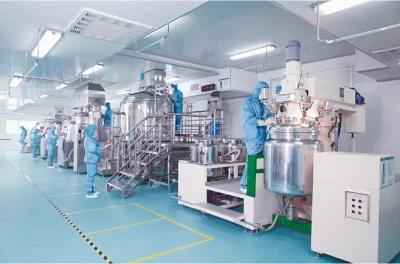
Currently, leading Chinese skincare manufacturers generally adhere to pharmaceutical-grade production standards. Over 80% of sizable enterprises have obtained GMPC (Good Manufacturing Practice for Cosmetics) certification, and more than 60% also hold ISO 22716 International Cosmetic Production Standard certification. These certifications not only ensure product safety but also imply full traceability throughout the production process—every step, from raw material batches to filling times, is digitally recorded.
Sustained Growth in R&D Investment
Between 2020 and 2023, the average annual growth rate of R&D investment by leading Chinese skincare manufacturers reached 18%, far exceeding the industry average. This investment is reflected in multiple dimensions: collaborative laboratories with research institutions like the Chinese Academy of Sciences and Jiangnan University; exploration into cutting-edge fields such as fermentation technology, nano-encapsulation, and plant stem cells; and in-depth research into niche areas like the skin microbiome and photoaging repair.
Technological Innovation and R&D Capabilities
The Fusion of Biotechnology and Modernization of Traditional Chinese Medicine (TCM)
Modern Transformation of Traditional Wisdom
Chinese manufacturers possess unique advantages in the R&D of Sino-herbal skincare. Moving beyond simply adding TCM extracts, leading companies are employing technologies like cellular-level extraction and targeted ingredient delivery to elevate the efficacy of traditional herbs such as ginseng, lingzhi mushroom, and centella asiatica to new heights. For example, using low-temperature supercritical extraction technology, the activity retention rate of ginsenosides can be increased from the traditional 60% to over 95%.
Breakthroughs in Microbial Fermentation Technology
Chinese manufacturers have established technological barriers in fields like probiotic skincare and fermented ingredient applications. For instance, a Shanghai-based manufacturer developed a “secondary fermentation” technology that can triple the concentration of active ingredients in yeast filtrate while reducing irritation by 50%. This technology is not only applied in manufacturing for international luxury brands but has also fostered a matrix of domestic fermented skincare brands.
Trends in Personalization and Intelligent Manufacturing
Practical Application of AI in Formulation
Artificial intelligence has deeply penetrated the skincare R&D process. The “skin databases” established by some manufacturers contain over 500,000 skin samples from Asians. By using machine learning algorithms to predict the effects of ingredient combinations, they have shortened the new product development cycle from the traditional 18-24 months to 6-8 months. More importantly, AI can simulate the stability of formulations under different climatic conditions, ensuring product adaptability in global markets.
Technological Realization of Customized Production
The shift from “large-batch standardization” to “small-batch personalization” relies on the maturity of modular production systems. The “intelligent production modules” developed by Chinese manufacturers can adjust formulation ratios, textures, and fragrances in real-time, achieving true one-to-one customization. A manufacturer in Guangzhou even offers a “new formula per month” service for overseas clients, allowing brands to quickly adjust products based on social media feedback.
International Cooperation and Market Adaptability
Global Compliance and Certification Systems
Seamless Integration with International Standards
Chinese manufacturers successfully serving global brands have established multi-national compliance systems. Their products not only meet the filing requirements of China’s National Medical Products Administration (NMPA) but also comply with major market regulations such as the EU’s EC1223, the US FDA, and ASEAN standards. This capability for “one-time R&D, global filing” significantly lowers the barriers and time costs for brands entering multiple markets.
Product Adaptation for Cultural Differences
Significant differences exist between Eastern and Western skin types and skincare habits. Leveraging their in-depth research on Asian skin, Chinese manufacturers provide localization modification solutions for international brands. For example, addressing the common issue of products from European/American brands being “too rich” for Asian markets, manufacturers can adjust lipid ratios or add oil-control ingredients to improve user experience without compromising core efficacy.
Sustainable Development and Ethical Manufacturing
Comprehensive Implementation of Green Production
Environmental protection has evolved from a marketing concept to a production standard. Leading manufacturers have achieved over 97% water resource recycling, utilize photovoltaic power to meet more than 30% of energy needs, and have established packaging recycling programs. More importantly, China is making rapid progress in biodegradable material R&D—a Zhejiang-based manufacturer developed “marine biodegradable” packaging material already used by several European clean beauty brands.
Ethical Sourcing and Fair Trade
As consumers demand greater ingredient traceability, Chinese manufacturers are building transparent supply chains. From fair-trade rose plantations in Yunnan to sustainable pearl farming in Zhejiang, ethical sourcing of raw materials is becoming the new standard for premium manufacturing. This transparency not only meets regulatory requirements but also provides powerful marketing support for brands.
How to Choose the Right Chinese Skincare Manufacturer
Key Dimensions for Evaluating Manufacturers
R&D Capability and Patent Portfolio
Quality manufacturers should have publicly available R&D achievements. Examine the number of patents they hold (especially invention patents), published scientific papers, and collaborative projects with academic institutions. Also, assess whether they possess specialized research capabilities for specific skin types (e.g., sensitive skin, acne-prone skin).
Production Transparency and Visit Accessibility
Manufacturers willing to open their production lines for visits are generally more confident. During on-site inspections, pay attention to workshop cleanliness, employee operational standardization, and the completeness of quality inspection processes. Digitally advanced factories may offer VR tours for real-time viewing of production status.
Flexible Choice of Collaboration Models
Service Differences: OEM/ODM/OBM
• OEM Model: The brand provides the complete formula and design; the manufacturer is responsible for production.
• ODM Model: The manufacturer provides full-service solutions from R&D to production.
• OBM Model: The manufacturer owns its own brand while also performing contract manufacturing for other brands.
Startup brands are advised to begin with ODM to leverage the manufacturer’s market insights and mature formulations. Established brands might choose OEM to protect their intellectual property. OBM manufacturers typically have the strongest R&D capabilities but may present potential conflicts of interest.
Minimum Order Quantity (MOQ) and Supply Chain Support
Order requirements directly impact collaboration feasibility. Traditional manufacturers often have MOQs of 50,000-100,000 units, while flexible supply chains can lower this to under 5,000 units. More importantly, evaluate the manufacturer’s supply chain stability—can they guarantee capacity during peak seasons? Do they have backup raw material suppliers? Does their logistics system cover the target markets?
Future Trends and Opportunities for Chinese Manufacturing
The New Era of Technology-Driven Manufacturing
Over the next five years, China’s skincare manufacturing industry will present three major trends: First, the popularization of “precision skincare” technology, where personalized products based on genetic testing and skin diagnosis will move from concept to mass production. Second, the comprehensive application of “green chemistry,” with bio-synthesized ingredients gradually replacing traditional chemical synthesis. Third, “human-machine collaboration” in smart factories, where AI will participate in the entire process from R&D to quality inspection.
The Choice of Chinese Manufacturing for Global Brands
Choosing a Chinese manufacturer is no longer just a cost consideration but a choice of an innovation partner. Chinese manufacturers have established unique advantages in ingredient innovation, production flexibility, and market response speed. For global brands seeking product differentiation, rapid market testing, and sustainable production, the Chinese supply chain is not merely a production endpoint but an engine for innovation.
Whether it’s international brands seeking breakthroughs in the Asian market or emerging brands pursuing product competitiveness, Chinese skincare manufacturers can provide complete value from technological R&D to mass production. In today’s beauty industry, where globalization and localization proceed in parallel, deep collaboration with Chinese manufacturers has become a key strategic element for brand success.