
The Art of Manufacturing Beyond Bottles and Jars
To consumers, skincare products are the bottles and jars on their dressing tables; but within the industry, the skincare product manufacturer is the engine and cornerstone of the entire beauty ecosystem. These manufacturing experts blend scientific research, technological innovation, and a profound understanding of skin physiology to create safe, effective, and enjoyable skincare experiences. This article delves deeply into the multifaceted role and core competencies of skincare product manufacturers, and how to choose a truly excellent partner—whether you are a brand seeking OEM services or an end-consumer wishing to understand the story behind your products.
This is the manufacturing craft behind the category: how formula science, process control, and packaging engineering combine on the floor. If you want the sourcing framework and the commercial model in one place, start with our skincare product manufacturer guide, then come back here for the trends shaping 2026.
The Core Role and Industry Positioning of a Skincare Product Manufacturer
The Translator from Concept to Product
A true skincare product manufacturer is far more than a simple “production factory.” They are the scientific translators of brand concepts, capable of transforming marketing ideas and active ingredient claims into stable, effective, and scalable product formulations. This process involves complex considerations: Which ingredients can work synergistically? How to ensure active ingredients remain stable throughout the shelf life? How can texture, fragrance, and user experience align with target consumer expectations? Excellent manufacturers possess a rich repository of experience and a scientific formulation methodology, helping brands navigate development pitfalls and shorten time-to-market.
The Ultimate Guardian of Quality and Safety
In an increasingly regulated global market, manufacturers bear the primary responsibility for product safety and compliance. This includes, but is not limited to: raw material traceability and purity testing, cleanliness control of the production environment, scientific construction of preservation systems, stability testing (ambient, accelerated, light exposure), and regulatory filing support for different markets. Top-tier manufacturers often implement internal standards stricter than regulatory requirements and invest in advanced testing equipment (such as HPLC, GC-MS) to ensure every batch meets promised specifications.
The Stabilizer and Innovation Catalyst of the Supply Chain
An excellent manufacturer also serves as the central hub of the supply chain. They establish strategic partnerships with global premium ingredient suppliers, can anticipate trends like novel actives and sustainable packaging early, and leverage procurement scale for better costs and technical support. Their supply chain resilience becomes key to ensuring brand continuity during disruptions like pandemics. Simultaneously, they act as innovation catalysts, transforming the latest academic discoveries (e.g., skin microbiome, autophagy mechanisms) into commercially viable formulation technologies through fundamental R&D.
The Five Core Competencies of a Top Skincare Product Manufacturer
1. Profound R&D and Formulation Science Capabilities
The R&D lab is the manufacturer’s “heart.” This means not only having experienced formulators but also establishing a scientific R&D system. This includes:
-
Fundamental Research Capability: In-depth study of skin structure, physiological mechanisms, and penetration kinetics, ensuring formulation design is evidence-based.
-
Formulation Technology Platforms: For example, dedicated platforms for sensitive skin soothing, targeted delivery for anti-aging (liposomes, nano-carriers), and natural fermentation ingredient application platforms.
-
Evaluation and Testing Methods: Beyond routine stability and safety tests, leading manufacturers conduct in vitro efficacy tests (e.g., cell assays for antioxidant, anti-inflammatory effects), instrumental evaluations (corneometer, TEWL, elasticity measurements), and volunteer sensory panels, using data to substantiate efficacy claims.
2. Production and Quality Management Systems Meeting International Standards
The production facility is where scientific formulations are perfectly realized. Core standards include:
-
GMPC (Good Manufacturing Practice for Cosmetics) Certification: This is the internationally recognized quality management system standard for cosmetic production, covering personnel, premises, equipment, hygiene, production, quality control, sales, and more.
-
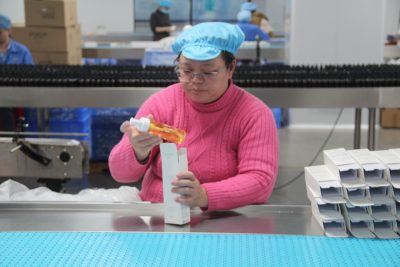
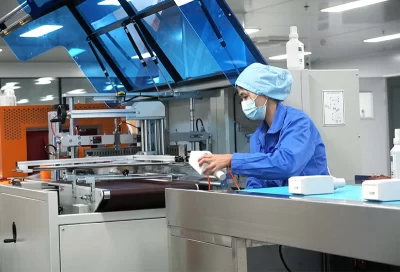
Intelligent and Lean Manufacturing: Utilizing MES (Manufacturing Execution Systems) to track the entire production process, ensuring precise control and full traceability from ingredient dispensing to filling. Flexible production lines efficiently handle small-batch, multi-variant orders.
-
Rigorous Supplier Management: Auditing and grading raw material suppliers to ensure source quality. Packaging materials also undergo compatibility and safety testing.
3. Acuity for Market Trends and Consumer Insights
Top manufacturers also serve as “strategic consultants” for brands. By participating in international ingredient exhibitions (e.g., in-cosmetics), analyzing global market data, and conducting consumer research, they can foresee trends like clean beauty, microbiome skincare, precision skincare, and emotional skincare. They not only interpret trends but also provide “how to implement” solutions, such as helping brands balance “clean” with “efficacy,” or designing product matrices for different skin types and scenarios.
H4: 4. Flexible Cooperation Models and Full-Spectrum Services
Service models have evolved from traditional OEM (production based on brand-provided formulas) to more in-depth ODM (Original Design Manufacturing) and JDM (Joint Development Manufacturing). Manufacturers offer “one-stop services” from market analysis, concept proposal, formulation development, packaging design, regulatory filing, to production and logistics, tailored to the brand’s positioning, budget, and target audience. This deep collaboration significantly lowers the entry barrier and risk for emerging brands.
5. Commitment to Sustainable Development and Social Responsibility
Environmental and ethical considerations have become irreversible industry imperatives. Leading manufacturers actively invest in green manufacturing: using renewable energy, achieving wastewater and waste recycling, optimizing packaging to reduce plastic use, and choosing recyclable or biodegradable materials. Ethically, they ensure supply chains are free from animal testing (supporting alternative methods) and promote fair trade. These practices are not only about corporate responsibility but also become powerful components of a brand’s narrative.

How Brands Can Select and Evaluate a Skincare Product Manufacturer
Step 1: Define Your Own Needs and Positioning
Before approaching manufacturers, a brand must clarify: Are you looking for a cost-prioritized partner for large-scale production, or an innovation-focused, flexible R&D partner? What are your target markets (different regulations apply)? Is the product positioning mass-market, professional, or luxury? What is the budget and minimum order quantity? Clear self-awareness is the prerequisite for efficient screening.
Step 2: Conduct In-Depth Visits and Due Diligence
-
On-site Visits: Personally inspect the R&D center, laboratories, production workshops, and warehouses to gauge their management level and professional atmosphere.
-
Technical Dialogue: Engage deeply with their R&D team, pose specific technical challenges (e.g., “How to achieve long-term Vitamin C stability?”), and assess their problem-solving approach and expertise.
-
Case Study and Credential Review: Examine case studies of brands they have served (mindful of confidentiality), and verify hard evidence like quality management system certifications and patents.
-
Compliance Capability Assessment: Understand if their regulatory team is familiar with target market regulations (e.g., China’s Cosmetic Supervision and Administration Regulations, EU EC1223/2009, US FDA requirements) and can provide complete filing or registration support.
Step 3: Focus on Partnership Fit and Communication Efficiency
Production collaboration is a long-term relationship. Assess whether the manufacturer’s project management process is clear, and if the liaison team is responsive, professional, and easy to communicate with. A well-defined contract is crucial, covering intellectual property ownership (formula rights), quality dispute resolution, delivery timelines, and MOQ adjustment clauses.
The Future of Skincare Product Manufacturing: Technology, Personalization, and Sustainability
Deep Integration of Smart Manufacturing and Digitalization
The future factory will be a combination of “lights-out” facilities and “digital twins.” Through IoT, AI visual inspection, and robotic automation, the entire process will become intelligent with minimal human intervention. Big data will optimize production parameters, predict maintenance needs, and enable more precise cost and energy control. Blockchain technology may provide immutable end-to-end traceability, significantly enhancing consumer trust.
The Possibility of Precision Skincare and Personalization
As biometric detection technologies (e.g., at-home genetic testing, skin image analysis) become more accessible and affordable, manufacturers will be able to offer brands small-batch, multi-variant personalization solutions. For instance, flexible production lines could allow tweaks to active ingredient concentrations or types in a base formula based on a consumer’s skin test results, achieving true “made-for-you” products.
The Ultimate Goals of Green Chemistry and a Circular Economy
Future ingredient innovation will focus more on green chemistry principles: using renewable resources, developing synthetic pathways with lower environmental impact, and designing biodegradable ingredients. Packaging will trend towards refillable systems and simplified materials for easier recycling. The entire manufacturing process will pursue “net-zero carbon” and actively practice “cradle-to-cradle” circular design philosophy.
Conclusion: Choosing a Manufacturer is Choosing the Brand’s Future
The skincare product manufacturer, a name hidden behind brands, actually holds the key to product efficacy, safety, and innovation pace. For brands with long-term vision, choosing a manufacturer is not just selecting a supplier, but choosing a strategic partner who shares risks and values. In this era where product is king, only by joining hands with manufacturers possessing scientific craftsmanship, forward-looking vision, and solid quality can brands truly create timeless classics that withstand market competition and deliver visible skin transformation to consumers.