
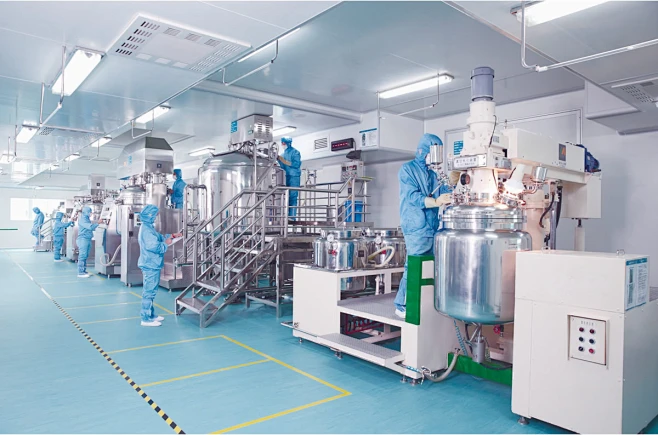
In the hyper-competitive beauty industry, your brand is only as good as the product inside the bottle. Whether you are an emerging indie brand or an established enterprise scaling up, the decision to select a manufacturing partner is strategic, not just operational.
Searching for a top-rated cosmetics manufacturer for skincare products often leads to overwhelming lists of factories claiming to be the “best.” But in B2B cosmetics, “top-rated” isn’t about popularity—it’s about compliance, scalability, R&D agility, and supply chain resilience.
This comprehensive guide pulls back the curtain on the manufacturing world, helping you navigate the complexities of OEM/ODM partnerships and guiding you toward a profitable, long-term collaboration.+
1. What Defines a “Top-Rated” Manufacturer in the Modern Market?
A manufacturer can produce a decent moisturizer, but that doesn’t make them “top-rated.” In 2024, the definition of excellence has shifted from simple production capacity to comprehensive risk management and innovation.
The Non-Negotiable: Certifications and Global Compliance
You cannot market a premium skincare line without a foundation of safety. A top-rated manufacturer must hold more than just a business license.
-
ISO 22716 (GMP): This is the gold standard for Good Manufacturing Practices in cosmetics. It ensures that products are produced and controlled according to quality standards.
-
FDA & EU Compliance: If you plan to sell globally, your manufacturer must understand the regulatory nuances between the US (MoCRA updates) and the strict EU cosmetic regulations.
-
Cruelty-Free & Vegan Certifications: Look for manufacturers who can facilitate Leaping Bunny or PETA certifications, as this is no longer a niche demand but a market expectation.
Advanced R&D and Formulation Stability
The difference between a product that goes viral and one that separates in the bottle lies in the lab.
-
Stability Testing: A top-tier partner conducts rigorous freeze-thaw cycles, light exposure tests, and microbial testing before mass production.
-
Customization vs. White Label: Top manufacturers offer true R&D capabilities to tweak formulations (texture, scent, active concentration) rather than forcing you into a generic “off-the-shelf” formula.
2. OEM, ODM, or OBM: Choosing the Right Partnership Model
To rank as a top-rated cosmetics manufacturer for skincare products, a factory usually offers flexible service models. Understanding which one fits your business stage is critical for cost control.
Understanding OEM (Original Equipment Manufacturing)
This model is for brands that already own their formulas.
-
The Pro: You retain 100% Intellectual Property (IP) rights to the formulation.
-
The Con: You bear the burden of R&D costs and regulatory registration.
-
Best For: Established brands with an in-house chemist or dermatologist team who need a factory simply to execute the production at scale.
The Strategic Advantage of ODM (Original Design Manufacturing)
This is the most popular route for high-growth skincare brands. The manufacturer provides the formula, and you provide the branding.
-
Speed to Market: You can launch a product in 3-4 months instead of 12-18 months.
-
Cost Efficiency: You save on R&D overhead. A top-rated manufacturer will have a library of proven, stable base formulas that can be “tweaked” with signature ingredients (e.g., adding Peptides or Retinol) to make it unique to your brand.
-
Best For: Influencers, startups, and brands looking to expand their SKU lines quickly without massive R&D investment.
3. Key Trends Shaping Skincare Manufacturing in 2024
A manufacturer stuck in 2010 cannot help you win in 2024. The best partners are ahead of the curve, offering capabilities in trending sectors.
Clean Beauty and Sustainable Packaging
Consumers are scrutinizing ingredient lists and packaging waste.
-
Green Chemistry: Top manufacturers are now using cold-process manufacturing to reduce energy consumption and sourcing bio-based ingredients that replace synthetic silicones.
-
Eco-Packaging Integration: It is not enough to make the cream; the factory must be equipped to fill eco-friendly packaging, such as glass, PCR (Post-Consumer Recycled) plastics, or sugarcane tubes, which often require different machinery calibration.
Biotech and Fermented Ingredients
The “science-backed” beauty trend is exploding.
-
Bio-Fermentation: Look for manufacturers with capabilities in bio-fermentation technology. Fermented ingredients (like galactomyces or fermented oils) have higher potency and absorption rates.
-
Encapsulation Technology: To produce high-end anti-aging products, your manufacturer should have the technology to encapsulate volatile ingredients like Vitamin C or Retinol, ensuring they remain active until the consumer opens the jar.
4. The Vetting Process: How to Evaluate a Manufacturer
Finding a top-rated cosmetics manufacturer for skincare products requires due diligence. Do not rely solely on Alibaba profiles. You need to ask the tough questions.
Evaluating Supply Chain Stability
The post-pandemic world has taught us that supply chains are fragile.
-
Raw Material Sourcing: Ask the manufacturer: Where do you source your key actives? Do you have backup suppliers? A top-rated factory will have multi-source procurement strategies to prevent production halts if one supplier fails.
-
Inventory Management: Do they offer warehousing for your packaging? Understanding their logistics capabilities is crucial for maintaining stock levels.
Negotiating MOQs and Lead Times
This is often the breaking point for negotiations.
-
Flexible MOQs: While big factories prefer 10,000+ units, a truly “partner-centric” top-rated manufacturer often offers tiered MOQs (e.g., starting at 1,000 or 3,000 units) to help brands test the market.
-
Realistic Lead Times: Be wary of factories promising 2-week turnarounds. Proper quality control (QC) and microbiological testing take time. A standard, honest lead time is usually 35-60 days for new orders.
5. Red Flags: Risks to Avoid in Private Labeling
To protect your business, you must be able to spot the warning signs of a low-quality manufacturer.
Intellectual Property (IP) Traps
One of the biggest risks in ODM is formula ownership.
-
The Trap: You pay for “customization,” but the factory sells the exact same formula to your competitor next month.
-
The Solution: Always sign a clearly defined NDA (Non-Disclosure Agreement) and a Manufacturing Agreement that specifies exclusivity periods or ownership rights if you pay for custom R&D.
Hidden Costs and Quality Inconsistencies
-
The “Golden Sample” Problem: The sample they send you is perfect, but the mass production batch is watery or smells different.
-
Prevention: specific “Retain Samples” from every batch must be kept. A top-rated manufacturer will have a rigorous QA (Quality Assurance) protocol where they compare every production run against the approved standard sample before shipping.
6. Why You Should Partner With Us
Navigating the sea of manufacturers is exhausting. You need a partner who understands not just chemistry, but commerce.
We position ourselves as more than just a factory; we are a brand incubator. As a top-rated cosmetics manufacturer for skincare products, we combine:
-
GMP & ISO 22716 Certified Facilities: Ensuring global market entry.
-
Trend-Driven R&D: Access to the latest peptides, natural extracts, and biotech actives.
-
Scalable Solutions: From boutique batches to mass-market retail orders.
Don’t leave your brand’s reputation to chance.
Ready to launch your next bestseller?
Stop searching and start creating. Let’s discuss your formulation needs, MOQ requirements, and how we can bring your vision to life with speed and safety.
[Click here to chat with our R&D Team on WhatsApp] (Fast response | Free Consultation | Confidential Chat)

Frequently Asked Questions (FAQ)
Q: What is the typical Minimum Order Quantity (MOQ) for a top-rated skincare manufacturer? A: While industry standards often hover around 5,000 units, top-rated manufacturers offering flexible support may accept MOQs as low as 1,000 to 3,000 units for specific standard formulations to help brands launch.
Q: How long does it take to develop a custom skincare product? A: Generally, the timeline from R&D to final delivery is 3 to 6 months. This includes formulation testing, stability testing (essential for safety), packaging sourcing, and production.
Q: Can a top-rated manufacturer help with packaging design? A: Yes, most leading manufacturers offer “turnkey solutions,” which means they handle everything from the internal formula to the external packaging design and sourcing, simplifying your supply chain.