
Introduction: Redefining the Power of “Made in China” in Beauty
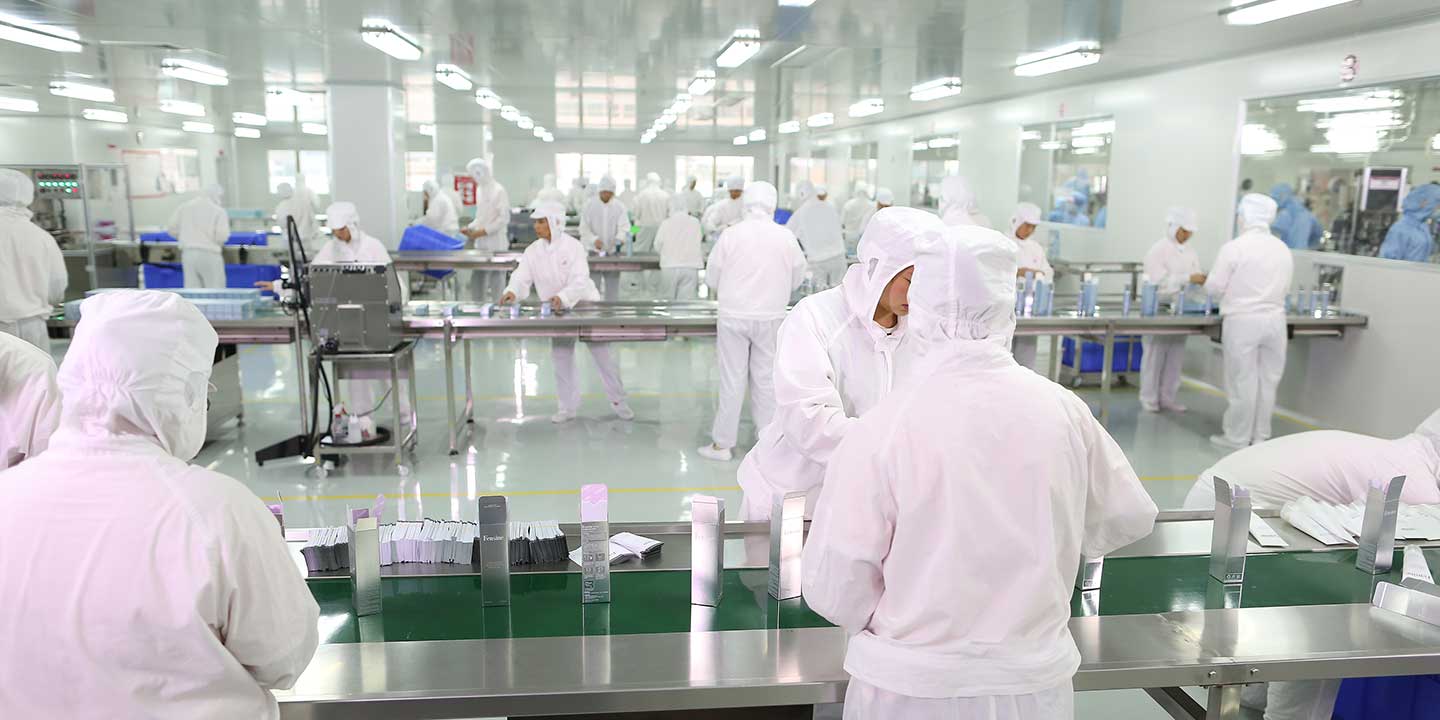
When global consumers think of “Chinese cosmetic manufacturers,” old impressions may still linger around cheap contract manufacturing and imitation. However, today’s Chinese cosmetic manufacturers are undergoing a profound industrial transformation—they are not only the supply backbone of the world’s largest beauty market but have also become global leaders in R&D innovation, sustainable production, and digital solutions. From groundbreaking active ingredient research in Shanghai laboratories to highly automated smart manufacturing lines in Guangzhou factories, Chinese cosmetic manufacturers are reshaping the global beauty industry landscape at a remarkable pace. This article will delve into the driving forces behind this transformation, core technological breakthroughs, and how to collaborate with these manufacturers for mutual success, providing a comprehensive overview of this trillion-yuan industry.
The Rise of Chinese Cosmetic Manufacturers: From Contract Manufacturing to Innovation Leadership
The Evolution from “World Factory” to “Innovation Engine”
Over the past two decades, Chinese cosmetic manufacturers have achieved an impressive leap forward. In the early stage (2000-2010), they primarily relied on cost advantages to undertake OEM (Original Equipment Manufacturing) and ODM (Original Design Manufacturing) orders for international brands, learning international standards for production processes and quality management systems. During this period, Chinese cosmetic manufacturers established production bases compliant with international certifications such as ISO 22716 and GMPC, laying a solid foundation for future development.
The transformation stage (2011-2018) witnessed Chinese cosmetic manufacturers‘ shift from “manufacturing” to “smart manufacturing.” With the explosion of the domestic consumer market, visionary Chinese cosmetic manufacturers began establishing independent R&D teams, investing in innovation laboratories, and collaborating with domestic and international research institutions. For example, some leading Chinese cosmetic manufacturers in Shanghai now allocate over 5% of their annual sales to R&D, approaching the level of international first-tier brands.
Global Market Position and Supply Chain Dominance
In the current stage (2019-present), Chinese cosmetic manufacturers have entered an innovation-led phase. They have developed global competitiveness in specific areas such as natural plant extraction, microbial fermentation technology, and green packaging solutions. More importantly, they have developed “fast-response” supply chain systems tailored to Generation Z consumers—shortening the timeline from concept to shelf-ready products to as little as 30 days, compared to the traditional 12-18 month cycle typical of international brands.
Today, one in every three lipsticks globally has direct manufacturing links to Chinese cosmetic manufacturers. China is not only one of the world’s largest cosmetic consumption markets but also the most crucial production hub where Chinese cosmetic manufacturers operate:
-
Production Scale: China boasts over 5,000 licensed Chinese cosmetic manufacturers, with Guangdong, Zhejiang, and Shanghai accounting for more than 70% of national capacity
-
Supply Chain Completeness: From packaging mold development, raw material synthesis and extraction, formula R&D to filling and packaging, Chinese cosmetic manufacturers have established the world’s most complete vertical beauty supply chain
-
Internationalization Level: Over 90% of the top 100 international beauty brands have production bases or long-term partnerships with Chinese cosmetic manufacturers
-
Export Growth: Exports from Chinese cosmetic manufacturers grew from $1.5 billion in 2015 to over $6 billion in 2022, with products reaching more than 150 countries and regions
Technological Breakthroughs and Innovation: The Core Competitiveness of Chinese Cosmetic Manufacturers
Integration of Natural Ingredients and Biotechnology Innovation
Chinese cosmetic manufacturers are combining traditional wisdom with modern technology to create unique product innovation pathways:
Modernization Research and Application of Chinese Herbal Medicine
Leading Chinese cosmetic manufacturers like Jala Group and Shanghai Jahwa have established specialized Chinese herbal medicine research institutions, employing modern technologies such as supercritical CO2 extraction and low-temperature molecular distillation to extract highly active ingredients from traditional plants like ganoderma lucidum, centella asiatica, and tea polyphenols. This research extends beyond ingredients to validate mechanisms of action through cutting-edge technologies like skin genomics and metabolomics, aligning traditional components with international scientific standards.
Breakthroughs in Microbial Fermentation Technology
Chinese cosmetic manufacturers have made significant advances in microbial fermentation, particularly utilizing unique Chinese microbial strains. For instance, some Chinese cosmetic manufacturers ferment Pu’er tea using distinctive yeast strains from Yunnan, producing active substances that outperform common vitamin C derivatives in antioxidant testing. This development of “unique Chinese ingredients” provides global brands with differentiated raw material options.
Advanced Manufacturing and Digital Transformation
Green Chemistry and Sustainable Synthesis
Responding to global sustainable consumption trends, Chinese cosmetic manufacturers have invested heavily in green chemistry. Major Chinese cosmetic manufacturers in Guangdong have developed enzyme-catalyzed mild synthesis processes that significantly reduce energy consumption and waste generation compared to traditional chemical synthesis. Simultaneously, they have made substantial progress in developing environmentally friendly materials like biodegradable emulsifiers and water-based film-forming agents.
AI-Driven Personalized Customization Systems
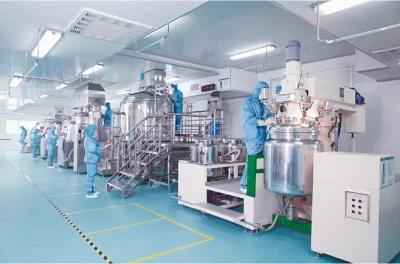
An innovative factory among Chinese cosmetic manufacturers in Hangzhou introduced the world’s first AI visual inspection production line, using machine learning algorithms to monitor over 30 parameters in real-time—including product filling volume and sealing quality—with detection accuracy reaching 99.98%. More importantly, they developed flexible production lines for C2M (Customer-to-Manufacturer) models, accepting custom lipstick orders as small as 100 units and completing production and delivery within 72 hours.
How to Choose and Collaborate with Chinese Cosmetic Manufacturers: A Practical Guide
Key Metrics for Identifying Quality Manufacturing Partners
When selecting Chinese cosmetic manufacturers, don’t focus solely on price and production capacity—their R&D strength is crucial for long-term partnerships:
R&D Capability Evaluation System
-
Laboratory Configuration: Check for CNAS-accredited analytical laboratories and advanced research facilities like cell laboratories and 3D skin model labs at Chinese cosmetic manufacturers
-
Patent Portfolio: Examine the quantity and quality of Chinese cosmetic manufacturers‘ patents in formulation technology, ingredient application, and production processes, particularly international PCT patents
-
R&D Team: Understand core R&D personnel backgrounds at Chinese cosmetic manufacturers, prioritizing teams with multinational corporate experience or close collaborations with renowned academic institutions
-
Innovation Process: Inquire about new product development processes at Chinese cosmetic manufacturers; excellent manufacturers should have systematic consumer insight, concept testing, stability assessment, and safety verification systems
Compliance and Quality Assurance Systems
Manufacturers’ compliance capabilities are crucial amid increasingly stringent global regulations for Chinese cosmetic manufacturers:
-
International Certifications: Confirm factories of Chinese cosmetic manufacturers hold ISO 22716, GMPC, EFfCI certifications and pass multinational corporate social responsibility audits
-
Raw Material Management: Understand raw material supplier audit systems at Chinese cosmetic manufacturers, particularly controls for prohibited substances, endangered plants, and animal-derived ingredients
-
Testing Capabilities: Evaluate safety and efficacy testing capabilities of Chinese cosmetic manufacturers, including but not limited to skin irritation tests, SPF determination, and antioxidant activity verification
-
Data Integrity: Examine laboratory and production record data management systems at Chinese cosmetic manufacturers to ensure all data is traceable and unalterable
Strategies for Building Efficient Collaborative Relationships
Transitioning from Transactional to Partnership Models
International brands’ collaborations with Chinese cosmetic manufacturers are shifting from simple order fulfillment to deep strategic partnerships:
-
Joint R&D Mechanisms: Establish joint R&D teams with Chinese cosmetic manufacturers to co-develop innovative products for specific markets or consumer groups
-
Supply Chain Coordination: Share sales forecast data to help Chinese cosmetic manufacturers optimize production plans while gaining more flexible minimum order quantities and shorter lead times
-
Transparency Agreements: Establish bidirectional transparent cost structure analysis with Chinese cosmetic manufacturers, pricing based on value rather than cost alone to ensure long-term sustainable collaboration
-
Intellectual Property Protection: Sign clear IP agreements with Chinese cosmetic manufacturers while building mutually trusted innovation protection mechanisms to encourage both parties’ R&D investments
Addressing Challenges and Mitigating Risks
Collaborating with Chinese cosmetic manufacturers also requires attention to potential challenges:
-
Language and Cultural Bridges: Invest in cultivating bilingual, bicultural teams or partner with specialized local collaborators to reduce communication misunderstandings with Chinese cosmetic manufacturers
-
Production Risk Diversification: Consider “China+N” production layouts with Chinese cosmetic manufacturers, distributing some capacity to locations like Vietnam and Malaysia to enhance supply chain resilience
-
Geopolitical Considerations: Monitor trade policy changes, plan tariff optimization strategies in advance when working with Chinese cosmetic manufacturers (e.g., utilizing regional trade arrangements like ASEAN free trade agreements)
-
Digital Transformation Synchronization: Ensure information system compatibility between parties when collaborating with Chinese cosmetic manufacturers for digital coordination from order to delivery
Conclusion: Co-creating the Future of Beauty with Chinese Cosmetic Manufacturers
The evolution story of Chinese cosmetic manufacturers is far from over. As they continue investing in biotechnology, artificial intelligence, and sustainability, these manufacturers are transforming from “value implementers” to “value creators.” For global beauty brands, collaborating with Chinese cosmetic manufacturers is no longer merely a cost-saving choice but a strategic necessity for accessing innovation resources, accelerating market response, and achieving sustainable growth.
Looking ahead, Chinese cosmetic manufacturers will further reshape the global industry landscape in the following areas: developing personalized skincare solutions based on Eastern skin research; leading circular economy models in the beauty industry, achieving over 95% recyclable or reusable packaging materials; utilizing digital twin technology to create virtual factories enabling global clients to remotely participate in the entire product development process with Chinese cosmetic manufacturers.
In this rapidly changing beauty world, Chinese cosmetic manufacturers have evolved from a geographical concept to an innovation model, a supply chain philosophy, and a core force in the global beauty industry that cannot be ignored. Rather than viewing them as simple suppliers, consider them innovation partners in exploring beauty’s future—perhaps the most important mindset shift for global brands to succeed in China’s dynamic market.
Whether seeking to enter the Chinese market, optimize global supply chains, or find differentiated innovation sources, deeply understanding and building substantive collaborations with Chinese cosmetic manufacturers will provide competitive advantages in future beauty competition. Because Chinese cosmetic manufacturers produce not just products, but this era’s new definition of beauty itself.