Introduction: The Critical Decision Behind a $30.7 Billion Market
The global
cosmetic OEM/ODM market reached a size of $30.718 billion in 2024 and is projected to surpass $40.5 billion by 2031. As the world’s largest
cosmetic OEM/ODM manufacturing hub, China accounted for 27.42% of the global market share in 2024, with its domestic market size expected to hit 150 billion RMB in 2025.
Yet, 90% of startup brands and cross-border e-commerce sellers find themselves confused when choosing a manufacturing model. What are the fundamental differences between cosmetic OEM and ODM? Making the wrong choice can lead to millions of dollars in trial-and-error costs, product homogenization and unsalable inventory, or even intellectual property disputes. This article uses hard data, real-world cases, and actionable guidelines to help you clearly distinguish between the two models and select the perfect fit for your brand’s development stage.
I. Core Definitions: Cosmetic OEM (Private-Label Manufacturing) vs ODM (One-Stop Customization)
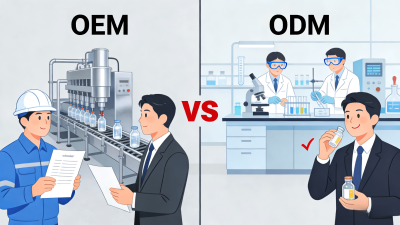
1. Cosmetic OEM (Original Equipment Manufacturer): Brand-Led, Factory-Executed
Core Logic: The brand provides mature formulas, product standards, and packaging designs, entrusting the factory solely with production tasks (raw material sourcing, filling, and packaging). The factory has no involvement in R&D or design decisions.
Typical Case: Lancôme commissions Cosmax Korea to produce its Advanced Genifique Youth Activating Serum. Lancôme provides its exclusive formula and patented packaging, while Cosmax strictly adheres to the specified production processes—with no right to modify ingredients or disclose the formula.
Key Features: The brand retains full ownership of formulas and product designs. The factory only charges processing fees and has no decision-making power over product development.
2. ODM (Original Design Manufacturer): Factory-Led, Brand-Collaborative
Core Logic: The factory maintains an existing library of formulas, an in-house R&D team, and packaging solutions. Brands can either select ready-made products or specify functional and texture requirements (e.g., “suitable for sensitive skin,” “anti-aging and wrinkle-reducing”), and the factory manages the entire process from formula development to finished product delivery.
Typical Case: An emerging domestic beauty brand launched a hyaluronic acid mask via the ODM model. Norsbel provided a proven formula featuring 384 silk mask sheets and freeze-dried active ingredient preservation technology. The brand only needed to finalize packaging design and brand logos, and the product hit the market in just 3 months.
Key Features: The factory holds intellectual property rights to base formulas. Brands can opt for non-exclusive usage rights (lower cost) or exclusive formula rights (higher cost).
II. In-Depth Comparison Across 7 Dimensions: A Quick Reference Table
| Comparison Dimension |
Cosmetic OEM Model |
ODM Model |
Key Decision Factors |
| R&D Leadership |
Brand (provides existing formulas/clear standards) |
Factory (offers ready-made formula library/custom R&D services) |
Does the brand have an in-house R&D team/exclusive formulas? |
| Intellectual Property Ownership |
Formulas and designs owned by the brand (factory only receives production authorization) |
Base formulas owned by the factory (exclusive rights available for purchase) |
Does the brand prioritize product differentiation/avoiding formula duplication? |
| Time-to-Market |
45–90 days (production + registration only) |
30–60 days (R&D + production + registration) |
Can the brand tolerate time costs/need to seize market windows? |
| Minimum Order Quantity (MOQ) |
High (typically 10,000 units per batch; 50,000 sheets for masks) |
Flexible (small batches of 500–3,000 units; supports trial production) |
Initial budget/capacity to bear inventory risks |
| Total Cost Structure |
Raw materials (35–60%) + packaging (20–45%) + processing fees (15–30%) |
Formula R&D fees (5–10%) + raw materials (30–55%) + packaging (20–40%) + service fees (10–15%) |
Budget allocation priorities (R&D vs. production) |
| Suitable Brand Types |
Mature brands/emerging brands with R&D capabilities |
Startup brands/cross-border e-commerce sellers/brands in the trial phase |
Brand development stage/team capabilities |
| Risk Factors |
Formula compliance risks/mismatched production processes |
Homogenization competition/intellectual property disputes |
Risk preference (compliance risks vs. market risks) |
Data Support: Cost Differences Quantified
Take the production of 100,000 units of 50ml hydrating serum as an example (based on 2025 industry average prices):
-
Total Cost (Cosmetic OEM Model): 863,000 RMB (8.63 RMB per unit)
- Raw materials: 25,000 RMB (5 RMB/kg × 5,000 kg)
- Packaging: 300,000 RMB (3 RMB per set)
- Processing fees: 500,000 RMB (1 RMB per ml)
- Hidden costs: 38,000 RMB (inspection + logistics + registration)
-
Total Cost (ODM Model): 985,000 RMB (9.85 RMB per unit)
- Formula R&D fees: 80,000 RMB
- Raw materials: 220,000 RMB (4.4 RMB/kg × 5,000 kg)
- Packaging: 300,000 RMB
- Processing fees: 350,000 RMB
- Hidden costs: 35,000 RMB
Note: For non-exclusive formula rights, R&D fees can be reduced to 20,000–30,000 RMB, lowering the total cost to approximately 920,000 RMB.
III. Deep Dive into Key Differences: From Partnership Nature to Implementation Details
1. Intellectual Property: The Hidden Pitfalls That Most Brands Overlook
Cosmetic OEM Model: A “full IP ownership” model with minimal risks. Brands must explicitly state in contracts: “The factory shall not use, modify, or disclose formulas and packaging designs to third parties without authorization.” It is also critical to require the factory to sign a Non-Disclosure Agreement (NDA) and implement a batch traceability system. For instance, when Guangdong Kangrong Industrial Co., Ltd. provided
cosmetic OEM services for a high-end brand’s serum, it set up a dedicated production line, with raw materials and finished products under the brand’s exclusive supervision.
ODM Model: A double-edged sword of “shared IP rights.” Without exclusive formula rights, the factory may slightly adjust the same formula for other brands. In 2024, 12 brands on an e-commerce platform launched “hyaluronic acid ampoule serums” with nearly identical ingredient lists—all derived from a single ODM factory’s public formula.
✅ Pitfall Avoidance Guide: When choosing ODM, either pay for exclusive formula rights (typically 50,000–200,000 RMB) or require the factory to make differentiated adjustments (e.g., adding exclusive ingredients, modifying texture systems). Explicitly specify in the contract: “The factory is prohibited from supplying similar formulas to brands in the same product category.”
2. Customization Level: Standardized Production vs. Flexible Innovation
Cosmetic OEM Model: The “efficiency leader” of standardized production. Ideal for brands with clear product positioning that need to mass-produce mature products. For example, in the
cosmetic OEM production of Lancôme Advanced Genifique, Cosmax strictly followed the brand’s 38-step production standards, keeping the error rate below 0.1% and achieving an annual production capacity of 50 million units.
ODM Model: The “fast responder” of flexible innovation. Factories can quickly iterate formulas to align with market trends. For example, amid the 2025 “clean beauty” boom, Topfun Co., Ltd. developed a custom herbal serum for a startup brand via ODM. Leveraging its 10,000-mu herbal planting base, Topfun completed the entire process from raw material selection to product launch in 3 months, with natural ingredients accounting for 85% of the formula.
3. Compliance Risks: Who Takes Responsibility for Product Safety?
Cosmetic OEM Model: The brand bears primary compliance liability. The factory only “produces according to the provided formula.” If the formula contains prohibited ingredients (e.g., illegal whitening agents, hormones) leading to registration rejection or product removal, the brand assumes all losses. In 2024, a brand’s self-provided cosmetic OEM formula was found to contain banned substances, resulting in the destruction of 100,000 units and direct losses exceeding 2 million RMB.
✅ Pitfall Avoidance Guide: Before cosmetic OEM production, entrust a third-party organization to conduct formula compliance testing (cost: 800–1,500 RMB per batch) to ensure ingredients meet the Technical Specifications for Cosmetic Safety.
ODM Model: The factory shares compliance risks. Reputable ODM factories (e.g., Norsbel, Intercos) have dedicated compliance teams that pre-verify formula safety and provide all required registration documents (formula sheets, efficacy claim evidence, testing reports). For example, when Wanying Biotechnology produced ODM ampoule serums for a medical beauty brand, it simultaneously provided 6 mandatory reports (including microbial and heavy metal testing), achieving a 100% registration pass rate.
IV. Selection Guide: 3 Steps to Match Your Brand’s Stage
Step 1: Self-Assessment – Answer 3 Core Questions
🔍
R&D Capability: Do you have exclusive formulas/an in-house R&D team? (Yes → Prioritize
cosmetic OEM; No → Prioritize ODM)
💰 Budget & MOQ: Is your initial order volume below 5,000 units? (Yes → ODM small-batch customization; No → cosmetic OEM large-scale production)
⏰ Time-to-Market: Do you need to launch products within 3 months? (Yes → ODM; No → cosmetic OEM allows for detailed refinement)
Step 2: Optimal Solutions for Different Brand Types
-
Startup Brands/Cross-Border E-Commerce Sellers: Prioritize ODM
Case Study: A cross-border e-commerce brand partnered with Cheoyoon Group via ODM to launch a “additive-free pregnancy-safe facial cream” with a minimum order of 3,000 units. The product exceeded 10 million RMB in sales within 6 months. Later, the brand purchased exclusive formula rights to achieve differentiated competition.
-
Mature Brands/Brands Expanding New Categories: Prioritize
cosmetic OEM
Case Study: When Herborist expanded into the makeup category, it chose Intercos for cosmetic OEM production. Herborist leveraged its existing herbal formula system, while Intercos provided advanced makeup manufacturing technology (microcapsule encapsulation technology) to ensure product quality aligned with the brand’s positioning.
-
Trial Phase/Market Testing: ODM Small-Batch Customization
Recommendation: Partner with ODM factories that support trial production of 500–1,000 units (e.g., Wanying Biotechnology, Cheoyoon Group). Test market feedback before scaling production to minimize inventory risks.
Step 3: 5 Key Criteria for Factory Selection
| Criteria Category |
Cosmetic OEM Factory Selection Priorities |
ODM Factory Selection Priorities |
| Certifications |
GMPC, ISO 22716, FDA certification |
Additional requirements: ≥10 R&D patents, efficacy testing qualifications |
| Production Capacity |
Number of production lines (≥5), annual output (≥10 million units) |
Formula library size (≥500 formulas), customization response time (≤7 days) |
| Cooperation Cases |
Experience partnering with mature brands in the same category |
Track record of successful launches for emerging brands (sales ≥5 million RMB) |
| Cost Transparency |
Provides detailed cost breakdown (raw materials + processing fees) |
Clearly states R&D fees and exclusive right pricing |
| After-Sales Support |
Batch traceability system, quality defect compensation mechanism |
Market feedback tracking, formula optimization services |
V. 2025–2031 Industry Trends: Convergence and Differentiation of Cosmetic OEM and ODM
1. ODM Market Share to Reach 38% by 2031
Market forecasts indicate that the global ODM model will achieve a Compound Annual Growth Rate (CAGR) of 4.66%, outpacing the 3.2% CAGR of the
cosmetic OEM model. ODM’s global market share is projected to rise from 32% in 2024 to 38% in 2031, driven by two core factors:
- A surge in new beauty brands (over 50,000 new beauty brands launched in China in 2024), highlighting ODM’s advantage of fast market entry.
- Upgraded R&D capabilities of factories. Leading ODM enterprises such as Cosmax and Intercos allocate over 15% of revenue to R&D, with patent filings growing 20% annually.
2. Technological Convergence: Rise of the “Cosmetic OEM + ODM Hybrid Model”
An increasing number of brands are adopting a combined strategy: “
Cosmetic OEM for core products + ODM for long-tail products.”
Case Study: Perfect Diary uses cosmetic OEM (partnering with Cosmax) for its core makeup line (foundation, eyeshadow palettes) to maintain formula exclusivity. For long-tail products (makeup remover wipes, hydrating mists), it uses ODM (partnering with Norsbel) to quickly cover niche scenarios and reduce operational costs.
3. Global Layout: Chinese Factories as a Core Global Choice
China accounted for 27.42% of the global
cosmetic OEM/ODM market in 2024, with its share expected to reach 28.75% by 2031. As China’s industrial core, Guangdong Province will capture over 60% of the domestic market share in 2025. Its complete industrial chain and technological upgrades have attracted international brands such as Lancôme and Dior to set up
cosmetic OEM/ODM partnerships locally.
VI. Pitfall Avoidance Guide: 10 Practical Tips to Save Millions in Trial-and-Error Costs
1. Cost Control Tips
- Raw Materials: For cosmetic OEM, adopt the strategy of “brand-procured core raw materials + factory-procured base raw materials” to reduce raw material costs by 10–15%.
- Packaging: Use the factory’s existing standard bottle molds (reduce mold development costs by 80%). For small batches, use digital printing (no MOQ restrictions).
- Processing Fees: Place orders during off-peak seasons (March–April / November–December) to secure a 15% reduction in processing fees. For monthly orders exceeding 100,000 units, negotiate tiered pricing.
2. Key Contract Clauses
- Intellectual Property: Clarify ownership and usage rights of formulas and packaging designs. For ODM, specify “exclusive/non-exclusive” rights explicitly.
- Quality Compensation: Stipulate that “if the proportion of defective products exceeds 3%, the factory shall bear full rework costs + delay-related losses.”
- Compliance Liability Waiver: For cosmetic OEM, specify that “the factory is only responsible for the production process; the brand shall bear full responsibility for formula compliance.”
3. Factory Inspection Priorities
- Production Environment: Conduct on-site inspections of Class 100,000 cleanrooms (pharmaceutical-grade standards) and emulsification equipment (prefer vacuum homogenizing emulsifiers).
- Testing Capabilities: Verify whether the factory has equipment for routine testing (microbial, heavy metal analysis) and can provide a Certificate of Analysis (COA).
- Capacity Matching: Confirm the factory’s current order backlog rate (below 70% is ideal for ensuring on-time delivery).
Conclusion: There Is No “Best” Model—Only the Most Suitable One
Cosmetic OEM is centered on efficiency and control, ideal for brands with R&D capabilities pursuing standardized production. ODM focuses on speed and innovation, perfect for startups and cross-border sellers looking to quickly capture market share. In the 2025 beauty manufacturing market, a single model can no longer meet all brand needs—smart brands are maximizing benefits through model combinations and technological collaborations.
Regardless of the model you choose, remember this: your manufacturing partner is a strategic collaborator, not just a production tool. By partnering with compliant, R&D-driven factories with transparent services (e.g., industry leaders like Cosmax, Norsbel, and Guangdong Kangrong Industrial Co., Ltd.), you can establish a solid foothold in the $30.7 billion global cosmetics market.