
The Global Rise of Chinese Cosmetics Manufacturers: More Than Just the “World’s Factory”
Industrial Transformation from Contract Manufacturing to Innovation
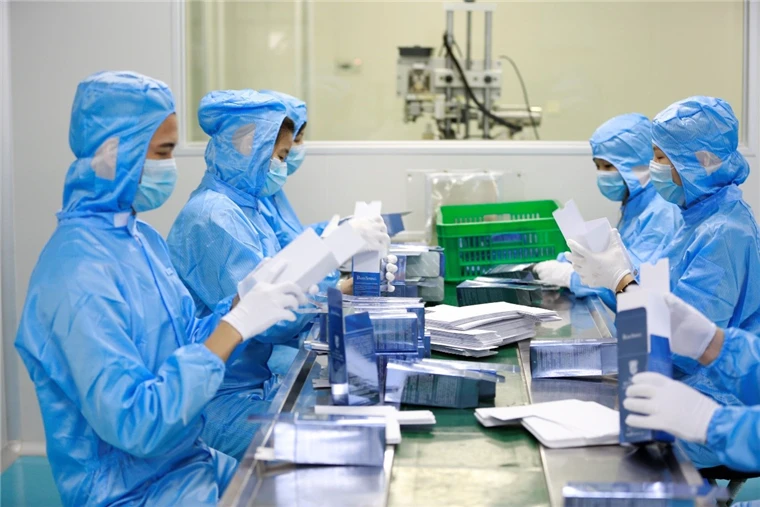
Over the past decade, cosmetics manufacturers in China have accomplished a remarkable shift from simple contract manufacturing to full-industry-chain innovation. According to the latest data from China’s National Medical Products Administration (NMPA), the number of enterprises holding cosmetics production licenses in China exceeded 5,500 in 2023. Among these, over 300 manufacturers have an annual output value exceeding 1 billion RMB, forming four major industrial clusters centered in Guangdong, Zhejiang, Shanghai, and Jiangsu.
These manufacturing bases are not only the “unsung heroes” behind international brands but have also become hotbeds for independent innovation and R&D. Contrary to common perception, cosmetics manufacturers in China now account for over 45% of the ODM (Original Design Manufacturing) and OBM (Own Brand Manufacturing) sectors, completely transforming the previous industry landscape dominated purely by OEM (Original Equipment Manufacturing). Behind this shift lies continuously increasing R&D investment—the industry’s average R&D spending reached 3.2% in 2022, with leading enterprises exceeding 5%, nearing the R&D levels of top-tier international cosmetic groups.
Digital and Intelligent Manufacturing: Leading Practices
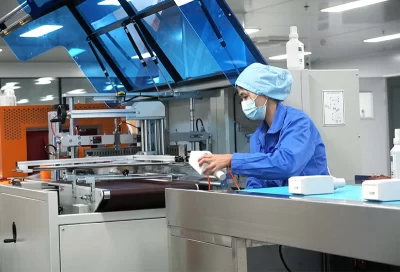
Amid the Industry 4.0 wave, cosmetics manufacturers in China have been early adopters of smart manufacturing transformation. In a well-known cosmetics industrial park in Guangzhou, a fully automated production line can produce 12,000 lipsticks per hour, with processes from raw material mixing and filling to packaging entirely handled by intelligent robots, controlling product weight within 0.01 grams. This smart factory model not only significantly enhances production efficiency but also enables full-process traceability from raw material sourcing to end sales through blockchain technology.
The application of digital technology extends to product development as well. By using AI algorithms to analyze global beauty trends on social media, cosmetics manufacturers in China can shorten the time from market insight to new product development to 30-45 days, a reduction of over 60% compared to traditional development cycles. This agile manufacturing capability has led many international brands to establish their new product R&D centers in China to respond swiftly to demand changes in Asian and even global markets.
Decoding the Core Competitiveness of Chinese Cosmetics Manufacturing
Complete Industry Chain and Cost-Effectiveness Advantages
China boasts the world’s most complete cosmetics industry chain layout, forming efficient industrial clusters within a radius of no more than 200 kilometers, encompassing everything from basic raw material supply and packaging material design and manufacturing to finished product production and testing certification. Taking Guangzhou’s Baiyun District as an example, it is home to over 1,200 cosmetics-related enterprises. Any component required for a product, from glass bottle production and pump head manufacturing to printing and packaging, can be sourced and delivered within 2 hours.
This industrial cluster effect brings significant cost and efficiency advantages. A comparative study shows that cosmetics of comparable quality manufactured in China have 18-25% lower comprehensive costs than those made in South Korea and 35-40% lower than those made in Europe. More importantly, the complete industry chain enables cosmetics manufacturers in China to achieve flexible production in small batches and multiple orders, with minimum order quantities as low as 3,000 pieces, lowering market entry barriers for emerging brands.
Breakthroughs in Technological Innovation and R&D Strength
In recent years, breakthroughs in R&D by cosmetics manufacturers in China have been remarkable. A national-level laboratory in Shanghai successfully developed supramolecular encapsulation technology, improving the stability of active ingredients by 5 times and increasing transdermal absorption rates by 80%. Enterprises in the Guangzhou Biotech Park developed plant stem cell culture technology, enabling the large-scale sustainable production of rare plant ingredients.
Particularly noteworthy is the unique advantage cosmetics manufacturers in China have developed in developing plant-based ingredients with Chinese characteristics. Based on traditional Chinese medicine texts and modern extraction techniques, over 200 types of locally sourced plant active ingredients have been successfully commercialized, such as snow lotus extract and Dendrobium officinale polysaccharides. These “Chinese ingredients” are becoming star raw materials sought after by international brands. In 2022, China’s cosmetics raw material export value increased by 47% year-on-year, confirming the global recognition of its technological prowess.
In-Depth Analysis of Leading Chinese Cosmetics Manufacturing Enterprises
Innovation-Driven Manufacturers: Cosmax China and Nox Bellow
Cosmax China, a wholly-owned subsidiary of the Korean Cosmax Group, has achieved innovative breakthroughs in the Chinese market that surpass its home country. Its Shanghai R&D center employs over 400 researchers. The “Microcapsule Dual-Color” technology launched in 2021 revolutionized color cosmetics manufacturing, enabling single lipsticks to display gradient color effects. The company’s most notable achievement is developing Asia-specific skincare series for multiple international luxury brands, based on the analysis of over 100,000 Asian skin samples to build a proprietary formulation database.
Nox Bellow is the invisible champion in sheet mask manufacturing, producing one out of every six sheet masks globally. The company boasts the largest sheet mask production capacity in Asia, with a daily output of up to 6.5 million masks. Its innovation lies in developing the concept of scenario-specific masks, such as “Blue Light Protection Masks” for night owls and “Humidity Balance Masks” for air-conditioned environments. Nox Bellow’s R&D lab has obtained 27 international patents and is a global leader in hydrogel mask and hydrogel patch technology.
Full Industry Chain Integrators: Shanghai ZhenChen and Yisja
Shanghai ZhenChen showcases the successful path of a cosmetics manufacturer in China transitioning from pure production to brand incubation. Besides serving over 50 domestic and international brands, the company has also independently incubated three cosmetic brands with annual sales exceeding 100 million RMB. Its pioneering “Data-Driven Development” model can complete the entire process from concept to market launch within 21 days by analyzing real-time e-commerce sales data and social media trends.
Yisja focuses on the personal care sector, and its intelligent customized production line is impressive. Using AI facial recognition technology, the system can analyze a consumer’s skin condition within 3 seconds and produce personalized customized serums within 30 minutes. The company invested 120 million RMB in building an R&D center housing China’s first human efficacy evaluation laboratory for cosmetics, capable of conducting 54 standardized efficacy tests for anti-wrinkle, whitening, sun protection, etc., with testing standards recognized by the EU.
How to Select a High-Quality Chinese Cosmetics Manufacturer
Assessing Certification Systems and Compliance Capabilities
When selecting a cosmetics manufacturer in China, compliance credentials are the primary consideration. High-quality manufacturers should not only hold the “Cosmetics Production License” issued by China’s NMPA but also possess international certifications such as ISO 22716 (Cosmetics Good Manufacturing Practices) and GMPC (US/EU Standard). Notably, leading enterprises have begun obtaining specialized qualifications like COSMOS Organic Certification and Halal Certification to meet specific market demands.
A thorough examination of the manufacturer’s Quality Management System (QMS) is crucial. This includes traceability capability in raw material procurement (whether a batch traceability system is established), control standards for the production process (whether clean rooms meet the 100,000-class standard), and finished product testing capabilities (whether equipped with advanced testing equipment like HPLC and GC-MS). Excellent cosmetics manufacturers in China typically proactively invite clients to audit their QMS and provide access to real-time production process monitoring.
Evaluating R&D Capability and Collaborative Innovation Potential
The true R&D strength of a cosmetics manufacturer in China needs assessment across multiple dimensions. First, examine its patent portfolio—not just the quantity but also the quality and commercialization of patents. Second, understand the structure of its R&D team; outstanding companies usually have R&D personnel accounting for over 15% of total staff, with interdisciplinary backgrounds (chemistry, biology, dermatology). Third, investigate its collaboration network; partnerships with renowned universities and research institutes often indicate stronger innovation potential.
The modern relationship between brands and cosmetics manufacturers in China has evolved beyond simple contract manufacturing to deep collaborative innovation. During initial engagement, specific technical challenges can be posed, such as “how to maintain the efficacy of a certain unstable active ingredient for over 12 months,” to observe whether the manufacturer’s technical team can propose a preliminary solution within 72 hours. This stress test can quickly identify partners with genuine problem-solving capabilities.
Future Lanes: Trends and Challenges for Chinese Cosmetics Manufacturing
Sustainable Development and Green Manufacturing Transformation
Environmental pressures are driving the green transformation of cosmetics manufacturers in China. Leading manufacturers have begun implementing whole-life-cycle carbon footprint management, from sustainable raw material sourcing (e.g., using RSPO-certified palm oil derivatives) and energy-saving production processes (solar power systems covering over 30% of energy needs) to recyclable packaging design (single-material plastic packaging, biodegradable film bags).
A “Zero Wastewater Discharge” factory built by a large cosmetics manufacturer in China in Guangzhou represents the industry’s highest standard. Its water circulation system can recycle and reuse 98% of production water, with the remaining 2% treated as clean water for plant greening. This green manufacturing capability is becoming a core consideration for international brands choosing partners, especially for EU and North American markets, where compliance with increasingly stringent local environmental regulations is a prerequisite for market access.
Personalized Customization and Building Agile Supply Chains
Consumer demand for personalized products is reshaping manufacturing models. Cosmetics manufacturers in China are enabling mass customization through modular formulation systems and digital production lines. An intelligent dispensing system developed by a Shenzhen tech company can produce completely personalized skincare products within 24 hours based on consumer DNA test results (analysis of skin-related genetic loci), with a minimum order quantity of just one unit.
Behind this flexible manufacturing capability lies powerful digital supply chain integration. By using IoT technology to monitor global raw material inventory in real-time and combining AI to predict market demand fluctuations, high-quality cosmetics manufacturers in China can shorten supply chain response times to 72 hours and improve inventory turnover rates by over 40%. For brands, this means lower inventory pressure and faster market response speeds.
Dual Challenges of Stricter Regulation and Quality Upgrading
The implementation of the “Regulations on the Supervision and Administration of Cosmetics” in 2021 marks a new era for cosmetics regulation in China. The new regulations introduce the Cosmetics Registrant and Notifier System, strengthening quality and safety management throughout the product lifecycle. This imposes higher requirements on cosmetics manufacturers in China—they need to establish adverse reaction monitoring systems, improve product recall mechanisms, and assume greater responsibility for quality and safety.
Facing this challenge, leading cosmetics manufacturers in China are turning compliance capabilities into competitive advantages. For instance, building a database of over 1 million Chinese skin samples to provide localized data support for product safety assessments; developing a global compliance formulation platform that meets regulatory requirements in China, the EU, and the US, helping brands efficiently enter multiple markets. This “compliance-by-design” mindset shifts manufacturers from passively reacting to actively leading the elevation of industry standards.
Conclusion: Embracing the Evolving Chinese Cosmetics Manufacturing Ecosystem
Cosmetics manufacturers in China have shifted from being cost-advantage-driven to being powered by both innovation and quality. For global brands, partnering with cosmetics manufacturers in China is no longer just a choice for cost reduction but a strategic decision to access technological innovation, market insights, and agile supply chains. As industry consolidation accelerates and standards continue to rise, truly globally influential Chinese cosmetics manufacturing groups are expected to emerge within the next 3-5 years.
The key to choosing a cosmetics manufacturer in China lies in identifying partners who not only possess advanced equipment and production capacity but can also provide end-to-end solutions—from cutting-edge trend research, innovative formula development, and intelligent manufacturing to global compliance support and market strategy advice. In this rapidly changing industry, the most successful collaborations will be long-term partnerships built on a foundation of deep mutual trust, transparent communication, and co-innovation.
For brands planning to enter or expand in the Chinese and Asian markets, now is the optimal time to reassess supply chain strategies and explore the potential of partnering with leading cosmetics manufacturers in China. This land, brimming with innovative vitality, offers unprecedented value-creation opportunities for the global beauty industry.