
Overview: The Global Rise of Chinese Cosmetic R&D
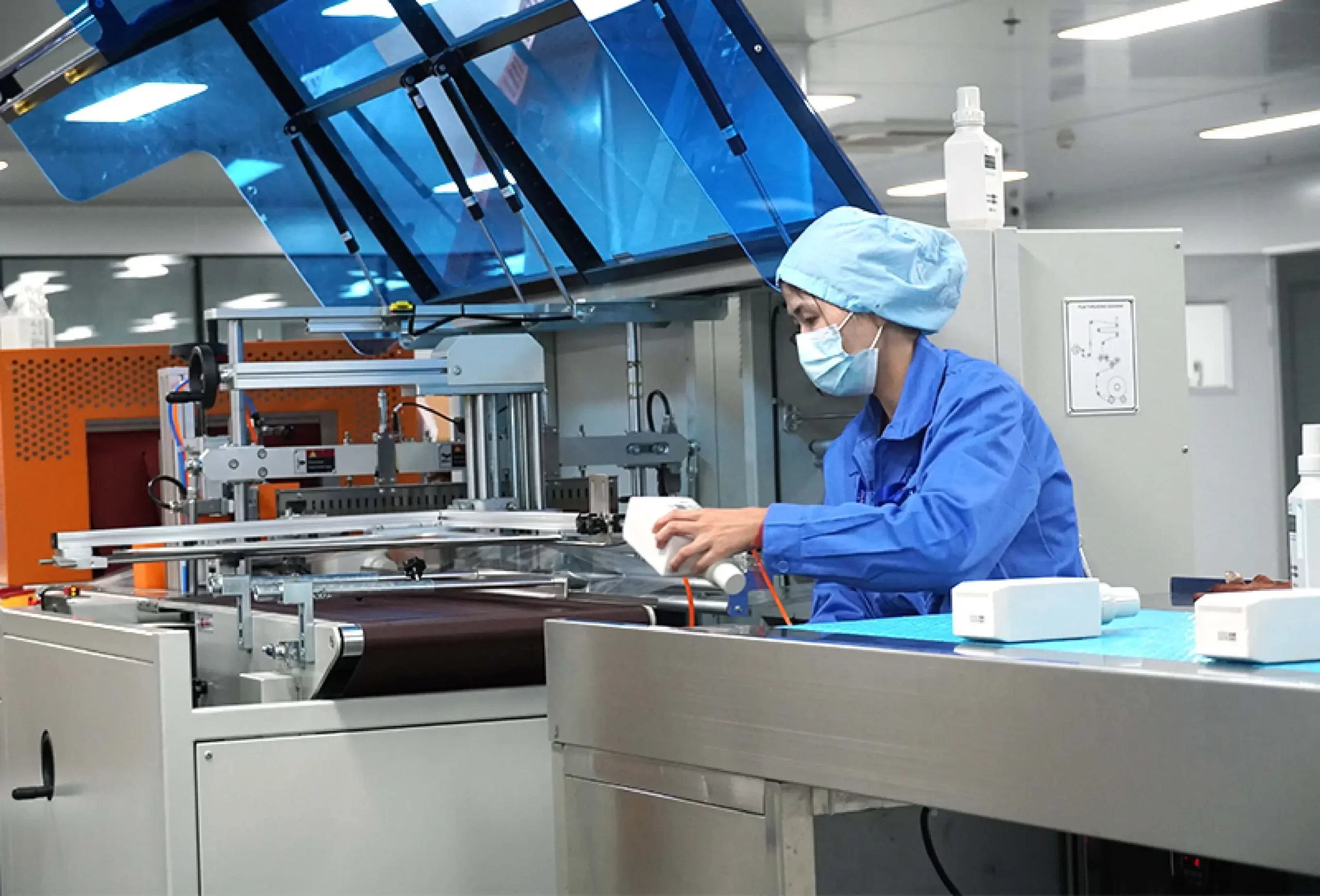
In the global cosmetic industry chain, the R&D teams of Chinese cosmetic manufacturers are rapidly transitioning from “followers” to “parallel runners,” and even becoming “leaders” in certain fields. This transformation is not only reshaping the global cosmetic industry landscape but also providing brand owners with unprecedented collaborative value.
The Shift from “Made in China” to “R&D in China”
Over the past decade, China’s cosmetic industry has undergone a profound transformation. The previous industrial model, which relied primarily on low-cost production and imitation, has gradually been replaced by a new model driven by independent R&D and innovation. Behind this change is an exponential increase in R&D investment—the proportion of R&D investment to revenue among leading Chinese cosmetic manufacturers has grown from less than 2% in 2015 to 5–8% today, with some companies even exceeding 10%, reaching international first-tier standards.
A direct reflection of this transformation is the explosive growth in the number of patents. Statistics show that the number of cosmetic-related patent applications in China has increased by 300% over the past five years, with a significant rise in the proportion of invention patents. These patents cover various dimensions, including raw material innovation, formulation technology, production processes, and testing methods, building a comprehensive R&D protection system.
Three Reasons Global Brands Choose Chinese R&D Teams
International brands are increasingly favoring collaboration with the R&D teams of Chinese cosmetic manufacturers, primarily for the following three advantages:
First, deep understanding of the Asian market. Born and raised in the region, Chinese R&D teams have an innate sensitivity to the skin characteristics, aesthetic preferences, and cultural psychology of Asian consumers. This local insight helps international brands launch products that better align with Asian market demands, significantly reducing the cost of market education.
Second, agile response and iteration speed. Chinese cosmetic R&D teams are known for their efficiency and flexibility, shortening the cycle from concept proposal to sample preparation by 30–50% compared to traditional European and American laboratories. This speed advantage is decisive in the fast-paced cosmetic market.
Third, a balance between cost and effectiveness. While maintaining internationally competitive R&D quality, Chinese R&D teams offer a more cost-effective structure, enabling brand owners to achieve product innovation within a more reasonable budget. This advantage is particularly evident in the mid-to-high-end market.
The Core Competitiveness of Chinese Cosmetic R&D Teams
Interdisciplinary Integration Capability: More Than Just a Chemist’s Game
Modern cosmetic R&D has long transcended traditional chemistry, and leading Chinese cosmetic manufacturers are building interdisciplinary R&D matrices. This integration capability is reflected at three levels:
Deep integration of biotechnology and skin science. Chinese R&D teams focus not only on formulation stability and user experience but also delve into the mechanisms of interaction between active ingredients and skin cells. For example, advanced methods such as efficacy testing using 3D skin models and evaluating the impact of products on skin barrier function through gene expression analysis have become standard in China’s top R&D laboratories.
Fusion of data science and consumer insights. Leveraging China’s vast consumer data base, R&D teams can correlate tens of millions of skin data points, usage feedback, and formulation parameters to predict the efficacy of ingredient combinations. This data-driven R&D model significantly improves the success rate of new products, shifting product development from “experience-oriented” to “evidence-oriented.”
Intersection of engineering technology and aesthetics. Cosmetic R&D is not only a laboratory endeavor but also involves multiple stages, such as production processes, packaging design, and user experience. The unique feature of Chinese R&D teams is their ability to provide integrated solutions throughout the entire product lifecycle—from molecular structure design to production line adaptation, and from laboratory samples to scaled production.
Innovative Breakthroughs in Chinese-Specific Ingredients and Formulations
Another breakthrough in Chinese cosmetic R&D lies in the deep development and modern application of local raw materials:
Modern transformation of traditional Chinese herbal ingredients. Chinese R&D teams utilize modern extraction technologies, molecular modification methods, and delivery systems to revitalize traditional ingredients such as lingzhi (reishi mushroom), astragalus, and centella asiatica. For instance, innovations like nano-emulsification technology improve the transdermal absorption rate of active ingredients, while microencapsulation technology enables sustained release and stability of ingredients, enhancing the efficacy of traditional components by several times.
Development of formulation systems adapted to the Asian climate. Addressing environmental characteristics such as high temperature, humidity, and severe pollution in Asia, Chinese R&D teams have developed region-specific formulation systems. Examples include “ultra-lightweight long-lasting makeup technology” for the southern Chinese market, which ensures the protective effect of sunscreen products while avoiding the greasy feel of traditional thick formulations, and “multi-layered sustained-release moisturizing systems” for the dry climate of northern China, providing over 12 hours of continuous moisturization.
Leading exploration of green and sustainable formulations. Amid the global sustainability trend, Chinese R&D teams have made significant progress in biodegradable materials, green solvent alternatives, and waterless formulations. Some companies have established comprehensive cosmetic carbon footprint assessment systems and incorporated environmental indicators into their R&D decision-making processes.
How to Evaluate and Select the Right Chinese R&D Partner
Identifying Manufacturers with Genuine R&D Strength
Among the many Chinese cosmetic manufacturers claiming to have R&D teams, how can one distinguish the truly capable ones? The following key indicators are worth noting:
R&D infrastructure and investment. Genuine R&D strength requires hardware support. During on-site inspections, focus on the following: laboratory size and zoning rationality, the advanced level of analytical and testing equipment (such as HPLC-MS, skin CT, and other high-end devices), the proportion of R&D personnel (typically exceeding 15% in high-quality enterprises), and the consistency and growth trend of R&D investment over the years.
Patent quality over quantity. Carefully analyze the composition of a company’s patents, focusing on the proportion of invention patents (as opposed to design patents), citation frequency, international patent layout, and the relevance of these patents to the core business. Valuable patents should translate into actual product advantages or process improvements.
Background and stability of the core R&D team. Understand the academic background, industry experience, and team structure of the R&D leadership. Excellent teams are typically composed of experts from multiple fields, such as dermatologists, biologists, chemical engineers, and data analysts, with relatively stable core members, ensuring continuity and depth in R&D work.
Collaboration Models and Intellectual Property Protection Strategies
When collaborating with Chinese cosmetic R&D teams, choosing the right collaboration model is crucial:
Win-win model of joint R&D. For brands wishing to deeply engage in the product development process, joint R&D is the best option. Under this model, the brand owner and the manufacturer’s R&D team form a joint project group to define R&D directions, share technical resources, and share development risks. Successful joint R&D often begins with clear intellectual property agreements, including the ownership and usage rights of background intellectual property (technologies brought by each party) and foreground intellectual property (technologies generated during collaboration).
Customized technology development services. For brands with clear technical needs but lacking R&D resources, customized technology services are available. Leading Chinese manufacturers provide full-chain development support from concept to product, including market analysis, formulation design, efficacy verification, stability testing, and compliance review. In this model, brand owners need to clearly define technical requirements, expected outcomes, and acceptance criteria.
Practical points for intellectual property protection. When engaging in cosmetic R&D collaboration in China, special attention must be paid to intellectual property protection: ensure detailed non-disclosure agreements (NDAs) are signed before collaboration; clearly define intellectual property ownership, scope of use, licensing fees, and infringement liability in R&D agreements; conduct regular patent searches and monitoring to ensure R&D directions do not infringe on others’ rights; and for core formulations and technologies, consider protecting them as “technical secrets” rather than patents.
Future Trends: The Next Wave of Transformation in Chinese Cosmetic R&D
Technological Breakthroughs in Personalized and Precision Skincare
Over the next five years, the most significant transformation in Chinese cosmetic R&D will occur in the field of personalized skincare:
Skin typing systems based on multi-omics data. Leading Chinese R&D teams are integrating genomics, proteomics, metabolomics, and microbiome data to build skin typing models more refined than traditional skin type classifications. These systems can identify skin aging trajectories, sensitivity triggers, and differences in response to active ingredients among different populations, providing a scientific basis for truly personalized product development.
Integration of real-time diagnostics and product adaptation technologies. The combination of portable skin testing devices and intelligent formulation systems will enable integrated “testing-recommendation-customization” services. Consumers can complete skin testing using home devices, upload data to cloud-based analysis systems, and receive personalized formulation recommendations generated by algorithms. Manufacturers can then rapidly produce small batches of customized products through flexible production lines. China’s advantages in smart manufacturing and IoT technologies will accelerate the commercialization of this model.
Comprehensive Upgrade in Sustainability and Ethical R&D
In the global green transformation of the cosmetic industry, Chinese R&D teams are transitioning from followers to innovators:
R&D practices guided by circular economy principles. From raw material sourcing and production processes to packaging design, Chinese manufacturers are establishing lifecycle environmental assessment systems. R&D focuses include developing recyclable or refillable packaging solutions, extracting cosmetic raw materials from food industry by-products, optimizing production processes to reduce energy and water consumption, and establishing systems for recycling and reusing cosmetic empties.
Innovation in alternatives to animal testing. With advancements in China’s cosmetic regulations, methods to completely replace animal testing are being rapidly established. Chinese R&D institutions are significantly increasing investment in areas such as organoid models, computer simulation predictions, and in vitro reconstructed skin models. These methods are not only ethically more advanced but also show better correlation in predicting human reactions compared to traditional animal testing.
Transparent and traceable R&D information disclosure. The demand for product transparency among the new generation of consumers is driving more open R&D processes. Leading Chinese manufacturers are beginning to provide detailed product “backgrounds,” including raw material sources, production processes, environmental impact assessments, and efficacy verification data. This transparency not only enhances consumer trust but also compels R&D teams to adopt higher standards.
Collaborative Innovation in Global R&D Networks
The future of Chinese cosmetic R&D will be more open and international:
Deep integration of Chinese and foreign R&D teams. Leading Chinese cosmetic manufacturers are integrating global R&D resources through acquisitions, joint ventures, and the establishment of overseas R&D centers. This model enables Chinese teams to quickly absorb internationally advanced technologies while introducing local R&D achievements to the global market, creating a two-way flow of technology.
Rise of open innovation platforms. Some Chinese manufacturers have established open innovation platforms for startups, research institutions, and independent R&D personnel, attracting external innovators through technology challenges, joint laboratories, and incubators. This model breaks through the limitations of a company’s internal R&D resources and accelerates the pace of innovation.
Synchronized advancement of standardization and global compliance. As Chinese cosmetic R&D internationalizes, actively participating in international standard-setting and ensuring compatibility of R&D processes with regulations in major global markets has become an inevitable choice. While meeting China’s NMPA requirements, Chinese R&D teams are systematically learning the regulatory systems of major markets such as the European Union, the United States, and Japan, developing “compliance-by-design” products suitable for global launch.
Conclusion
Choosing to collaborate with the R&D teams of Chinese cosmetic manufacturers is no longer merely a supply chain decision but a strategic choice related to a brand’s innovation capabilities. From a profound understanding of the Asian market to interdisciplinary integration capabilities, from innovations in Chinese-specific ingredients to cutting-edge explorations in personalized skincare, Chinese R&D teams are reshaping the global cosmetic innovation landscape with their unique value propositions.
For brand owners, the key lies in identifying partners with genuine R&D strength, establishing mutually beneficial collaboration models, and developing long-term strategies for intellectual property protection and sustainable development. As the R&D capabilities of Chinese cosmetics continue to evolve, such collaborations will not only bring cost advantages or market adaptability but may also become a source of breakthrough innovation for brands.
In this new era driven by R&D, brands that can establish deep, mutually trusting, and collaborative relationships with the R&D teams of Chinese cosmetic manufacturers will gain a first-mover advantage in defining the future beauty market. Meanwhile, Chinese R&D teams, through interactions with global brands, will continually push the boundaries of innovation, achieving a magnificent transformation from “R&D in China” to a “global innovation engine.”