
The global beauty industry is a vibrant ecosystem of constant innovation. Every day, entrepreneurs, established brands, and even influencers dream of launching their own skincare line, a unique makeup palette, or a revolutionary hair care product. However, the path from a concept sketched on a napkin to a physical product sitting on a retail shelf is fraught with complexity. It involves navigating formulation science, packaging sourcing, regulatory compliance, and complex supply chains.
For a vast majority of successful beauty brands, the engine that turns these ideas into reality is an Original Equipment Manufacturer (OEM), and increasingly, that engine is located in China. Once known primarily for mass production, China has evolved into a global hub for cosmetic innovation, offering cutting-edge laboratories, flexible manufacturing, and unparalleled speed.
This guide serves as your definitive roadmap for the journey From Idea to Launch: Working with a China Cosmetics OEM Manufacturer. We will delve deep into every stage of the process, helping you understand how to leverage these partnerships to build a successful beauty brand.
Why Partner with a China Cosmetics OEM Manufacturer?
Before diving into the “how,” it’s crucial to understand the “why.” China’s dominance in cosmetic manufacturing is not accidental. It’s built on a foundation of several key advantages that are hard to replicate elsewhere.
1. Unmatched Cost Efficiency and Scalability
The most immediate benefit is cost. China has a mature and highly integrated supply chain. From sourcing raw active ingredients and specialized peptides to securing glass bottles, plastic pumps, and outer cartons, everything is within a concentrated geographical area. This proximity drastically reduces material costs and logistics expenses for the manufacturer. This efficiency allows you, the brand owner, to achieve premium quality at a fraction of the cost it would take in Western markets. Furthermore, this ecosystem is incredibly scalable. Whether you need a pilot run of 1,000 units for a crowdfunding campaign or a full-scale production run of 100,000 units for a national launch, a capable Chinese OEM can accommodate your needs.
2. Access to Advanced R&D and Innovation
The narrative that Chinese manufacturing is solely about copying is outdated. Today, leading Chinese OEMs are powerhouses of innovation. They invest heavily in research and development, constantly exploring new textures, delivery systems (like encapsulated serums or time-release formulas), and trendy ingredients like fermented extracts or CBD alternatives. By partnering with them, you gain access to this cutting-edge science. You can leverage their expertise to create products that are not just derivatives of what’s already on the market, but are genuinely novel and competitive.
3. Speed and Agility: The Fast Fashion of Beauty
In today’s market, speed to market is a critical competitive advantage. Chinese manufacturers operate with a velocity that is difficult to match. Their ability to quickly source materials, run samples, and ramp up production means you can go from a finalized concept to a finished product in a matter of weeks, not months. This agility allows your brand to respond rapidly to emerging trends—like the sudden popularity of a specific skincare ingredient or a viral makeup style—capitalizing on the moment while your competitors are still in the planning phase.
Phase 1: Conceptualization and the Brief
The journey begins long before you contact a factory. It starts with a clear, well-defined idea. The more work you do upfront, the smoother the collaboration will be.
1. Defining Your Brand Identity and Product Concept
Before approaching an OEM, you must have a solid grasp of your brand’s core identity.
-
Who is your target customer? (e.g., Gen Z sustainability seekers, men over 40 with sensitive skin, professional makeup artists)
-
What problem does your product solve? (e.g., fine lines, hyperpigmentation, lack of “stay” power in a lipstick)
-
What is your brand’s aesthetic and price point? (e.g., minimalist luxury, fun and colorful, eco-conscious budget)
This clarity will form the basis of your product brief. A strong brief includes details like the product type (e.g., “a lightweight, oil-free gel moisturizer”), key desired benefits (e.g., “24-hour hydration, suitable for acne-prone skin”), preferred texture and fragrance, and target packaging style.
2. Initial Research and Shortlisting Partners
Not all OEMs are created equal. Some specialize in natural and organic skincare, others in color cosmetics with complex formulas, and others in hair care. Conduct thorough online research. Look for manufacturers with verifiable experience in your product category. Platforms like Alibaba can be a starting point, but also look for manufacturers with professional websites, like guangzhoucosmeticmanufacturer.com , that showcase their capabilities, laboratory equipment, and certification. Create a shortlist of 3-5 potential partners whose expertise aligns with your vision.
Phase 2: The Development and Sampling Stage
This is the core of the OEM partnership, where your idea begins its physical transformation.
1. Navigating Formulation and Customization Options
When you engage an OEM, you typically have three paths for formulation:
-
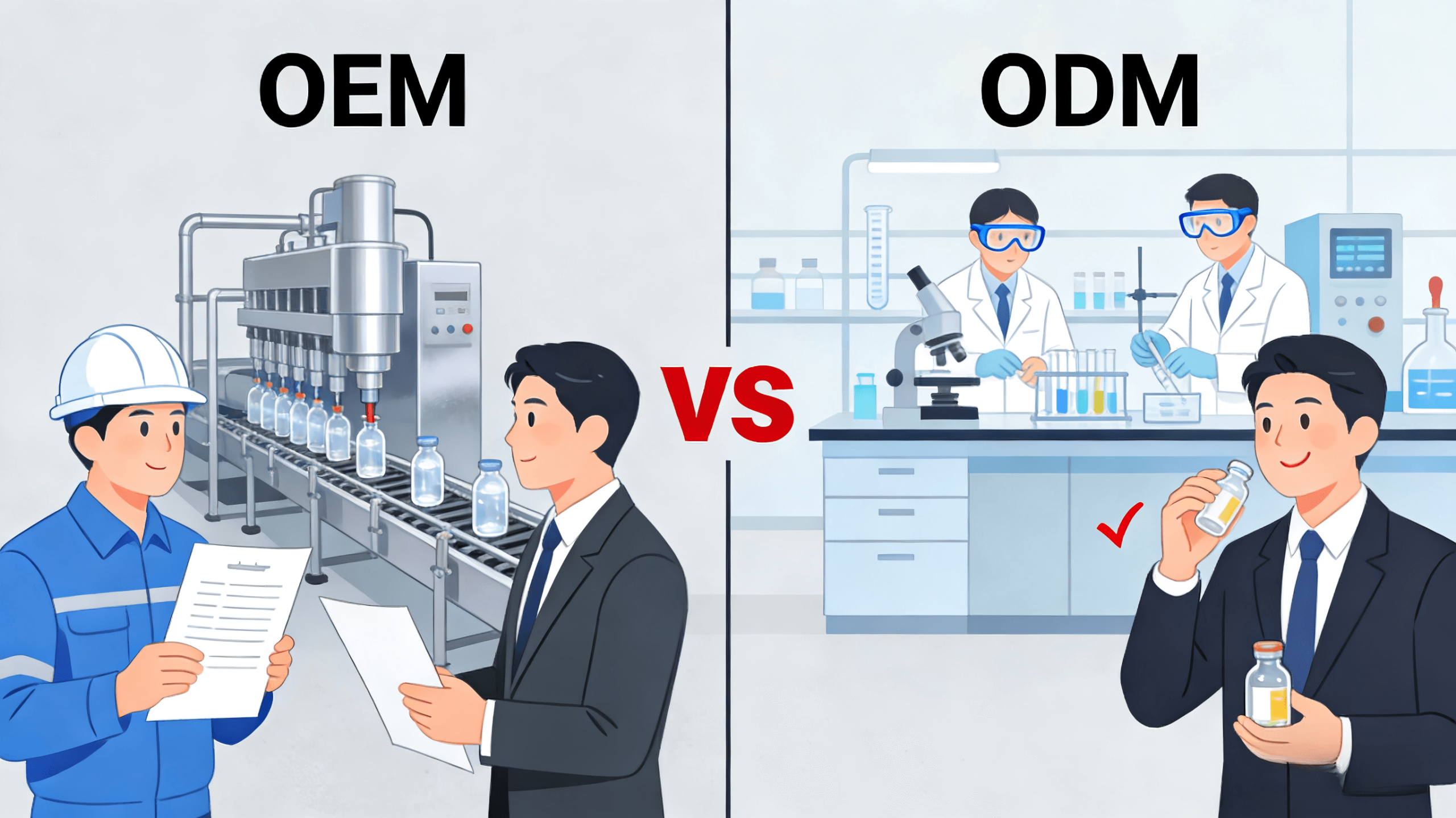
Stock Formula (Private Label): You select a formula that the manufacturer has already developed. This is the fastest and most cost-effective route, ideal for testing a market or launching simple products. You can often make minor tweaks, like changing the fragrance or color.
-
Modified Stock Formula: You start with an existing formula but request significant changes, such as adding a specific active ingredient (e.g., hyaluronic acid, retinol), altering the preservative system, or changing the texture. This offers a balance of speed and uniqueness.
-
Custom Formulation: This is the full-service, ground-up approach. You provide your brief, and the OEM’s chemists work in the lab to create a bespoke formula tailored to your exact specifications. This path requires more time, investment, and rounds of sampling but results in a truly proprietary product.
A transparent and communicative OEM partner will guide you through these options, explaining the feasibility, costs, and timelines associated with each.
2. The Critical Role of Sampling, Testing, and Feedback
Sampling is the heartbeat of product development. After the initial formulation, you will receive samples for evaluation. This is not a one-and-done step; it is an iterative process.
-
Evaluate Thoroughly: Test the sample under various conditions. How does it feel on the skin? What is the fragrance like immediately after application and an hour later? Does the texture hold up in different climates?
-
Stability Testing: A reputable OEM will conduct internal stability tests (e.g., subjecting the product to heat, cold, and light cycles to ensure it doesn’t separate, change color, or spoil). Ask for these reports.
-
Provide Clear, Constructive Feedback: When requesting changes, be specific. Instead of “I don’t like the smell,” say, “The fragrance is too sweet; can we try a more citrus-forward, lighter scent?” or “The moisturizer feels a bit heavy; can we reduce the oil phase to make it more gel-like?”
Phase 3: Packaging, Design, and Regulatory Compliance
A great product needs great packaging, and it all must be legal to sell.
1. Sourcing and Customizing Your Packaging
Just as with the formula, packaging can be selected from the manufacturer’s catalog (stock packaging) or custom-designed. Your OEM often has a network of trusted packaging suppliers, which simplifies the process.
-
Primary Packaging: This is what touches the product (bottles, jars, tubes). You need to consider material (glass, plastic, PCR – post-consumer recycled), functionality (airless pump, dropper, flip-top cap), and compatibility with your formula (some ingredients can degrade certain plastics).
-
Secondary Packaging: This is the outer carton or box. It’s a key canvas for your branding, colors, and messaging.
-
Lead Times: Packaging, especially custom molds, often has the longest lead time in the entire project. Start this conversation early. A partner like the one at guangzhoucosmeticmanufacturer.com can help you balance your aesthetic desires with practical timelines and costs.
2. Mastering Regulations and Documentation for Your Target Market
This is a non-negotiable step. A product that isn’t compliant cannot be sold.
-
Safety Assessments: You will need a Cosmetic Product Safety Report (CPSR) for markets like the EU and UK, or comply with FDA regulations in the US.
-
Ingredient Compliance: Your formula must adhere to the restricted and prohibited substance lists of your target country (e.g., EU Cosmetics Regulation, FDA guidelines).
-
The Manufacturer’s Role: Your OEM should provide you with the essential documents you need: the Certificate of Analysis (COA) for each batch, the Manufacturing Certificate of Free Sale, and the full ingredient list with International Nomenclature of Cosmetic Ingredients (INCI) names. They should be familiar with the documentation required for your market, even if you are ultimately responsible for final registration.
Phase 4: Production, Quality Control, and Logistics
With the formula perfected and packaging ready, you move into the final, exciting phase.
1. The Production Run and On-Site Quality Assurance
Once you give the green light, the manufacturer will order raw materials and schedule your production run.
-
Pre-Production Samples: Before the full run begins, request a “pre-production sample” made with the actual packaging and final formula. This is your last chance to catch any issues.
-
Quality Control (QC): A professional OEM will have a QC process at every stage: inspecting incoming raw materials, monitoring during manufacturing and filling, and checking finished products. If possible, consider hiring a third-party inspection agency in China to be present during production to conduct random sampling and ensure everything meets your specifications.
2. Shipping, Logistics, and Market Launch
The final step is getting your product from the factory in China to your warehouse or fulfillment center.
-
Incoterms: Understand the shipping terms (Incoterms) like FOB (Free on Board) or EXW (Ex Works). This clarifies who is responsible for shipping, insurance, and customs at each stage.
-
Freight Options: Choose between air freight (faster, more expensive for smaller, lighter, or time-sensitive launches) and sea freight (slower, more cost-effective for larger volumes).
-
The Launch: As your shipment arrives, your focus shifts entirely to marketing, sales, and distribution. You have successfully navigated the journey From Idea to Launch, turning your vision into a tangible product ready for the world.
Conclusion: Building a Successful Partnership
Working with a China cosmetics OEM manufacturer is more than a transaction; it’s a strategic partnership. The key to success lies in preparation, clear communication, and mutual respect. By doing your homework, providing a detailed brief, and being an active participant in the development process, you set the stage for a fruitful collaboration.
The landscape of beauty is more democratic than ever. With the expertise and infrastructure of partners like guangzhoucosmeticmanufacturer.com , the power to create and launch a professional, high-quality cosmetics line is accessible to visionary entrepreneurs worldwide. Your idea has the potential to become the next big thing. The journey from idea to launch begins with a single, well-informed step.