
Choosing the right cosmetics manufacturer in China is one of the most critical decisions for beauty brands, startups, and private label businesses. The manufacturer you select will directly impact your product quality, compliance, delivery time, and long-term brand reputation.
China has become the world’s leading cosmetics manufacturing hub thanks to its mature supply chain, advanced R&D capabilities, and cost efficiency. However, with thousands of factories claiming to offer OEM/ODM services, many buyers struggle to identify a reliable cosmetics manufacturer that truly meets international standards.
This guide will walk you through how to choose a cosmetics manufacturer in China, explain common risks, detail the OEM manufacturing process, and help you make an informed, confident decision.
Why Choosing the Right Cosmetics Manufacturer in China Is So Important
China’s cosmetics industry is highly competitive, but not all manufacturers operate at the same level. Selecting the wrong partner can lead to serious problems, including regulatory issues, inconsistent quality, and delayed market launches.
1. China Is the Global Cosmetics OEM Hub
China accounts for a significant portion of global skincare and personal care manufacturing. Many international beauty brands rely on Chinese OEM factories for:
-
Skincare products (cream, serum, toner, mask)
-
Body care and hair care
-
Private label cosmetics
The advantage lies in scale, formulation expertise, and supply chain integration.
2. The Risk of Choosing the Wrong Manufacturer
Common issues buyers face include:
-
Fake certifications or expired licenses
-
Poor formulation stability
-
Non-compliant ingredients
-
Inconsistent batch quality
-
Hidden subcontracting
-
Missed delivery deadlines
Once products reach the market, these issues are costly—or impossible—to fix.
3. Search Intent Behind “How to Choose a Cosmetics Manufacturer in China”
Most buyers searching this term are:
-
New beauty brand founders
-
Importers and distributors
-
Amazon / DTC private label sellers
-
Brands switching OEM suppliers
Their core concern is risk control + long-term cooperation, not just price.
What Problems Do Buyers Commonly Face When Working With Chinese Cosmetics Manufacturers?
Understanding common problems helps you avoid costly mistakes.
1. Lack of Transparency
Some factories present themselves as manufacturers but are actually:
-
Trading companies
-
Small workshops without production licenses
-
Middlemen outsourcing orders
This results in:
-
Higher costs
-
Poor quality control
-
No accountability
2. Weak Regulatory Knowledge
Cosmetics exported to the EU, US, Middle East, or Southeast Asia must comply with:
-
FDA (US)
-
EU Cosmetic Regulation (EC 1223/2009)
-
ASEAN Cosmetic Directive
-
Local MSDS & CPSR requirements
Factories without export experience often fail at compliance documentation.
3. Limited R&D Capability
A true cosmetics manufacturer should offer:
-
Formula customization
-
Stability testing
-
Ingredient compatibility analysis
-
Texture and performance optimization
Without R&D support, brands struggle to differentiate products.
4. Inconsistent Quality Control
Quality issues often come from:
-
Manual production
-
Poor raw material sourcing
-
No batch testing records
-
Lack of GMP standards
These problems increase return rates and damage brand trust.
Understanding the Cosmetics Manufacturing Process in China (OEM & ODM)
Before choosing a manufacturer, you must understand the standard cosmetics OEM process.
1. Product Concept & Formula Development
This includes:
-
Market positioning
-
Target ingredients
-
Texture and function requirements
-
Cost control
Professional manufacturers provide custom formulation rather than off-the-shelf formulas.
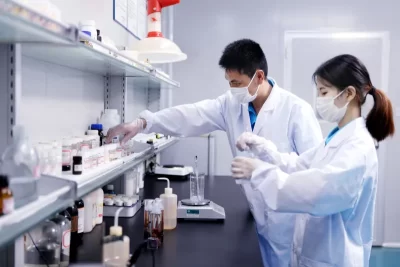
2. Sampling & Testing
Key steps include:
-
Lab sample creation
-
Texture and fragrance adjustment
-
Stability testing (high/low temperature)
-
Microbial testing
This stage determines final product performance.
3. Raw Material Sourcing
Reliable manufacturers use:
-
Certified global suppliers
-
Full ingredient traceability
-
Compliance-approved raw materials
This is critical for export markets.
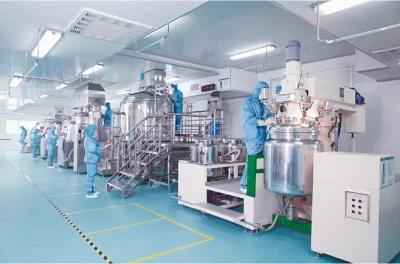
4. Mass Production
A professional cosmetics manufacturer operates:
-
GMP-certified clean workshops
-
Automated filling and mixing systems
-
Batch-level quality checks
Production capacity must match your order volume.
5. Packaging & Labeling
OEM services often include:
-
Packaging sourcing
-
Label compliance checks
-
Barcode and artwork inspection
Incorrect labeling is a common export failure point.
6. Final Inspection & Logistics
Before shipment:
-
Finished product inspection
-
Documentation preparation
-
Export compliance review
An experienced factory helps reduce customs risks.
How to Evaluate a Professional Cosmetics Manufacturer in China
Here’s a practical checklist you can use.
1. Verify Legal Qualifications
A legitimate cosmetics manufacturer should provide:
-
Business license
-
Cosmetics production license
-
GMP certification
-
Export records
Always verify documents independently.
2. Assess R&D Strength
Ask:
-
How many formulators are on staff?
-
Can they customize formulas?
-
Do they support ingredient innovation?
Strong R&D equals long-term competitiveness.
3. Inspect Production Facilities
Key indicators:
-
Cleanroom environment
-
Automated equipment
-
Clear production流程
-
In-house filling lines
Avoid factories that refuse video or on-site audits.
4. Review Quality Control System
A professional manufacturer should have:
-
Incoming raw material inspection
-
In-process quality checks
-
Finished product testing
-
Batch traceability
Ask for QC reports.
5. Export & Compliance Experience
Factories with international clients understand:
-
CPSR documentation
-
MSDS preparation
-
Ingredient compliance
-
Customs requirements
This saves time and avoids delays.
6. Communication & Project Management
Clear communication prevents:
-
Formula misunderstandings
-
Packaging errors
-
Delivery delays
Look for factories with dedicated project managers.
Why Choose a Professional Cosmetics Manufacturer Instead of a Small Factory?
Price is important—but reliability matters more.
1. Lower Long-Term Risk
Professional manufacturers reduce:
-
Product recalls
-
Compliance failures
-
Brand reputation damage
2. Better Scalability
As your brand grows, a professional factory can:
-
Increase production volume
-
Support new product lines
-
Maintain consistency
Small factories often cannot scale.
3. Stronger Brand Differentiation
Advanced manufacturers help with:
-
Unique formulations
-
Trend-driven product development
-
Custom textures and performance
This is critical in competitive markets.
4. One-Stop OEM Solutions
Professional cosmetics manufacturers offer:
-
R&D
-
Production
-
Packaging
-
Compliance support
This simplifies supply chain management.
Common Mistakes to Avoid When Choosing a Cosmetics Manufacturer in China
-
Choosing the lowest price without verification
-
Skipping factory audits
-
Ignoring compliance requirements
-
Accepting stock formulas without testing
-
No clear contract or QC agreement
Avoiding these mistakes saves time and money.
How Long Does It Take to Start OEM Cosmetics Production in China?
Typical timeline:
-
Formula development: 2–4 weeks
-
Sampling & testing: 2–3 weeks
-
Packaging confirmation: 2 weeks
-
Mass production: 25–35 days
Professional manufacturers help optimize timelines.
Final Thoughts: How to Choose the Right Cosmetics Manufacturer in China
Choosing the right cosmetics manufacturer in China is not just about cost—it’s about quality, compliance, reliability, and long-term partnership.
A professional OEM partner helps you:
-
Reduce risk
-
Speed up time to market
-
Build a sustainable beauty brand
Take the time to evaluate manufacturers carefully. The right choice will support your brand’s growth for years.
CTA – Start Your OEM Project With a Professional Manufacturer
If you’re looking for a reliable cosmetics manufacturer in China with strong R&D, GMP-certified production, and full OEM/ODM support:
Our team will help you turn your beauty concept into a compliant, high-quality product—ready for global markets.