
struggling to find the right partner? This guide covers the critical differences between OEM and ODM, how to navigate GMP compliance, negotiation strategies for MOQs, and the vetting process for cosmetic supply chains. Essential reading for founders building a long-term beauty brand.
Introduction: Why Your Manufacturer Determines Your Brand’s Lifespan
In the beauty industry, marketing may determine how high your brand flies, but your supply chain determines how far it can go.
For startups or expanding enterprises, the question of “How to Choose a Cosmetics Manufacturer” isn’t just about finding a factory floor; it’s about finding a strategic partner who understands your vision, possesses robust R&D capabilities, and guarantees consistent quality control.
Many brands fail not because of a lack of market demand, but due to inconsistent product quality, delayed shipments, or compliance issues that break the cash flow. This article strips away the sales fluff and provides a systematic, insider framework for screening and selecting the right partner.
Define Your Business Model: OEM vs. ODM vs. OBM
Before contacting any manufacturer, you must clarify your needs. Different models dictate your level of control and dependency on the factory.
OEM (Original Equipment Manufacturer) – You Own the Formula
If you own a unique formula and intellectual property (IP) and simply need a factory to provide equipment and labor, you need OEM services.
-
Best For: Mature brands with internal R&D teams, or formula-focused entrepreneurs.
-
Key Considerations: Equipment precision, strict enforcement of Non-Disclosure Agreements (NDAs), and the ability to scale production.
-
Expert Tip: Sign a strict NDA before requesting a quote. Protect your IP at all costs.
ODM (Original Design Manufacturer) – Leverage Their R&D
If you excel at marketing but lack R&D capabilities, ODM is your best path. The factory provides ready-made formulas (private label) or customizes them for you.
-
Best For: DTC (Direct-to-Consumer) startups, influencers, and cross-industry entrepreneurs.
-
Key Considerations: Innovation speed, the size of their formula library, and the option for Formula Buyout (ownership transfer).
-
The Trap: Beware of “Cookie-Cutter Formulas.” If a factory sells the exact same formula to ten different brands, your product will have zero differentiation.
Hard Power Check: Compliance & Certifications
Cosmetics are applied directly to the human body; safety is a non-negotiable red line. algorithm values this technical depth.
Non-Negotiable International Standards
Do not rely on verbal assurances. Demand to see original copies and expiration dates of the following:
-
ISO 22716 / GMP (Good Manufacturing Practice): The global gold standard for cosmetics. It ensures products are made in a sanitary, controlled environment. If they don’t have GMP, walk away.
-
FDA Registration (For US Market): If selling in the US, the facility must comply with MoCRA and FDA registration requirements.
-
Cruelty-Free & Vegan Certifications: With the rise of “Clean Beauty,” having certifications like Leaping Bunny can significantly increase your brand premium.

Labs and Quality Control Systems (QC)
A top-tier manufacturer must have independent microbiological and physicochemical laboratories.
-
The Critical Question: “Do you perform internal Challenge Testing and Stability Testing?”
-
Insider Insight: Ask how they handle non-conforming raw materials. Superior factories have a strict IQC (Incoming Quality Control) process that traces every batch of ingredients back to the source.
R&D and Innovation: More Than Just “Production”
Beauty trends shift rapidly—from “Skin Cycling” to “Microbiome Skincare.” Your factory must keep up with the pace.
The Chemist Team’s Credentials
Don’t be afraid to vet the Chief Formulator. Do they have experience with major international brands, or just basic industrial chemistry?
-
De-AI / Human Tip: Many factories claim to have R&D but actually outsource it. You must confirm the team is In-House. This directly impacts communication efficiency and the flexibility of formula adjustments.
Supply Chain Transparency
Premium manufacturers have long-term partnerships with top global ingredient suppliers (e.g., BASF, Givaudan, DSM).
-
Key Ask: “Where do your core active ingredients come from? Can you provide the COA (Certificate of Analysis)?”
-
Value Add: A factory that can access patented ingredients or rare plant extracts gives your brand powerful Storytelling assets.
Commercial Terms: MOQs, Costs, and Lead Times
This is where most friction occurs. Understanding the factory’s cost structure helps you negotiate better terms.
Hacking the MOQ (Minimum Order Quantity)
MOQ is the biggest barrier for startups. Big factories often require 5,000–10,000 units per SKU.
-
Negotiation Strategy:
-
The Surcharge Method: Ask if you can pay a surcharge to lower the initial MOQ to test the market.
-
Split Components: Often, the MOQ is high because of the packaging (bottles/tubes), not the liquid. You can buy the packaging yourself (or stock it) and only ask the factory for Filling & Assembly, which often has lower thresholds.
-
Hidden Costs and Lead Times
Quotes often only show the unit price, but you need to calculate the Total Cost of Ownership.
-
Watch for Hidden Fees: Mold fees, sampling fees (usually refundable upon order), third-party testing fees, and regulatory filing fees.
-
The Delivery Trap: When a factory promises “30-day delivery,” they usually mean “30 days after packaging arrives.” Since packaging production can take 45 days, your total launch time might be 3 months. Always confirm the End-to-End Timeline.
Due Diligence: The Factory Audit
In the digital age, Zoom is convenient, but on-site Factory Audits are irreplaceable.
What to Look for On-Site?
Don’t just sit in the conference room looking at PPTs. Walk the floor:
-
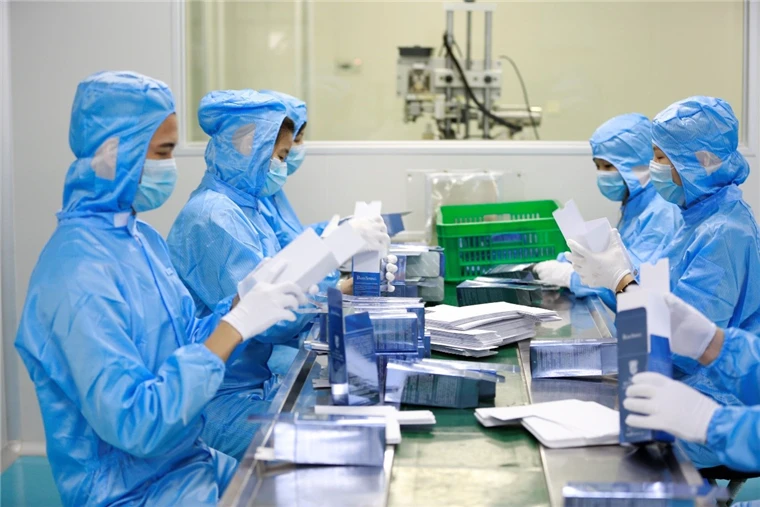
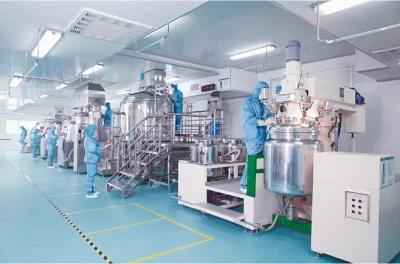
Hygiene: Are workers strictly wearing hairnets, masks, and gloves? Are floors dry and clean?
-
Inventory Management: Are raw materials stored off the floor? Do they follow FIFO (First In, First Out)?
-
Retention Room: Does the factory keep samples of every batch produced for the last 3 years? This is crucial for tracing issues if a customer complaint arises later.
Sample Testing & The Feedback Loop
Once you receive the prototype, do not approve it immediately.
-
Blind Testing: Conduct blind tests with your target demographic.
-
Stress Testing: Put the sample in an oven (45°C) and a fridge for a week. Check for separation, discoloration, or odor changes. This predicts how your product will survive shipping and shelf life.
Conclusion: You Are Hiring a Partner, Not a Machine
Answering “How to Choose a Cosmetics Manufacturer” ultimately comes down to trust.
The best manufacturer is not necessarily the cheapest. It is the one willing to work overtime when you have a supply chain crisis, lock in prices when raw materials surge, and grow with you when your brand is small.
Expert Advice: Never put all your eggs in one basket. As your brand scales, building a “Primary Supplier + Backup Supplier” system is the only way to mitigate risk.