
Looking to find a reliable Chinese cosmetics manufacturer in 2026? This guide provides an in-depth analysis on how to navigate CSAR 2026 regulatory audits, evaluate the differences between OEM and ODM, identify low minimum order pitfalls, and pinpoint top suppliers.
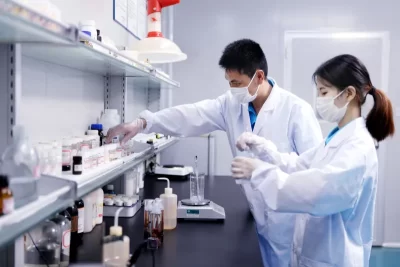
Introduction: The 2026 Global Beauty Shift
In 2026, the beauty industry is no longer just about mass production; it’s about precision, sustainability, and regulatory integrity. For global brand owners, finding a reliable Cosmetic OEM/ODM Manufacturer in China has evolved from a simple sourcing task into a strategic partnership.
With China’s Cosmetic Supervision and Administration Regulation (CSAR) now in its full enforcement phase, the “wild west” era of manufacturing is over. Today, a “reliable” partner is one that not only produces high-quality lipsticks or serums but also handles complex safety filings, ingredient transparency, and ethical supply chains.
I. Understanding the Difference: Cosmetic OEM vs. ODM vs. JDM
Before you start your search, you must define the scope of your partnership. Choosing the wrong model can lead to wasted R&D budgets or legal headaches.
1. Cosmetic OEM (Original Equipment Manufacturer)
-
Who it’s for: Brands with their own secret formulas or a dedicated R&D team.
-
What you provide: Formula specifications, ingredient lists, and packaging design.
-
What the manufacturer provides: Production facilities, labor, and quality control.
-
Keyword focus: Custom cosmetic formulation manufacturing China.
2. Cosmetic ODM (Original Design Manufacturer)
-
Who it’s for: New entrepreneurs or influencers who want to launch a “Turnkey” brand quickly.
-
What you provide: Brand concept, logo, and marketing direction.
-
What the manufacturer provides: Pre-developed formulas (off-the-shelf), packaging sourcing, and full production.
-
Keyword focus: Private label cosmetic manufacturer low MOQ.
3. JDM (Joint Design Manufacturing) – The 2026 Trend
In 2026, many reliable manufacturers offer JDM services. This is a collaborative approach where the brand’s marketing insights meet the factory’s chemical expertise to create unique, high-performance products.
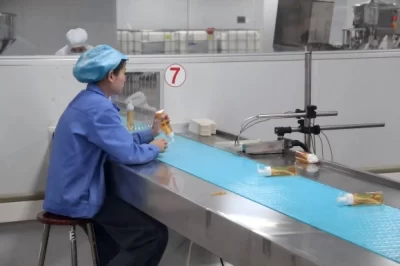
II. Top Sourcing Regions: Where the Best Factories Live
Location in China often dictates the product category and price point. Here is a breakdown of where to find your Cosmetic OEM/ODM Manufacturer:
| Region | Primary Category | Why It Matters in 2026 |
| Guangzhou (Baiyun) | All-rounder (Skincare & Makeup) | The world’s largest cluster; highest competition means better prices. |
| Shanghai / Suzhou | Premium Skincare & High-tech R&D | Home to “Clean Beauty” specialists and factories that meet medical-grade standards. |
| Zhejiang (Yiwu/Jinhua) | Mass-market makeup & Tools | Ideal for entry-level products, brushes, and accessories with high turnover. |
| Fujian (Xiamen) | Fragrances & Essential Oils | Specializes in high-end scent extraction and gift sets. |
III. The 7-Point “Reliability” Audit for 2026
Finding a website on Alibaba is easy; verifying a factory is hard. Use this audit to vet any potential Cosmetic OEM/ODM Manufacturer.
1. Regulatory Compliance (CSAR 2026)
In 2026, the first question you must ask is: “Is your factory registered on the NMPA platform for 2026 safety filing?”
A reliable manufacturer must provide:
-
Safety Assessment Reports: Every product needs a professional safety assessment under current laws.
-
Ingredient Traceability: Can they provide the source for their active ingredients? In the age of “Clean Beauty,” transparency is your biggest marketing asset.
2. Certifications (The “Big Three”)
Don’t settle for “we follow standards.” Demand the PDF versions of:
-
ISO 22716: The global gold standard for cosmetic manufacturing.
-
GMPC (US/EU): Crucial if you plan to sell in North America or Europe.
-
Social Compliance (BSCI/Sedex): More important than ever as Gen Z consumers demand ethical labor practices.
3. The “Cruelty-Free” Blueprint
A common misconception is that all Chinese manufacturers test on animals. This is false in 2026.
-
General Cosmetics (shampoo, lipstick, etc.) manufactured in China can be cruelty-free if the factory has a provincial-level GMP certificate.
-
A reliable Cosmetic OEM/ODM Manufacturer will have experience helping international brands navigate the animal-testing exemption process.
4. R&D Capabilities & Lab Transparency
A top-tier factory isn’t just a production line; it’s a lab.
-
Ask for their Stability Testing protocols. How do they ensure the cream won’t separate in a hot warehouse?
-
Ask about Microbiological Testing. Do they have an in-house lab to test for bacteria and mold?
IV. Navigating the “Low MOQ” Trap
One of the most searched terms is “Makeup manufacturer China low MOQ.” But be careful.
-
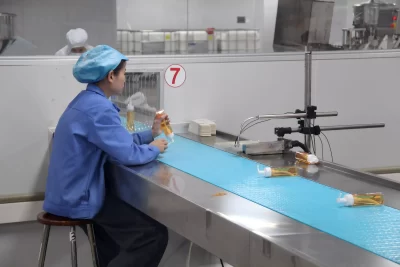
The Reality: High-end machines (like lipstick filling lines) take 2 hours to clean between batches. Factories cannot run 50 units profitably.
-
The Reliable Approach: A good manufacturer will offer tiered MOQs. For example:
-
Stock formula + Stock packaging: MOQ 500 units.
-
Custom formula + Custom packaging: MOQ 3,000 – 5,000 units.
-
-
Warning: If a factory offers an MOQ of 10 units for custom formulas, they are likely a trading company or using unstable, hand-mixed methods.
V. Cost Breakdown: What are you actually paying for?
To choose a reliable Cosmetic OEM/ODM Manufacturer, you need to understand their pricing structure. A transparent quote should look like this:
-
Formula Cost: Usually calculated per kilogram. High-end serums with peptides will cost significantly more than basic moisturizers.
-
Packaging: Often represents 60-70% of the total product cost.
-
Quality Control (QC): A reliable factory includes QC costs in their margin. If the price is too low, QC is the first thing they cut.