
In the highly competitive skincare market, finding a reliable manufacturer is the cornerstone of brand success. Whether you are a startup or an established company seeking transformation, choosing the right manufacturing partner directly impacts product quality, market reputation, and long-term development. This article provides an in-depth analysis of the entire process of finding skincare manufacturers, offering practical strategies and key considerations to help you make informed decisions.
Understanding Different Types of Skincare Manufacturers
ODM vs. OEM: Analyzing Two Main Collaboration Models
ODM (Original Design Manufacturer) and OEM (Original Equipment Manufacturer) are the two most common collaboration models in the skincare industry. ODM manufacturers typically offer complete services from formula R&D, design to production, possessing their own library of mature, independently developed formulas. Clients can choose existing formulas with minor adjustments. This model suits startup brands or companies with limited resources, significantly reducing R&D costs and time. OEM focuses more on production according to the client’s specific formula and specifications, where the client retains full intellectual property rights to the formula. This model is suitable for brands with clear product positioning and technical requirements.
The choice between ODM and OEM depends on your brand’s stage and resources. Emerging brands can use ODM to quickly launch products and validate market concepts, while mature brands may prefer OEM to maintain product uniqueness. It’s worth noting that many large manufacturers offer both services and can adapt flexibly to client needs.
Pros and Cons of Specialized vs. Comprehensive Manufacturers
The skincare industry features highly specialized manufacturers, such as factories focusing on masks, serums, natural/organic products, or specific efficacies (like anti-aging or brightening). These specialized players possess deep technical expertise and patented advantages in their niches, offering more refined solutions. For example, factories specializing in freeze-dried powders or ampoule production often have superior equipment specialization and process maturity compared to general manufacturers.
Comprehensive manufacturers offer one-stop services, covering production across all categories from cleansers and essences to creams and sunscreens. Their strength lies in strong supply chain integration, simplifying cooperation processes for brands with diverse product lines. When choosing, evaluate your product line plan: if your brand focuses on specific categories, a specialized manufacturer might offer a better solution; if you plan to develop a complete skincare series, the coordination efficiency of a comprehensive factory is worth considering.
Systematically Evaluating Manufacturers: Five Key Dimensions
Certifications & Compliance: The Non-Negotiable Baseline
Skincare products come into direct contact with skin, so production qualifications and regulatory compliance are the primary considerations. In the Chinese market, skincare manufacturers must hold a “Cosmetics Production License” and comply with the “Cosmetics Supervision and Administration Regulations.” International brands also need to consider certifications for their target markets, such as FDA registration (USA), EC certification (EU), GMPC (Good Manufacturing Practice for Cosmetics), etc.
During due diligence, always verify the factory’s actual certification status beyond promotional materials. Request to see original certificates, understanding their scope and validity. Pay special attention to whether the factory has in-house quality control capabilities like microbial testing and stability testing. Compliant laboratory equipment and a professional QC team are fundamental for product safety. For products with special claims (e.g., “additive-free,” “organic certified”), confirm the factory has corresponding qualifications and segregated production lines.
R&D Capability & Technological Innovation: The Source of Brand Differentiation
A manufacturer’s R&D capability directly determines product competitiveness. Key evaluation points include: the professional background and experience of the R&D team, patent portfolio, depth of collaboration with universities/research institutes, and the ability to independently develop novel formulations or apply cutting-edge ingredients。
On-site visits to the R&D lab are the best way to gauge their strength. Observe the advancement of lab equipment, raw material inventory management (especially storage conditions for active ingredients), and the standardization of R&D processes. Inquire about their recent success stories: How have they solved specific skin concerns for clients? How have they optimized formulas to reduce costs without compromising efficacy? Forward-looking manufacturers track industry trends like clean beauty or microbiome skincare and can provide corresponding technical support.
Practical Methods for Efficiently Finding and Screening Manufacturers
Industry Trade Shows & Professional Platforms: Golden Channels for Discovering Suppliers
Domestic and international trade shows are the most direct way to connect with skincare manufacturers. In China, shows like China Beauty Expo (CBE) and Cosmoprof Asia gather a large number of quality suppliers. Prepare before attending: list target companies, prepare specific questions, and schedule face-to-face meetings. Trade shows allow inspection of product samples and provide an intuitive feel for corporate culture and professionalism.
Online B2B platforms like Alibaba 1688 and Global Sources are also important channels but require careful screening. Prioritize verified suppliers, meticulously reviewing factory videos, client reviews, and transaction records. Emerging vertical platforms like specialized cosmetic supplier websites offer more targeted search functions. Industry association member directories, such as those from the China Association of Fragrance Flavor and Cosmetic Industries, are also reliable sources for finding compliant manufacturers.
Supply Chain Audit & On-Site Visit: The Essential Step of Seeing is Believing
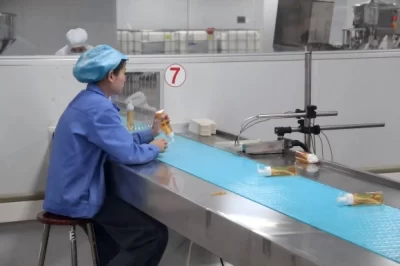
After preliminary screening, conducting on-site visits to shortlisted manufacturers is crucial. The visit should go beyond a pre-arranged tour; request a comprehensive look at the production, warehouse areas, QC lab, and R&D department. Focus on cleanliness of the production environment, equipment maintenance status, employee operational standards, and management processes for raw materials and finished goods.
The supply chain audit checklist should include: the level of production line automation (automated filling lines reduce contamination risk), completeness of batch records, effectiveness of traceability systems, and contingency plans for emergencies. Inquire about capacity and lead times: Can they guarantee supply during peak seasons? Are the Minimum Order Quantities (MOQs) reasonable? Also assess their environmental measures and sustainable practices, which increasingly impact brand image.
Strategies and Techniques for Building Successful Partnerships
Contract Negotiation & IP Protection: Mitigating Future Risks
A detailed contract clarifying rights and responsibilities is essential before cooperation. Key clauses include: product quality standards, acceptance procedures, delivery timelines, payment terms, and liability for breaches. Pay special attention to Intellectual Property (IP) ownership: clearly define the ownership and usage scope of formulas, designs, and technologies. Even in ODM models, strive for exclusive sales rights or regional protection for your products.
A Non-Disclosure Agreement (NDA) should be signed during initial discussions to protect your brand concepts and business information. It’s advisable to engage a lawyer familiar with cosmetic regulations to review the contract, especially for cross-border collaborations. Negotiate flexible production arrangements, such as support for small trial batches, sample development services, and responsiveness to product adjustments. Established manufacturers often offer tiered pricing, reducing costs as order volumes increase.
Long-Term Partnership & Mutual Growth: Beyond a Simple Buyer-Seller Relationship
An ideal manufacturer relationship should be a strategic partnership. Look for manufacturers willing to invest resources in understanding your brand philosophy and jointly facing market challenges. Observe if they proactively provide industry insights, ingredient trends, or packaging innovation suggestions. Regular communication meetings and joint quality improvement plans can enhance cooperation efficiency.
Building a diversified supplier portfolio mitigates risk but requires balancing management costs. A primary manufacturer handles core products, while backup suppliers cater to sudden demand or special categories. Utilizing digital collaboration tools (e.g., for sharing production progress, real-time quality data) improves communication efficiency. In long-term partnerships, consider co-investing with the manufacturer in equipment upgrades or R&D projects to deepen the relationship and gain priority access to capacity and technical support.
Finding a skincare manufacturer is a process requiring patience and professional judgment. Start by clarifying your own needs, gather information through multiple channels, rigorously evaluate manufacturer capabilities, and ultimately build a partnership based on trust and shared goals. In the fast-changing skincare industry, having a reliable, flexible, and technologically advanced manufacturing partner will become your brand’s strong backbone for facing market challenges and achieving continuous innovation. Remember, the best manufacturers don’t just produce products; they are co-creators of your brand’s value.