
I. What Truly Defines a High-End Skincare Product Manufacturer?
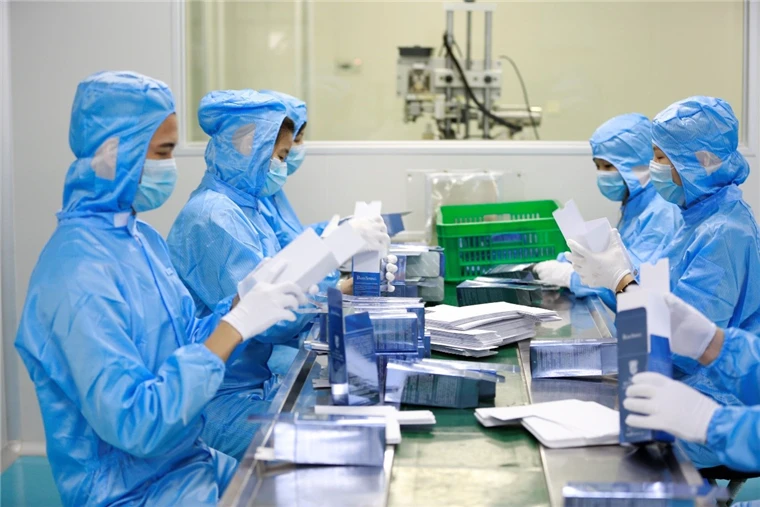
In the skincare market, the term “high-end” is often overused, but a genuine high-end skincare manufacturer is far more than an ordinary contract manufacturer. These manufacturers represent the pinnacle of the industry in terms of craftsmanship, R&D capabilities, and quality standards, serving as the bridge between cutting-edge science and luxurious experience.
Core Traits: A Manufacturing Philosophy That Exceeds Industry Standards
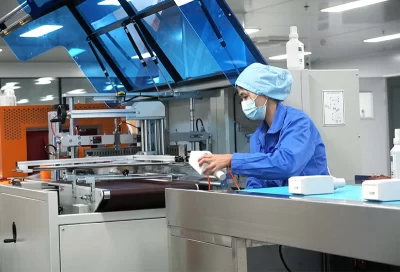
True high-end manufacturers do not follow standard formula templates; instead, they establish a complete philosophy of luxury skincare. Starting from ingredient sourcing, they build exclusive partnerships with global suppliers of rare raw materials, ensuring the purity and traceability of every batch. For instance, certain top-tier French manufacturers sign exclusive agreements with flower fields in Grasse to harvest precious roses at specific times, while morning dew still lingers—this extreme attention to ingredient detail is unattainable for ordinary manufacturers.
These manufacturers typically possess their own core patent technology portfolios. For example, Swiss top-tier labs develop cellular-level penetration technologies that allow active ingredients to reach targeted skin layers accurately. Japanese high-end manufacturers excel at combining traditional fermentation techniques with modern biotechnology to create high-end formulas that balance stability and potency. This technological accumulation is not achieved overnight but results from decades or even centuries of sustained R&D investment.
Industry Status: The Invisible Definers of Luxury
Interestingly, many well-known high-end skincare brands do not fully manufacture their products independently but engage in deep collaboration with these top-tier manufacturers. These manufacturers are often the setters of industry standards, participating in the formulation of international skincare safety regulations, active ingredient testing standards, and even publishing cutting-edge research findings in academic journals.
The truly elite manufacturers are often extremely low-profile. They rarely advertise directly to consumers but enjoy a prestigious reputation within the industry. Their client list reads like a who’s who of the luxury skincare world, from European royal household brands to Hollywood celebrities’ private custom lines, all relying on the expertise of these manufacturers. This “manufacturer’s manufacturer” status makes them the true pillars of the high-end skincare industry.
II. Core Technologies: The Three Pillars of High-End Manufacturers
Precision Bio-Activity Technology: The Guarantee of Efficacy
The fundamental difference between high-end and ordinary skincare products lies in bioavailability. Top manufacturers employ molecular-level precision technologies to ensure that active ingredients are not only added in sufficient quantities but also effectively penetrate and act on the target skin layers.
Among these, carrier technology is particularly crucial. For example, liposome encapsulation technology wraps easily degradable ingredients like Vitamin C or retinol in microscopic phospholipid bilayers, protecting them from oxidation while enhancing skin penetration. More advanced techniques include nano-emulsification, which transforms oily active ingredients into nano-sized particles, allowing them to easily pass through the skin barrier. These technologies require precise equipment and strict production environment controls, as minor deviations in temperature, pH, or mixing speed can render an entire batch ineffective.
In recent years, bio-fermentation technology has emerged as a new trend. High-end manufacturers use specific microbial strains to conduct directed fermentation of natural ingredients, not only increasing ingredient purity but also generating new bioactive substances. For instance, a top Japanese manufacturer transforms ordinary rice through a six-month fermentation process into a high-end skincare ingredient rich in gamma-aminobutyric acid and natural moisturizing factors. This complex, hard-to-replicate process creates a natural technological barrier.
Aseptic Production Processes: The Commitment to Purity
“Purity” in high-end skincare is not just a marketing slogan but a core standardthe entire manufacturing process. The production environments of top manufacturers meet pharmaceutical-grade standards, with cleanroom requirements far exceeding those of ordinary cosmetic factories.
Taking injection-grade production processes as an example, certain Swiss manufacturers apply sterile filling technology from the pharmaceutical industry to high-end skincare production. The entire filling process occurs within a fully enclosed automated system, ensuring zero product contact with air, with compounding to sealing completed in a continuous system. This process not only prevents microbial contamination but also avoids the impact of excessive preservatives on active ingredients.
More forward-thinking manufacturers have begun implementing AI-driven quality control systems. High-resolution cameras and sensors monitor each product’s color, texture, and fill volume in real-time, automatically rejecting any minor deviations. This pursuit of perfection results in a defect rate below 0.01% for high-end manufacturers, compared to the typical 1-3% standard for ordinary manufacturers.
III. Collaboration Trends: The Symbiotic Evolution of Brands and Manufacturers
Customized R&D: The Shift from OEM to JLM
Traditional Original Equipment Manufacturing (OEM) models are being replaced by Joint Laboratory Manufacturing (JLM) models. High-end brands no longer merely commission the production of existing formulas but establish deep R&D partnerships with manufacturers.
In this new type of collaboration, brands bring market insights and conceptual directions, while manufacturers provide technical expertise and implementation pathways. For example, when a brand proposes a concept like “simulating the skin’s nocturnal repair rhythm,” the manufacturer’s chronobiology experts participate in the R&D, screening for active ingredients that can regulate skin cells’ circadian rhythms and designing corresponding sustained-release delivery systems.
Such collaborations often span several years, with development cycles from basic research to final product potentially taking 36-48 months. Manufacturers contribute not only production facilities but also their patent technology portfolios and scientific talent. Both parties share intellectual property, creating product barriers difficult for competitors to replicate. This deep integration means many top manufacturers effectively become indispensable R&D departments for brands.
Sustainable Development: The New Dimension of High-End Manufacturing
Modern high-end consumers seek not only product efficacy but also environmental ethics. Leading manufacturers are redefining “luxury” by integrating sustainability into the core of manufacturing.
This encompasses comprehensive green manufacturing practices: using renewable energy to power production facilities; developing waterless or low-water formulation technologies to reduce water consumption; innovating packaging solutions like recyclable glass bottles and biodegradable materials; and establishing closed-loop systems that transform production waste into other uses.
More importantly, sustainability extends to ethical ingredient sourcing. Top manufacturers establish fair-trade relationships with sourcing communities, ensuring biodiversity protection and community benefit-sharing. For instance, a South African manufacturer partners with local communities to harvest rare bush roses in limited quantities without damaging the original ecosystem, and reinvests part of the profits into community education and healthcare. This narrative of ethical manufacturing has become an integral part of high-end brand value storytelling.
IV. Selection Guide: How to Identify Truly Top-Tier Manufacturers
Certifications and Qualifications: Looking Beyond Surface Standards
While ordinary consumers rarely pay attention to manufacturer qualifications, this is key to distinguishing genuine high-end from pseudo-luxury. Truly top-tier manufacturers hold multiple international certifications covering the entire production chain.
Beyond basic Good Manufacturing Practice (GMP) and ISO 22716 (Cosmetics Good Manufacturing Practices) certifications, top manufacturers may hold pharmaceutical-grade production licenses, indicating their facilities meet drug production standards. Environmentally, they may have carbon-neutral or zero-waste-to-landfill certifications. For specific product types, such as organic skincare, strict certifications like EU Ecocert or USDA Organic are required, which mandate full traceability from ingredient cultivation to final product.
Transparency is even more critical. High-end manufacturers are willing to open their supply chain information to partners (and sometimes consumers), providing proof of ingredient origin, production batch records, and third-party test reports. This openness is itself proof of capability, as only manufacturers confident in every aspect of their process dare to be so transparent.
Technological Investment and R&D Capability: The Invisible Competitive Edge
The scale and quality of a manufacturer’s laboratories are often key differentiators. Top manufacturers typically possess multiple specialized labs: molecular biology labs studying ingredient mechanisms; analytical labs ensuring ingredient purity and product stability; clinical evaluation labs conducting human efficacy testing; and possibly even skin tissue engineering labs using 3D skin models for product testing.
The ratio of R&D investment is another important indicator. While ordinary cosmetic manufacturers typically invest 1-3% of sales in R&D, top high-end manufacturers may invest 8-15%. This investment goes beyond equipment updates to fundamental scientific research. These manufacturers often publish papers in authoritative scientific journals, with their researchers participating in international academic conferences, genuinely pushing the boundaries of industry knowledge.
Examining a manufacturer’s patent portfolio also helps assess its strength. True technological innovators possess numerous active patents covering various dimensions like new ingredient discovery, delivery systems, and manufacturing processes. These patents are not for show but represent years of sustained R&D, forming solid competitive barriers.
Conclusion
High-end skincare manufacturers represent a complex and exquisite ecosystem that transforms cutting-edge scientific research into accessible luxury experiences. They are not merely product makers but also guardians of industry standards, drivers of technological innovation, and builders of a sustainable future.
For consumers seeking genuine high-end skincare experiences, understanding the manufacturer behind the product is as important as focusing on the brand itself. The value of a top-tier skincare product lies not only in its label and packaging but also in the unseen scientific investment, precision craftsmanship, and relentless pursuit of perfection. This explains why the same ingredients yield vastly different results and experiences when handled by different manufacturers.
As technology advances and consumer awareness grows, high-end skincare manufacturers will continue to evolve, pushing personalization, precision, and sustainability to new heights. Understanding this hidden force behind the world’s top skincare products will help us make more informed choices and find truly suitable luxury skincare solutions.
The journey to high-end skincare begins with understanding the art of manufacturing. If you are seeking a genuine top-tier skincare manufacturing partner or wish to delve deeper into how specific manufacturing processes can enhance your product line, we offer professional manufacturer matching and consultation services. Click to learn more and begin planning your high-end skincare manufacturing collaboration.