
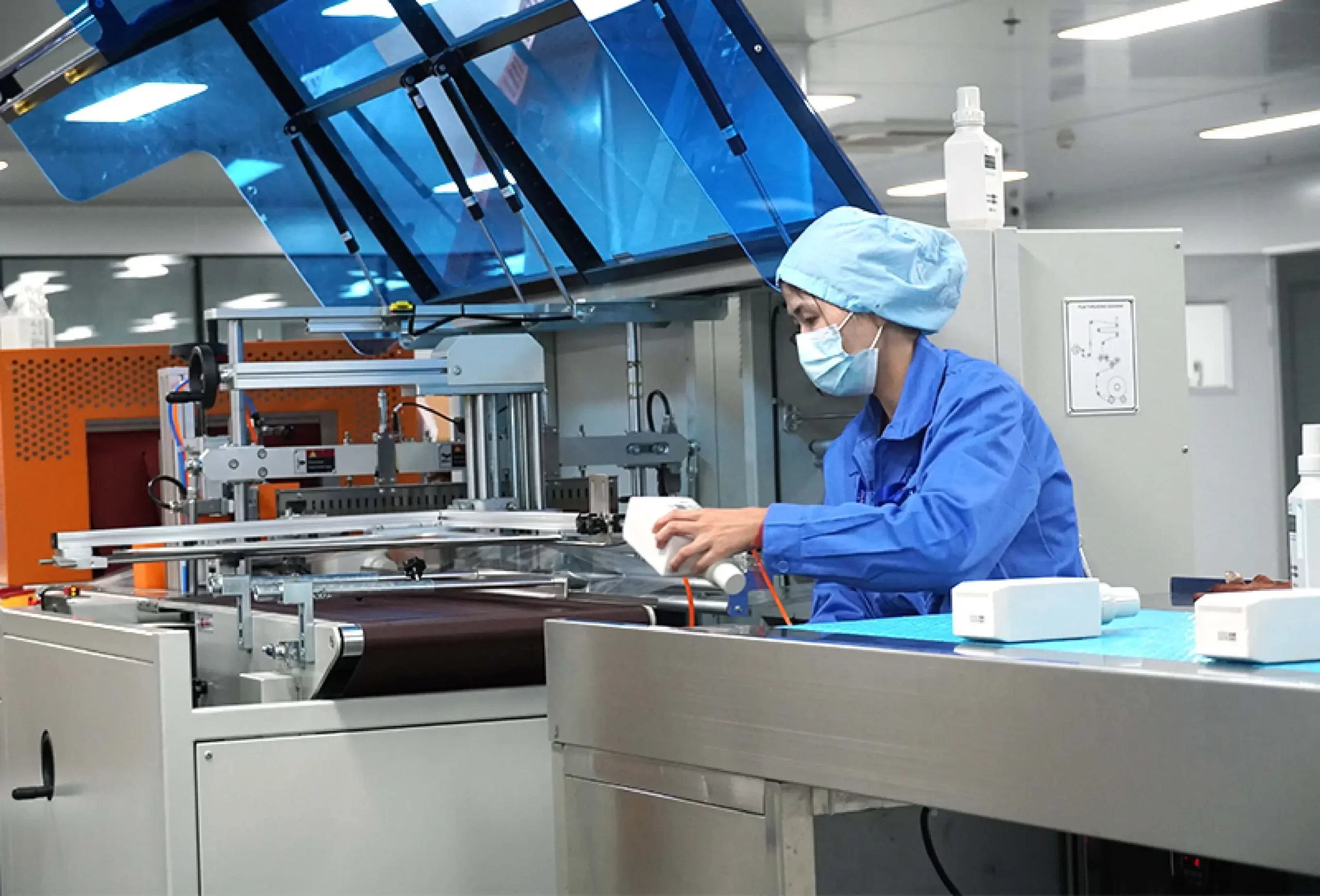
In today’s skincare market growing at an annual rate of 8%, countless brands flash across the sky like meteors, while those that become classics and earn lasting trust almost invariably have a top-tier Skincare product manufacturer behind them. This is far more than a simple product filler; it is a core partner integrating skin biology, formulation science, stable technology, and compliance strategy. This article provides an in-depth analysis of how an excellent skincare manufacturer becomes the ultimate catalyst for a brand’s journey from 0 to 1 and from 1 to 100, offering a decision-making blueprint worth millions.
1. Beyond “Contract Manufacturing”: The Three Irreplaceable Values of a Professional Skincare Manufacturer
1.1 Deep Integration of Skin Science and Formulation Science
The core barrier of a top-tier Skincare product manufacturer lies in its ability to translate cutting-edge skin science into stable, effective commercial formulations. This is far more than simply mixing ingredients.
-
The Leap from “Ingredient Focus” to “Mechanism Focus”: The R&D teams of excellent manufacturers typically consist of dermatologists, biochemists, and pharmacologists. They not only focus on trending ingredients (like retinol, blue copper peptides) but delve deeper into their pathways of action (e.g., anti-aging via the TGF-β pathway), transdermal absorption rates (e.g., how to increase penetration by 300% using liposome encapsulation technology), and synergistic/antagonistic effects with other ingredients. For example, research by a Swiss manufacturer confirmed that its patented sustained-release retinol microcapsule technology could reduce irritation by 70% while maintaining efficacy for 96 hours, directly defining a brand’s “gentle yet effective” market positioning.
-
“Ironclad Evidence” Supporting Efficacy Claims: In an era of increasingly strict regulations (e.g., China’s Cosmetics Efficacy Claim Evaluation Specifications), a manufacturer provides not just a product but a complete efficacy evidence chain. This includes: in vitro 3D skin model test data, consumer self-assessment reports, and even third-party clinical efficacy reports. Choosing a manufacturer with such a comprehensive verification system means a brand’s product claims are unassailable, significantly reducing market and legal risks.
1.2 The Guardian of “Active Ingredient” Stability and Bioavailability
Active ingredients are the soul of skincare, but their delicate nature (prone to oxidation, deactivation, difficulty penetrating skin) is the greatest challenge. The manufacturer’s true value lies in being the “guardian of that soul.”
-
End-to-End Stability Engineering: From strict quality control of incoming raw materials (e.g., testing active content and impurities via HPLC), to nitrogen-protected filling and light-shielded pipeline transfer during production, to final product accelerated stability testing (observing for 3-6 months at 40°C, 75% humidity) and long-term shelf-life testing. Top manufacturers even simulate storage and transport conditions in different global climate zones to ensure active potency remains intact when the product reaches the consumer.
-
The Innovator in Delivery Systems: The difference between an ordinary emulsion and an exceptional product often lies in whether the active can precisely reach its target. Leading manufacturers invest in developing transdermal delivery technologies like multivesicular liposomes, nanostructured lipid carriers (NLCs), and polymeric micelles. These technologies act as “Trojan horses,” safely and sufficiently delivering large or unstable molecules like Vitamin C and peptides into the deeper layers of the skin, maximizing the formula’s potential.
2. How to Discern a Top-Tier Skincare Product Manufacturer with a Keen Eye?
2.1 Hardcore Evaluation Checklist: 5 Key Points to Inspect During a Factory Visit
An on-site visit is essential. Bring this checklist:
-
Production Environment and Cleanliness Standards: Professional skincare production lines, especially for preservative-free or high-active products, must achieve pharmaceutical-grade cleanrooms (typically ISO 14644-1 Class 7-8). Observe operator attire, material transfer processes, air purification systems (HEPA filtration), and pressure differentials. This is the physical foundation for preventing microbial contamination and ensuring product purity.
-
The “Substance” of R&D and QC Labs: Don’t just count equipment; assess depth. A true R&D lab should be equipped with tools like a Transepidermal Water Loss (TEWL) meter, Visia Complexion Analysis System, High-Performance Liquid Chromatograph (HPLC), and stability chambers. More importantly, inquire about their method validation and laboratory quality management system, which determine data reliability and traceability.
2.2 Soft Power Insight: Assessing Their Potential as Your “Strategic Brain”
-
Regulatory Foresight and Global Layout Capability: Ask how the manufacturer responds to regulations like the EU’s SCRS (Safer Cosmetics), updates to China’s Inventory of Existing Cosmetic Ingredients, or US OTC monograph reforms. Do they have successful experience and local teams for filings/registrations in key markets (e.g., US/EU, China/Japan/Korea)? This determines your brand’s internationalization speed and compliance costs.
-
Collaborative Thinking from “Manufacturing” to “Co-creation”: An excellent manufacturer should be able to participate in your brand building. Discuss market trends (e.g., “skin microbiome,” “emotional skincare”) with them. See if they can provide a one-stop solution from market insight, concept incubation, formula matching, packaging material recommendations, to marketing copy support. For instance, a Korean manufacturer offers startup brands a “new product launch support package” including social media content kits and Key Opinion Leader (KOL) trial reports, significantly lowering the brand’s entry barrier.
3. The Future is Here: Three Major Industry Transformations Led by Skincare Manufacturers
3.1 Paradigm Shift from “Mass Production” to “Precision Personal Care”
With the proliferation of genetic testing and AI skin diagnostics, skincare is moving toward high personalization. The future Skincare product manufacturer will be a “data-driven formulation center.”
-
Modular Smart Production Lines: Factories will be equipped with flexible small-batch lines capable of real-time blending and filling based on consumers’ online diagnostic data (skin type, wrinkles, spots, sensitivity), using a pre-validated library of active ingredient modules, producing “made-for-one” customized serums or creams within days. This is not science fiction; pioneer manufacturers in Europe already offer such services for clinic channels.
-
Biomarker and Efficacy Correlation Databases: Top manufacturers are collaborating with research institutions to build vast skin biomarker databases, correlating specific ingredients with changes in skin gene expression and proteomics. This ushers product efficacy claims into the “biomarker era,” achieving unprecedented scientific rigor.
3.2 The Dual Revolution of “Clean & Effective” and “Planet-Friendly”
Consumers demand both “ingredient safety” and “Earth safety.” Manufacturers are central to implementing this philosophy.
-
Green Chemistry and Biotechnological Synthesis: Utilizing enzymatic catalysis, plant cell culture, microbial fermentation and other biotechnologies to produce high-purity, sustainable active ingredients (e.g., fermented ectoine, bio-synthesized squalene), replacing traditional petroleum extraction or animal/plant sources, dramatically reducing environmental footprint.
-
Full Lifecycle Carbon Management and Closed-Loop Design: Leading manufacturers calculate not only their own production carbon emissions but also share product Life Cycle Assessment (LCA) data with brands. They develop recyclable packaging, establish empty bottle recycling and regeneration systems, and explore waterless or water-saving formulation technologies (e.g., concentrated tablets, dissolvable sheet masks), turning sustainability from a marketing slogan into quantifiable, traceable practice.
Conclusion: Choosing a Manufacturer is Choosing Your Brand’s DNA and Destiny
In the skincare field where science and emotion intertwine, what an excellent Skincare product manufacturer provides goes far beyond bottles and jars. It provides a product philosophy rooted in skin biology, formulation wisdom that stands the test of time, a compliance shield for navigating global markets, and a vision for future innovation.
For brand founders or decision-makers, collaboration with a manufacturer should evolve from a simple “client-vendor” procurement relationship into a long-term, mutually trusting, value-co-creating strategic partnership. The next time you evaluate a potential partner, look beyond price and minimum order quantity. Deeply examine their scientific foundation, quality culture, and capacity for evolution. Because you are choosing not just a producer, but the most important “unsung hero” in your brand’s story, co-defining the exceptional experience the moment your product touches the consumer’s skin.