

Launching or scaling a haircare brand is an incredibly rewarding venture, but it comes with a unique set of logistical and scientific challenges. Whether you are aiming to disrupt the market with a revolutionary sulfate-free shampoo, an anti-thinning serum, or a salon-grade deep conditioning mask, the foundation of your success relies on the factory producing your goods.
If you are looking for a reliable, scalable, and highly capable supply chain partner, finding the right cosmetics manufacturer in Guangzhou China is arguably the most strategic move you can make. Guangzhou is widely recognized as the epicenter of global beauty manufacturing. However, navigating the sheer volume of suppliers, understanding formulation nuances, and establishing a secure B2B relationship requires insider knowledge.
This comprehensive guide will walk you through exactly how to source, vet, and partner with a top-tier shampoo factory in Guangzhou. We will dive deep into formulation science, OEM/ODM processes, quality control, and shipping, giving you the blueprint to bring your haircare vision to life.
Ready to bring your custom shampoo formula to market with a trusted factory? Skip the guesswork and speak directly with our manufacturing experts today. Message us on WhatsApp to discuss your project: +86 134 8026 8601
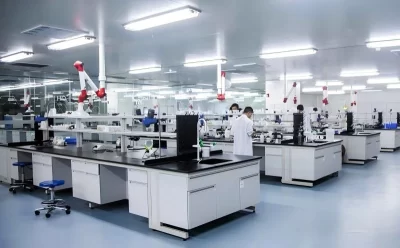
Why Choose a Cosmetics Manufacturer in Guangzhou China for Your Haircare Brand?
When beauty entrepreneurs and established salon chains decide to outsource their production, their search almost inevitably leads to Guangzhou. But why has this specific city become the undisputed powerhouse for liquid cosmetics and haircare?
The Epicenter of Global Beauty Supply Chains
Guangzhou, located in Guangdong Province, boasts the most mature and integrated cosmetic supply chain in the world. When you work with a factory here, you aren’t just hiring a production line; you are tapping into an ecosystem. Within a 50-mile radius, you have access to global raw material suppliers (sourcing advanced surfactants, botanical extracts, and active peptides), packaging factories (producing everything from PET bottles to luxury airless pumps), and specialized testing laboratories. This geographical proximity drastically reduces lead times and cuts down on domestic freight costs before your product even ships overseas.
Unmatched Cost-Effectiveness Without Compromising Formulation
A common misconception is that manufacturing in China is solely about finding the absolute lowest price. In today’s highly competitive beauty market, it’s actually about value engineering. A premium cosmetics manufacturer in Guangzhou China can produce high-end, salon-quality formulations at a fraction of the cost of domestic manufacturers in North America or Europe. This is due to economies of scale, highly efficient automated filling lines, and direct access to raw ingredient manufacturers. You get to maintain healthy profit margins while delivering a product that meets luxury standards.
Access to Advanced Shampoo Research and Development (R&D)
Modern shampoo factories in Guangzhou are heavily invested in R&D. They employ teams of chemical engineers and cosmetic formulators who stay ahead of global trends. Whether you need a formula that matches the viscosity and lather profile of an industry-leading brand, or you want to develop a completely proprietary blend featuring rare botanical oils, these R&D teams have the lab equipment and expertise to stabilize complex emulsions, perfect the pH balance, and ensure long-term shelf life.
OEM vs. ODM: Which Manufacturing Model Fits Your Shampoo Line?
Understanding how to engage with a factory is crucial. Manufacturers typically offer different service models based on where you are in your product development journey. Knowing the difference between OEM and ODM will help you communicate your needs effectively to your chosen cosmetics manufacturer in Guangzhou China.
Understanding Original Equipment Manufacturing (OEM) for Custom Formulas
OEM is the ideal route if you already have a mature concept, specific active ingredients in mind, or an existing formulation that you want a factory to produce at scale. In the OEM model, the factory acts strictly as the executor of your vision. You bring the brand, the packaging design, and the formula requirements; the factory handles the bulk mixing, filling, packing, and quality control. This is perfect for established brands looking to lower production costs or scale up volume without losing ownership of their intellectual property.
Leveraging Original Design Manufacturing (ODM) for Speed to Market
If you want to launch a brand but don’t have a background in cosmetic chemistry, ODM is your best path forward. In an ODM partnership, the factory provides “off-the-shelf” formulations that have already been rigorously tested for stability, safety, and performance. You can select a high-performing base formula—say, a keratin-infused smoothing shampoo—and customize it slightly by changing the fragrance, the color, or adding a specific “hero” ingredient like Argan oil or Biotin. ODM significantly cuts down on R&D costs and drastically accelerates your time to market.
Private Label Options for Emerging Haircare Brands
Private labeling is a subset of ODM, tailored heavily for startups, Amazon FBA sellers, and independent salons. Here, the factory has a portfolio of finished, proven haircare products. You simply choose the bottle, select the formula, and the factory applies your custom label. It requires the lowest investment and the lowest Minimum Order Quantities (MOQs), allowing you to test the market with minimal financial risk.
Not sure whether OEM or ODM is the right fit for your new shampoo line? Let’s evaluate your brand’s needs together. Get a free consultation via WhatsApp: +86 134 8026 8601
Key Factors to Evaluate When Selecting a Guangzhou Shampoo Factory
The sheer number of factories in Guangzhou can be overwhelming. To protect your brand’s reputation and your customers’ safety, you must vet potential partners rigorously. Do not let slick marketing brochures distract you from the core operational capabilities of the facility.
GMPC and ISO Certifications: Non-Negotiable Standards
The very first question you should ask any cosmetics manufacturer in Guangzhou China is about their certifications. A reputable factory must hold, at minimum, ISO 22716 (Good Manufacturing Practices for Cosmetics) and GMPC (Good Manufacturing Practice of Cosmetic Products) certifications. These certifications prove that the factory adheres to strict international standards regarding facility hygiene, raw material storage, batch traceability, and cross-contamination prevention. For haircare products, where bacterial contamination in water-based formulas is a real risk, these standards are non-negotiable.
Production Capacity and Scalability
Your goal is to grow your brand, which means your factory needs to be able to grow with you. Assess their production capacity. Ask about their mixing tanks (e.g., do they have 500L, 1000L, and 5000L emulsifying tanks?), the speed of their automated filling and capping lines, and their daily output capabilities. A factory that can handle your initial pilot run of 5,000 units must also be capable of scaling up to 100,000 units effortlessly when your product goes viral on social media.
Minimum Order Quantities (MOQs) and Flexibility
MOQs are a major hurdle for new brands. Because setting up a production line and sourcing custom packaging requires significant effort, factories set minimums to ensure profitability. For custom OEM shampoos, MOQs typically range from 5,000 to 10,000 pieces per SKU. However, excellent factory partners understand the startup journey and may offer flexible MOQs (e.g., 1,000 to 3,000 units) if you utilize their standard in-house packaging and standard ODM formulas. Always negotiate MOQs based on a long-term growth plan.
The Step-by-Step Process of Partnering with a Chinese Haircare Supplier
Once you have identified a promising cosmetics manufacturer in Guangzhou China, the actual work of bringing your product to life begins. The process is highly structured and requires clear, constant communication to avoid costly mistakes.
Initial Consultation and Concept Development
The journey starts with a deep dive into your product brief. You will need to provide the factory with a detailed outline of your desired shampoo. What is the target demographic? What is the desired price point? What are the key benefits (volumizing, hydrating, clarifying)? What is the preferred scent profile, color, and viscosity? The more details you provide upfront, the faster the R&D team can develop an accurate sample.
Formulation Testing and Sampling
Based on your brief, the factory’s chemists will create prototypes. They will mix small lab batches and send you samples for evaluation. During this phase, you must test the shampoo rigorously. How does it lather? Does it leave residue? Is the fragrance stable after washing? You will likely go through two to three rounds of revisions—adjusting the surfactant blend for a richer foam or tweaking the conditioning agents—until the formula is perfect. Once approved, you will sign off on the “golden sample,” which becomes the strict standard for bulk production.
Packaging Design and Sourcing
While the formula is being finalized, the packaging must be secured. A great factory will have a dedicated purchasing team to help you source bottles, pumps, caps, and labels. They will ensure that the packaging materials are compatible with the formula (e.g., ensuring certain essential oils don’t degrade the plastic). They will also require your design files for silk-screen printing or labeling, and they will run compatibility tests to ensure the pump mechanisms handle the specific viscosity of your shampoo without clogging.
Want to request a customized shampoo sample formulated by expert cosmetic chemists? > Reach out to us directly on WhatsApp to start your sampling process: +86 134 8026 8601
Navigating Formulation Trends in the Shampoo Industry
To succeed in today’s crowded beauty market, your product must align with consumer demands. A top-tier cosmetics manufacturer in Guangzhou China will have the technical capability to formulate according to the latest global haircare trends.
Sulfate-Free and Silicone-Free Formulations
Consumers are increasingly educated about ingredients. The demand for sulfate-free shampoos (moving away from harsh detergents like SLS and SLES) and silicone-free conditioners (avoiding dimethicone buildup) is massive. Formulating without these traditional ingredients requires high-level chemical expertise to ensure the shampoo still provides a satisfying lather and excellent slip. Your factory should offer advanced alternative surfactants, such as Sodium Cocoyl Isethionate (SCI) or Decyl Glucoside, to achieve clean, effective results.
Organic, Vegan, and Cruelty-Free Haircare
The “clean beauty” movement is no longer a niche; it is the industry standard. If your brand positioning requires organic ingredients, vegan claims, or cruelty-free status, your manufacturer must be able to source certified raw materials and provide the necessary documentation. They must ensure that absolutely no animal by-products (like traditional keratin derived from wool) are used, opting instead for plant-based alternatives like wheat or soy proteins.
Functional Shampoos: Anti-Hair Loss, Anti-Dandruff, and Color Protect
Beyond basic cleansing, consumers want functional benefits. Formulating active shampoos requires precise stabilization of active ingredients. For anti-dandruff shampoos, the factory must adeptly handle ingredients like Piroctone Olamine or Zinc Pyrithione. For anti-hair loss products, the integration of vasodilators, caffeine, or specific peptide complexes must be balanced carefully so they can penetrate the scalp effectively without degrading in the liquid base. A skilled R&D team ensures these actives remain potent throughout the product’s shelf life.
Quality Control (QC) and Regulatory Compliance in Cosmetics Production
Your brand’s reputation lives and dies by the quality and safety of your products. A rigorous Quality Control (QC) system is what separates an average supplier from an elite cosmetics manufacturer in Guangzhou China.
Raw Material Inspection and Traceability
Quality control begins before a single batch is mixed. When raw materials (water, surfactants, preservatives, fragrances) arrive at the factory, they must be quarantined and tested by the internal lab. The QC team checks for purity, microbial contamination, and correct chemical specifications. Furthermore, an advanced factory maintains strict lot traceability, meaning if there is ever an issue with a finished product, they can trace it back to the exact barrel of raw material used on that specific day.
In-Process Quality Checks and Stability Testing
During bulk production, technicians continuously monitor the mixing tanks. They test the pH levels, viscosity, and appearance to ensure the batch perfectly matches the golden sample. Once the batch is finished, it undergoes stability testing. This involves subjecting the shampoo to extreme temperatures (hot and cold incubators) and UV light exposure over several weeks to simulate a multi-year shelf life. This ensures the formula won’t separate, change color, or develop a foul odor while sitting on a retail shelf.
Compliance with FDA, EU Cosmetics Regulation, and NMPA
Depending on where you plan to sell your shampoo, the product must comply with local laws. A premier Guangzhou manufacturer will assist you with this. If you are selling in the USA, they ensure the ingredients comply with FDA guidelines and MoCRA (Modernization of Cosmetics Regulation Act). For the European Union, they will provide the necessary documents (like allergen declarations and safety data sheets) required to build a PIF (Product Information File) and register the product on the CPNP (Cosmetic Products Notification Portal).
Ensure your haircare products meet all international safety and regulatory standards. Partner with a fully certified manufacturing facility. Contact our compliance and production team on WhatsApp: +86 134 8026 8601
Logistics, Shipping, and Importing Your Haircare Products
The final hurdle in your manufacturing journey is getting thousands of bottles of liquid safely from the factory floor in Guangzhou to your fulfillment center or warehouse. Logistics for cosmetics require specific attention to detail.
Understanding Incoterms (EXW, FOB, CIF)
When negotiating your contract, you must understand shipping terms.
-
EXW (Ex Works): The factory’s responsibility ends when the goods are packed at their facility. You must arrange for a truck to pick them up and handle all export processes.
-
FOB (Free On Board): This is the most common arrangement. The factory handles the domestic transport to the Port of Guangzhou or Shenzhen and clears the goods for export. Your responsibility begins once the goods are loaded onto the cargo ship.
-
CIF (Cost, Insurance, and Freight): The factory pays for the shipping and insurance to your destination port, but this is often more expensive than arranging your own freight.
Freight Forwarding and Customs Clearance
You will need a reliable freight forwarder to manage the ocean freight (or air freight, though rarely used for heavy liquids like shampoo due to cost). Because shampoos are liquids and sometimes contain active chemicals or specific fragrances, they may require an MSDS (Material Safety Data Sheet) to be cleared by customs and shipping lines. Your factory will provide these documents. A good freight forwarder will navigate customs clearance in your home country, ensuring proper duties and tariffs are paid without delays.
Timeline Expectations from Factory Floor to Your Warehouse
Patience is essential in manufacturing. A typical timeline looks like this:
-
Sampling and Formulation: 2 to 4 weeks.
-
Packaging Sourcing and Production: 4 to 6 weeks.
-
Bulk Formulation and Filling: 2 to 3 weeks.
-
Ocean Freight (Guangzhou to US West Coast/Europe): 4 to 6 weeks. In total, you should plan for a 3 to 4-month lead time for your initial order. Reorders are typically much faster (4-6 weeks) since the formulation is set and packaging might already be in stock.
Conclusion
Building a successful haircare brand is a complex but highly lucrative endeavor. The key to unlocking your brand’s potential lies in finding the right production partner. By selecting a highly vetted cosmetics manufacturer in Guangzhou China, you gain access to world-class R&D, cost-effective scaling, and premium formulations that will make your customers fall in love with your brand.
Focus on finding a factory that prioritizes strict quality control, offers the right balance of OEM/ODM services, and communicates transparently about timelines and MOQs. With the right supplier backing you up, you can focus on what you do best: marketing, selling, and building a community around your exceptional products.
Ready to turn your shampoo concept into a reality? We are a leading cosmetics manufacturer with years of experience exporting high-quality haircare globally. Let’s discuss your production needs, get a quote, and start sampling today. Add us on WhatsApp: +86 134 8026 8601
Would you like me to suggest some specific hero ingredients currently trending in the haircare market that you could ask the factory to include in your initial formulation tests?