
Introduction: The Rise of Low MOQ Manufacturing in China’s Cosmetic Industry
The global cosmetics industry is experiencing a transformative shift, with indie brands, startups, and niche marketers seeking flexible manufacturing solutions that don’t require massive capital investment or inventory risks. Enter China’s low Minimum Order Quantity (MOQ) cosmetics manufacturers – specialized facilities that have revolutionized access to professional cosmetic production for businesses of all sizes. Unlike traditional manufacturers requiring orders of 10,000+ units, these innovative partners offer production runs as low as 500-1,000 pieces, dramatically lowering the barrier to entry while maintaining professional quality standards.
China has emerged as the epicenter for cosmetic manufacturing innovation, combining decades of expertise with cutting-edge technology and remarkable cost efficiencies. The country’s manufacturers have adapted to the evolving market demands by offering flexible production models that cater specifically to emerging brands, allowing entrepreneurs to test concepts, launch limited editions, and scale gradually without prohibitive upfront costs. This strategic evolution has positioned China as not just a source of cheap manufacturing, but as a hub of sophisticated, customizable, and scalable cosmetic production for the global market.
As an experienced cosmetics manufacturer, we offer low MOQ cosmetics OEM solutions
Why Choose a Chinese Manufacturer for Low MOQ Cosmetics?
Cost Advantages Without Compromising Quality
Contrary to common misconceptions, low MOQ doesn’t automatically mean low quality when working with reputable Chinese manufacturers. China’s cosmetic industry has matured significantly, with many facilities operating at European Union and FDA standards while maintaining cost structures 30-60% lower than Western counterparts. This price advantage stems from several factors: established supply chains for raw materials, advanced automated production lines that reduce labor costs, and economies of scale in supporting industries. For low MOQ orders specifically, Chinese manufacturers have developed specialized processes and modular production systems that minimize setup costs while maintaining consistency.
The financial breakdown reveals why China dominates this space: where a European manufacturer might charge €5,000-€10,000 simply for production line setup, Chinese counterparts have optimized this process to cost €1,000-€3,000 for the same MOQ. Additionally, the comprehensive ecosystem – where packaging suppliers, formula specialists, and regulatory consultants operate in proximity – creates efficiencies that directly benefit brands ordering smaller quantities. This doesn’t mean sacrificing quality; leading Chinese manufacturers invest heavily in R&D, with many holding ISO 22716, GMP, and other international certifications that guarantee product safety and consistency.
Advanced Technological Capabilities and Innovation
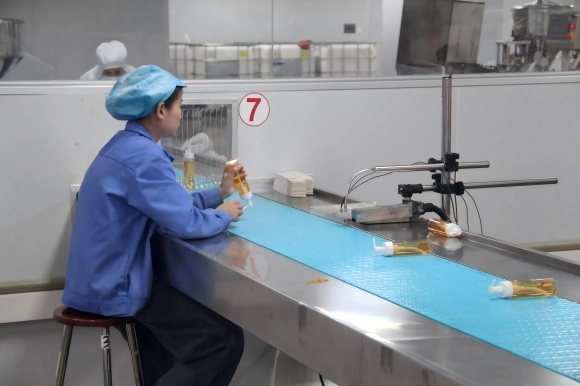
China’s cosmetic manufacturing sector has leapfrogged traditional production methods, embracing Industry 4.0 technologies that particularly benefit low MOQ production. Smart factories utilize AI-driven production planning, allowing for efficient small-batch runs without the traditional inefficiencies. Advanced 3D printing for custom packaging molds, robotic precision filling systems that minimize product waste, and real-time quality monitoring through computer vision systems ensure that even the smallest production runs meet exacting standards.
The innovation extends beyond machinery to formulation expertise. Chinese R&D centers are at the forefront of cosmetic science, developing cutting-edge formulations for clean beauty, microbiome-friendly skincare, sustainable cosmetics, and technologically advanced delivery systems. For low MOQ clients, this means access to innovative formulations that would typically require massive R&D investment. Many manufacturers offer “open formula” options or collaborate on custom development with surprisingly low minimums, allowing emerging brands to compete with established players on product innovation rather than just price.
Types of Low MOQ Cosmetic Manufacturing Services in China
OEM (Original Equipment Manufacturing) Services
Original Equipment Manufacturing represents the most common entry point for brands seeking low MOQ production in China. In this model, manufacturers produce cosmetics according to your exact specifications, using your provided formulas or selecting from their existing library. The advantages for low MOQ clients are substantial: manufacturers have optimized their processes to accommodate smaller batches through flexible production scheduling, shared production runs for similar products, and modular equipment setups.
Typical low MOQ thresholds in Chinese OEM facilities range from 500-3,000 units per product, depending on complexity. Lipsticks might start at 1,000 units, while more complex products like foundation with custom shades might begin at 500 units. The key advantage is minimal customization costs – many manufacturers have standardized packaging options that require no mold fees, and they maintain inventory of common raw materials to avoid minimum purchase requirements. This ecosystem makes professional-quality cosmetics accessible even for bootstrap startups testing market waters.
ODM (Original Design Manufacturing) and Custom Formulation
For brands seeking more comprehensive support, Original Design Manufacturing services provide turnkey solutions that extend beyond production into product development. Chinese ODM manufacturers offer complete packages including market research, concept development, formula creation, packaging design, regulatory compliance, and production – all with surprisingly accessible minimums. This holistic approach is particularly valuable for first-time brand owners who need guidance through the complex cosmetic development process.
The custom formulation process at low MOQ typically involves several stages: concept consultation, ingredient selection and safety assessment, sample development (usually 5-10 iterations), stability testing, and finally pilot production. While completely novel formulations might require higher minimums (often 3,000-5,000 units), many manufacturers offer “customization” of existing formulas – adjusting fragrances, colors, textures, or active ingredient concentrations – at much lower thresholds (1,000-2,000 units). This flexibility allows brands to create distinctive products without the R&D budget of major corporations.
How to Identify Reputable Low MOQ Manufacturers in China
Verification and Due Diligence Process
Finding a legitimate low MOQ cosmetics manufacturer in China requires systematic verification to avoid substandard partners. Begin with documentary verification: legitimate manufacturers should readily provide business licenses (营业执照), production permits (化妆品生产许可证), and relevant certifications (ISO 22716, GMP, etc.). Cross-reference this information with Chinese government databases like the National Enterprise Credit Information Publicity System to confirm their validity.
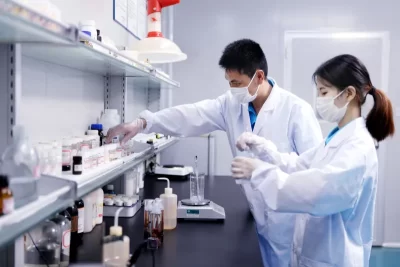
Technical capability assessment is equally crucial. Request detailed information about their production equipment, quality control processes, and R&D facilities. Reputable manufacturers will typically provide virtual or in-person facility tours. Specifically for low MOQ capabilities, inquire about their production scheduling – how they integrate small batches into their production calendar without causing delays. Ask for case studies or references from similar low MOQ clients, and critically, verify their experience with exporting to your target market, including understanding of regulatory requirements in the EU, US, or other regions.
Red Flags and Warning Signs
While numerous excellent low MOQ manufacturers operate in China, the market also contains less scrupulous operators. Key warning signs include manufacturers who are unwilling to provide verifiable documentation, those who refuse facility inspections (virtual or physical), and companies that offer prices dramatically below market rates without clear justification. Be especially cautious of manufacturers who claim to have “no minimums whatsoever” – while truly low MOQ is available, no legitimate manufacturer can profitably produce 50 units of a custom product with professional standards.
Communication patterns reveal much about potential partners. Manufacturers who are consistently vague about details, who avoid technical questions, or who pressure for quick deposits without thorough discussion should raise concerns. Specifically regarding low MOQ arrangements, beware of manufacturers who don’t ask detailed questions about your market, regulations, or quality expectations – legitimate partners need this information to advise appropriately on formulation, packaging, and compliance matters.
Key Considerations When Ordering Low MOQ Cosmetics from China
Understanding True Costs Beyond Unit Price
When evaluating low MOQ cosmetic manufacturing in China, brands must look beyond simple per-unit pricing to understand total cost implications. The complete cost structure typically includes: mold costs (if custom packaging is required), sample development fees, raw material costs (which may be higher per unit for small batches), manufacturing fees, quality testing costs, packaging assembly, and logistics. For low MOQ specifically, certain costs become proportionally higher – mold amortization across fewer units, minimum laboratory testing fees, and higher per-unit shipping costs due to smaller volumes.
Smart brands optimize their low MOQ strategy by selecting standard packaging options to avoid mold fees, grouping products into coordinated collections to meet color or material minimums, and planning production schedules to align with manufacturer’s existing production cycles. Many manufacturers offer seasonal production calendars where similar products from different brands are produced together, significantly reducing costs. Understanding these dynamics and working collaboratively with manufacturers on scheduling can reduce low MOQ costs by 20-40% compared to completely customized timing.
Navigating Regulatory Compliance and Certification
Regulatory compliance represents both a challenge and opportunity when working with Chinese low MOQ manufacturers. Reputable manufacturers maintain sophisticated regulatory departments that understand requirements across major markets including the EU (EC 1223/2009), United States (FDA regulations), ASEAN, and others. For low MOQ clients, manufacturers often provide regulatory guidance as part of their service, though specific market authorization (like CPNP notification for the EU) typically remains the brand’s responsibility.
Critical certifications to verify include ISO 22716 (Cosmetics Good Manufacturing Practices), which has become the global standard for cosmetic production quality systems. Additionally, manufacturers specializing in natural/organic products should hold relevant certifications like COSMOS, NATRUE, or USDA Organic where applicable. For brands targeting specific markets, manufacturers with experience in those regions will understand nuanced requirements – for example, SPF testing protocols for sunscreens, or China’s unique Animal Testing policies for imported cosmetics. The advantage of working with established manufacturers is their accumulated experience navigating these complex requirements across thousands of previous clients.
The Complete Process: From Concept to Delivery with Low MOQ Manufacturing
Development and Sampling Phase
The journey from concept to finished product with a low MOQ Chinese manufacturer follows a structured process optimized for efficiency. It begins with comprehensive consultation where manufacturers assess your concept against technical feasibility, regulatory considerations, and cost parameters. For formulation, you’ll choose between selecting from existing formulas (fastest, most economical), customizing existing formulas (moderate timeline and cost), or developing completely novel formulations (longest timeline, highest cost).
The sampling phase typically involves 2-4 iterations: initial lab samples for formula assessment, primary samples in actual packaging, and pre-production samples from the manufacturing line. For low MOQ clients, manufacturers often utilize advanced digital sampling technologies – 3D renders of packaging, virtual shade matching, and small-batch lab production – to minimize physical sampling costs. A critical step often overlooked is stability testing, which assesses product performance under various conditions over time. While full stability testing (typically 3-6 months) may precede larger production runs, for low MOQ initial launches, manufacturers often employ accelerated stability testing (4-8 weeks) that provides reasonable assurance for market testing phases.
Production and Quality Assurance Protocols
Once samples are approved, production for low MOQ orders follows specialized protocols. Unlike mass production with dedicated continuous runs, low MOQ production typically utilizes scheduled batch manufacturing where similar products from different clients are grouped. This requires precise coordination but allows for professional production standards at accessible minimums. The production process includes raw material verification, batch preparation according to approved formula, manufacturing under controlled conditions, filling and packaging, and final inspection.
Quality assurance for low MOQ presents unique challenges since statistical quality control methods designed for large batches are less applicable. Reputable manufacturers address this through enhanced in-process controls, increased inspection frequency, and sometimes 100% inspection for critical parameters. They should provide comprehensive documentation including batch production records, quality control test results, and certificate of analysis. For brands, understanding and potentially auditing these quality processes is essential – even for small orders, consistency and safety cannot be compromised.
Future Trends in Low MOQ Cosmetic Manufacturing in China
Sustainability and Ethical Manufacturing Evolution
The future of low MOQ cosmetic manufacturing in China is increasingly green and ethical. Forward-thinking manufacturers are implementing circular economy principles even for small-batch production, utilizing biodegradable materials, offering refillable packaging systems, and minimizing waste through advanced production planning algorithms. Sustainable practices that were once cost-prohibitive for small runs are becoming more accessible through technological innovations and growing consumer demand.
Ethical manufacturing extends beyond environmental concerns to social responsibility. Leading Chinese manufacturers are embracing fair labor practices, transparency in sourcing, and community engagement. For low MOQ clients, this means the opportunity to align with manufacturers whose values match their brand ethos. The trend toward “clean beauty” has particularly influenced manufacturing practices, with facilities developing specialized production lines free from cross-contamination risks for brands requiring vegan, cruelty-free, or allergen-free certifications even at small volumes.
Technological Innovations Transforming Small-Batch Production
Several emerging technologies are poised to further revolutionize low MOQ cosmetic manufacturing in China. Artificial Intelligence and machine learning algorithms optimize production scheduling, predict raw material needs, and enhance quality control for small batches. Digital twin technology allows virtual simulation of production processes before physical manufacturing begins, reducing errors and waste. Advanced robotics with faster changeover capabilities make smaller production runs more efficient.
On the formulation side, computational cosmetic science enables rapid virtual formulation development, dramatically reducing the time and cost to create new products. For packaging, on-demand digital printing eliminates minimum order requirements for custom designs. Perhaps most transformative is blockchain technology being implemented for supply chain transparency – allowing even the smallest brands to provide consumers with verifiable information about ingredient sourcing, production conditions, and environmental impact.
Conclusion: Building Your Brand with China’s Low MOQ Cosmetic Manufacturers
China’s low MOQ cosmetic manufacturers represent more than just a production solution – they offer a partnership model that can accelerate brand development while managing risk and capital requirements. The evolution of this sector from simple contract manufacturing to comprehensive brand development ecosystems has created unprecedented opportunities for entrepreneurs, indie brands, and established companies seeking to test new categories or markets.
The key to successful engagement lies in thorough research, clear communication, realistic expectations, and developing collaborative relationships with manufacturers who understand your vision and market. By leveraging China’s unique combination of scale capabilities and flexible production models, brands can navigate the competitive cosmetics landscape with agility, bringing innovative products to market faster and more efficiently than previously possible.
As the industry continues evolving toward greater customization, sustainability, and technological integration, China’s manufacturers are well-positioned to lead these transformations while maintaining accessibility for businesses of all sizes. The future of cosmetics is not just about mass production, but about right-sized production – and China’s manufacturing sector is pioneering precisely this balance.
Frequently Asked Questions About Low MOQ Cosmetic Manufacturing in China
What is the typical minimum order quantity for cosmetics in China?
Minimum order quantities vary significantly based on product type, complexity, and manufacturer specialization. Generally, standard products like lip balms or basic creams start at 1,000-3,000 units. More complex items with custom formulations or packaging might begin at 500-1,000 units. Some manufacturers offer pilot programs as low as 300-500 units for extremely simple products using completely standard components. The key is understanding that true “low MOQ” doesn’t mean no minimums, but rather minimums that are accessible for startups and small brands.
How can I ensure product quality with such small order quantities?
Quality assurance in low MOQ production relies on different protocols than mass production. Reputable manufacturers implement enhanced in-process controls, potentially 100% inspection for critical parameters, and maintain meticulous batch documentation. They utilize the same quality management systems (like ISO 22716) regardless of batch size. The most reliable approach is to work with manufacturers who specialize in small batches, as they’ve optimized their processes accordingly. Always request and verify quality certifications, conduct pre-production sample testing, and consider third-party testing for critical products.
What are the hidden costs in low MOQ cosmetic manufacturing?
Beyond per-unit pricing, low MOQ production often involves proportional costs including: mold fees (if custom packaging), sample development charges, laboratory testing fees (which may have minimums regardless of batch size), higher per-unit raw material costs, and elevated shipping costs due to smaller volumes. Additionally, some manufacturers charge setup fees for small batches. Transparent manufacturers will disclose all potential costs upfront – request detailed quotations that break down every component rather than just a final unit price.
How long does the complete process take from initial contact to delivery?
Timelines vary based on complexity but generally follow this pattern: Consultation and quotation (1-2 weeks), sample development (3-6 weeks, depending on iterations), regulatory preparation and testing (2-8 weeks, concurrent with sampling when possible), production (2-4 weeks after sample approval), and shipping (2-6 weeks depending on method). A typical complete timeline for a product with standard formulation and packaging is 3-4 months. Custom formulations or complex packaging can extend this to 5-7 months. Experienced manufacturers specializing in low MOQ have optimized these processes for efficiency.
Can I get custom formulation with low MOQ orders?
Yes, but with important distinctions. Completely novel formulations from scratch typically require higher minimums (often 3,000-5,000 units) to justify R&D investment. However, most manufacturers offer “customization” of existing formulas – adjusting fragrances, colors, textures, or active ingredient concentrations – at much lower thresholds (1,000-2,000 units). Some manufacturers maintain “open formula” libraries that brands can select from and customize within parameters. The most flexible approach is working with manufacturers who offer modular formulation systems where active components can be combined in various ways without complete reformulation.