
Launching or scaling a beauty brand requires a strong foundation, and that foundation is your manufacturing partner. China has become the global hub for cosmetics OEM (Original Equipment Manufacturer) and ODM (Original Design Manufacturer) services, offering unmatched supply chain efficiency, advanced formulations, and highly competitive pricing.
However, navigating a sea of thousands of suppliers can be overwhelming. Finding a reliable cosmetics manufacturer in China isn’t just about securing the lowest unit cost; it’s about ensuring consistent quality, protecting your brand’s reputation, and establishing a long-term partnership.
Here is a comprehensive guide to evaluating and selecting the right manufacturing partner for your cosmetics or hair care brand.
1. Verify Essential Certifications and Compliance
The non-negotiable first step in vetting any factory is verifying their credentials. International cosmetics markets have strict safety and hygiene regulations, and your manufacturer must meet these baseline standards.
-
ISO 22716 & GMPC: These are the global gold standards for cosmetics manufacturing. Good Manufacturing Practices for Cosmetics (GMPC) ensures that products are consistently produced and controlled according to quality standards.
-
Target Market Compliance: Depending on where you plan to sell, ensure the factory is familiar with the regulatory requirements of your region, such as FDA guidelines for the US market, CPNP registration for the EU, or specific ASEAN cosmetic directives.
-
Material Safety Data Sheets (MSDS) and COA: A reputable supplier should readily provide these documents for all formulations to prove the safety and composition of their products.
2. Assess R&D Strength and ODM/OEM Capabilities
Are you looking to slap your logo on a pre-existing formula (Private Label/White Label), or do you need a unique, custom-formulated product from scratch?
-
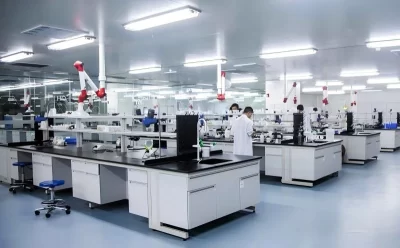
R&D Laboratory: A high-quality manufacturer will have an in-house Research & Development lab staffed by experienced chemical engineers. This is especially critical if you are developing complex formulations like sulfate-free shampoos, active-ingredient skincare, or clean beauty products.
-
Formulation Library: Ask to see their existing catalog. A mature factory will have thousands of mature formulas ready for market testing, which significantly reduces your lead time.
-
Sample Testing: Always request samples before committing to a bulk order. Test the texture, fragrance, stability, and packaging compatibility.
3. Evaluate Quality Control (QC) and Production Facilities
A glossy website does not always reflect the reality of a factory floor. You need to ensure their production capabilities match your brand’s quality expectations.
-
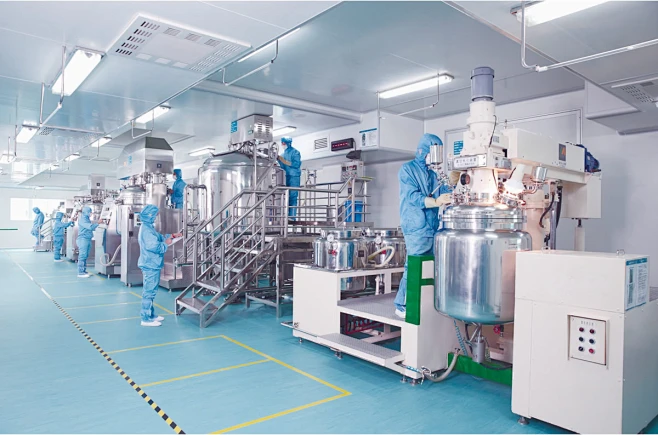
Dust-Free Workshops: Premium cosmetics and personal care products must be manufactured in sterile environments. Look for facilities operating 100,000-level (or higher) dust-free cleanrooms.
-
Automated Production Lines: Automation reduces human error and ensures consistency across large batches. Check if they have automated filling, capping, and labeling machines.
-
End-to-End QC: Quality control shouldn’t just happen at the end. Ask about their Incoming Quality Control (IQC) for raw materials, In-Process Quality Control (IPQC) during manufacturing, and Final Quality Control (FQC) before shipping.
4. Check MOQ Flexibility and Scalability
Minimum Order Quantities (MOQ) can be a major hurdle for independent brands.
-
Startup-Friendly MOQs: Some massive factories will ignore you if you cannot order 50,000 units. Look for a partner that offers flexible MOQs (e.g., 1,000 to 5,000 units) to help you test the market without tying up all your capital in inventory.
-
Scalability: Conversely, if your product goes viral, can the factory keep up? Ensure their monthly production capacity can accommodate your growth so you don’t face stockouts during critical sales periods.
5. Communication and Export Experience
The best factory in the world is useless to you if you cannot communicate effectively. Language barriers and time zone differences can lead to costly manufacturing errors.
-
Dedicated Account Managers: A professional B2B export team should provide a dedicated English-speaking account manager to handle your project from inquiry to delivery.
-
Export Experience: Choose a factory that regularly exports to your target country. They will be familiar with international shipping logistics, customs clearance, and the specific packaging requirements of your market.
Ready to Build Your Brand?
Choosing the right manufacturer is a strategic business decision that dictates the future of your brand. By prioritizing certifications, R&D capabilities, stringent quality control, and seamless communication, you can find a factory that acts as a true extension of your business.
Whether you are looking to formulate a disruptive new skincare line or source premium bulk hair care products, partnering with a professional, internationally-focused factory is the key to scaling your global presence.
Looking for a trusted OEM/ODM partner to bring your vision to life? Reach out to our team today to discuss your project requirements, request product samples, and get a highly competitive quote. Let’s build your brand together.