
The global beauty and personal care market is growing at an unprecedented rate. For brand owners, entrepreneurs, and distributors, partnering with the right production facility is the single most important decision you will make. While China remains the world’s leading hub for contract manufacturing, offering unmatched supply chain efficiency and scalability, navigating the vast sea of suppliers can be daunting.
If you want to scale your beauty brand, lower production costs without compromising on quality, and secure a steady supply chain, you need to know how to choose a reliable cosmetics manufacturer in China.
This comprehensive guide will walk you through the essential factors to consider, red flags to avoid, and the exact steps to finding a long-term OEM/ODM partner that aligns with your brand’s vision.
Why Source Cosmetics from China?
Before diving into the selection process, it is important to understand why so many top-tier beauty brands choose to manufacture in China.
-
Complete Supply Chain Integration: From raw material sourcing (active ingredients, botanical extracts) to custom packaging (bottles, jars, eco-friendly containers), everything is available within a close geographical radius. This drastically reduces lead times and shipping costs.
-
Advanced R&D and Manufacturing Technology: Modern cosmetic factories are equipped with state-of-the-art laboratory equipment, automated filling lines, and AI-driven quality control systems.
-
Cost-Effective Scalability: Whether you are ordering a minimum order quantity (MOQ) of 5,000 units or scaling up to 500,000 units, Chinese manufacturers offer flexible production lines that can accommodate your brand’s growth stages profitably.
6 Key Factors to Evaluate a Cosmetic Manufacturer
Finding a “reliable” partner means looking beyond a well-designed website or a cheap quotation. You must evaluate the factory’s core competencies. Here is what to look for:
1. Verify Certifications and Compliance (Crucial)
The cosmetics industry is heavily regulated worldwide. If a manufacturer cannot prove they meet international safety standards, walk away. A reputable factory must operate in a cleanroom environment (usually Class 100,000 dust-free workshops) and hold the following certifications:
-
ISO 22716: The international standard for Good Manufacturing Practices (GMP) in cosmetics.
-
GMPC (US FDA & Council of Europe): Ensures products are consistently produced and controlled according to quality standards.
-
MSDS & COA: The factory must be able to provide Material Safety Data Sheets and Certificates of Analysis for all formulations.
2. Differentiate Between Factories and Trading Companies
Many listings on B2B platforms are not actual manufacturers; they are trading companies acting as middlemen. While trading companies might offer lower MOQs, working directly with a factory gives you direct control over pricing, formulation changes, and quality assurance.
-
How to check: Ask for a live video tour of their facility, verify their business license (look for words like “Manufacturing” rather than just “Trading”), or visit the factory in person.
3. Assess OEM vs. ODM Capabilities
Determine what kind of service you actually need:
-
OEM (Original Equipment Manufacturer): You provide the custom formula and packaging design, and the factory produces it. This requires a highly capable facility that can strictly follow your blueprints.
-
ODM (Original Design Manufacturer): Private labeling. The factory provides pre-tested, mature formulations, and you simply put your brand name on them.
A strong partner should have an in-house R&D team capable of reverse-engineering products, stabilizing formulas, and offering hundreds of mature ODM formulas for quick market entry.
4. Minimum Order Quantities (MOQ) and Lead Times
MOQs can make or break your initial launch. While a large manufacturer might require 10,000 units per SKU, many flexible factories are willing to negotiate lower MOQs (e.g., 1,000 to 3,000 units) for startups with high growth potential.
-
Always clarify lead times for both sampling (usually 7-14 days) and mass production (usually 25-40 days after packaging arrives).
5. Stringent Quality Control (QC) Processes
A reliable cosmetics manufacturer in China will have a strict, multi-step QC protocol. Ask them about their testing procedures:
-
Incoming Quality Control (IQC): Testing raw materials and packaging before production.
-
In-Process Quality Control (IPQC): Monitoring pH, viscosity, and microbiology during the mixing and filling stages.
-
Final Quality Control (FQC): Inspecting the finished goods, checking seals, labels, and overall appearance before shipping.
-
Challenge Testing: Ensuring the preservative system works and the product is stable under extreme temperatures.
6. Communication and Responsiveness
Your manufacturer is your business partner. If their sales representatives are slow to respond, misunderstand technical requirements, or cannot communicate fluently in English, it will lead to costly mistakes down the line. Look for a team that is responsive, transparent about costs, and utilizes instant communication tools like WhatsApp for real-time project updates.
Red Flags to Watch Out For
When shortlisting potential suppliers, be highly cautious if you encounter any of the following:
-
Refusal to send samples: A legitimate factory will always encourage you to test their samples before committing to a bulk order.
-
Prices that are “too good to be true”: Extremely low prices often mean the factory is using substandard raw materials, illegal additives, or cutting corners on quality control.
-
Inability to provide certification documents: If they claim to be GMPC certified but cannot send you a clear, verifiable PDF of the certificate, do not proceed.
The Step-by-Step Process to Securing Your Partner
-
Initial Inquiry: Send a detailed brief including product type, desired ingredients, packaging ideas, and estimated volume.
-
Sample Testing: Pay the sampling fee and test the formulations rigorously for texture, scent, skin feel, and stability.
-
Facility Audit: Conduct a virtual or physical audit. Check their warehouse organization and production lines.
-
Contract and Deposit: Draft a clear contract detailing formulations, lead times, penalties for delays, and IP protection (NDA).
-
Pre-Production Sample (PPS): Always require a final PPS in its exact retail packaging before mass production begins.
Frequently Asked Questions (FAQ)
Q: Is it safe to manufacture cosmetics in China? A: Yes, absolutely. Top Chinese cosmetic manufacturers operate strictly under international guidelines like ISO 22716 and US FDA GMPC standards. As long as you perform due diligence and partner with a certified facility, the products will meet global safety regulations.
Q: Can a Chinese manufacturer help me with custom formulations? A: Yes. High-quality factories have dedicated R&D laboratories with experienced chemical engineers. They can customize ingredient percentages, scents, textures, and even formulate vegan, cruelty-free, or clean-beauty products.
Q: How long does it take to start a private label cosmetics line? A: If you choose an existing ODM formula and standard packaging, the process can take 30 to 45 days. If you are developing a custom OEM formula and custom molds for packaging, expect the process to take 3 to 4 months from initial concept to final delivery.
Q: Do I need to worry about my Intellectual Property (IP)? A: A trustworthy manufacturer will sign a Non-Disclosure Agreement (NDA) and an NNN (Non-Disclosure, Non-Use, Non-Circumvention) agreement to legally protect your custom formulations and brand concepts.
Ready to Elevate Your Beauty Brand?
Choosing a reliable cosmetics manufacturer in China doesn’t have to be a gamble. By prioritizing certifications, R&D capabilities, and transparent communication, you can build a highly profitable and scalable beauty brand.
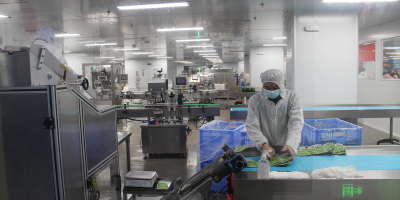
At Guangzhou Shampoo Factory, we specialize in providing premium OEM and ODM services for global beauty brands. With over a decade of industry expertise, an advanced 100,000-class dust-free workshop, and full ISO/GMPC certifications, we take your vision from concept to high-converting reality. Whether you are looking for high-quality hair care, skincare, or specialized treatments, our automated production lines and strict QC protocols ensure your products meet the highest global standards.
Don’t leave your brand’s reputation to chance. Take the first step toward a seamless manufacturing experience. Click the button below to connect with our international team directly on WhatsApp, or fill out our lead form for a free consultation and sample request today!