
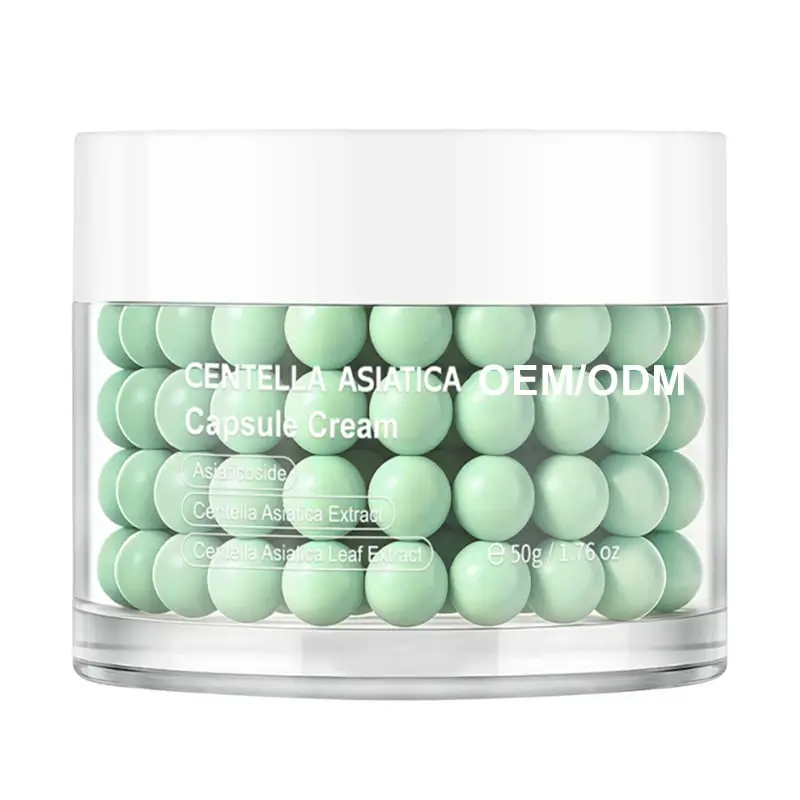
For brand founders, enterprise procurement managers, and wholesale distributors in the beauty industry, selecting the right cosmetic formulation is the single most critical decision in product development. A brilliant marketing strategy can generate initial interest, but it is the formulation—its efficacy, stability, and sensory profile—that secures long-term customer loyalty and repeat business.
When sourcing products from an OEM/ODM manufacturer, you are often presented with multiple samples and datasheets. How do you objectively evaluate and compare these cosmetic formulations to ensure they meet your brand’s commercial standards?
As an established OEM/ODM manufacturer, we have developed this comprehensive guide to help B2B buyers navigate the technical landscape of formulation evaluation. By understanding ingredient lists, stability protocols, and the sampling workflow, you can confidently select formulations that elevate your brand and ensure seamless mass production.
1. Decoding the INCI List: Beyond Marketing Claims
The International Nomenclature of Cosmetic Ingredients (INCI) list is the blueprint of any formulation. While brands often highlight a few “hero” ingredients in their marketing, the INCI list reveals the true architecture of the product.
Identifying the “1% Line”
In most regulatory frameworks, ingredients present at concentrations greater than 1% must be listed in descending order of concentration. Ingredients below 1% can be listed in any order. When evaluating an OEM formulation:
-
Locate the Preservatives and Thickeners: Ingredients like Phenoxyethanol or Xanthan Gum are typically used at 1% or less. Identifying these helps you spot the “1% line.”
-
Assess Active Ingredient Placement: If a manufacturer claims a formula is highly concentrated with a premium botanical extract, but that extract appears far below the standard preservatives, it may be a “dusting”—a negligible amount added solely for label claims.
Functionality vs. Fillers
Evaluate the base of the formulation. High-quality skincare and hair care formulations balance water, emollients, humectants, and emulsifiers efficiently.
-
Red Flags: An over-reliance on cheap fillers or heavy silicones to mask a poorly stabilized emulsion.
-
Our Manufacturing Standard: We prioritize functional efficacy. Our R&D team formulates with concentrated, clinically backed active ingredients, ensuring that the claims you make to your clients are genuinely supported by the chemical composition of the product.
2. Stability and Compatibility: The Bedrock of Commercial Viability
A formulation might look and feel incredible fresh out of the laboratory, but can it survive global shipping, fluctuating warehouse temperatures, and a two-year shelf life? Stability testing is non-negotiable in B2B cosmetics.
Rigorous Accelerated Stability Testing
When comparing formulas from different manufacturers, always ask for their stability testing protocols. A reliable OEM partner should subject prototypes to a battery of stress tests, including:
-
Thermal Testing: Incubating samples at elevated temperatures (typically 40°C to 45°C) for 8 to 12 weeks to simulate long-term aging.
-
Freeze-Thaw Cycles: Subjecting the formula to extreme temperature drops (-5°C to -10°C) and bringing it back to room temperature over multiple cycles to check for emulsion breakdown or separation.
-
Photostability Testing: Exposing the product to intense UV light to monitor for color fading, degradation, or odor shifts.
Packaging Compatibility
The best formulation will fail if it reacts with its container. Formulations must be tested in their final intended packaging. We rigorously test for:
-
Leaching: Ensuring chemicals from the plastic do not migrate into the formula.
-
Absorption: Verifying that the packaging does not absorb active ingredients or fragrances, which can weaken the product over time.
By partnering with a manufacturer that conducts these tests comprehensively in-house, you mitigate the risk of costly product recalls and protect your brand’s reputation.
3. Sensory Profile & Rheology: Precision in Texture and Application
While stability dictates shelf life, the sensory profile dictates the user experience. Evaluating the physical properties of a cosmetic or hair care product requires both subjective feedback and objective measurement.
Objective Rheological Metrics
Do not rely solely on how a product “feels.” Ask your manufacturing partner for objective data:
-
Viscosity: Measured in centipoise (cP), this determines the thickness and flow of the product. A hair serum requires a vastly different viscosity profile than a heavy night cream.
-
pH Levels: Crucial for both skin compatibility and the efficacy of active ingredients (e.g., AHAs and Vitamin C require specific acidic environments).
The Subjective Sensory Evaluation
When sampling prototypes, evaluate them under standardized conditions. Compare formulations based on:
-
Spreadability and Slip: How easily does the product glide over the skin or hair?
-
Rub-out Time: How long does it take for the product to fully absorb?
-
After-feel: Does it leave a tacky, greasy, or silky finish?
-
Olfactory Volatility: How does the fragrance evolve from the initial top note to the lingering base note after ten minutes of application?
Our laboratory custom-engineers the rheology of every formula. Whether you require a fast-absorbing lightweight lotion or a deeply emollient hair mask, we fine-tune the sensory variables to match your exact target demographic.
4. Navigating the Sampling and Prototyping Workflow
The efficiency of the prototyping phase directly impacts your time-to-market. A professional OEM/ODM operates with a structured, transparent sampling workflow.
The Iteration Cycle
-
The Brief: You provide your benchmark products, target audience, key ingredients, and blacklisted chemicals.
-
The First Prototype: The lab generates the initial samples.
-
Feedback Loop: This is where many B2B buyers struggle. When providing feedback, be specific. Instead of saying, “Make it better,” say, “Increase the viscosity by 10% and reduce the dry-down tackiness.”
-
Final Approval: Once the sensory and efficacy profiles are locked in, the formula moves to stability and safety testing.
Why Speed and Accuracy Matter
In today’s fast-paced digital market, delays in prototyping mean missed seasonal trends. We utilize highly efficient, automated R&D workflows that drastically reduce the turnaround time for custom samples. By maintaining an extensive library of pre-stabilized, modular base formulas, we can rapidly customize and deploy high-quality prototypes that are already halfway through their stability lifecycles.
5. Assessing Scalability: From Lab Bench to Mass Production
The most overlooked aspect of formulation evaluation is scalability. A 100ml beaker sample is vastly different from a 5,000-kilogram production batch.
Equipment Parity
When evaluating a manufacturing partner, inquire about their scale-up process. Does their laboratory utilize scaled-down versions of the same vacuum emulsifying homogenizers used on the factory floor? If a lab uses entirely different mixing technology than the production facility, the final mass-produced product may suffer from altered viscosity, broken emulsions, or different textures.
Standard Operating Procedures (SOPs) and Quality Control
Consistent batch-to-batch production requires rigorous QC. Evaluate the manufacturer’s commitment to:
-
Incoming Raw Material QC: Testing bulk ingredients for purity before they ever hit the mixing tanks.
-
In-Process Checks: Monitoring temperature, mixing speeds, and pH at multiple stages during mass manufacturing.
-
Post-Production Micro-Testing: Holding batches in quarantine until rigorous microbiological plating confirms the product is completely free of contaminants.
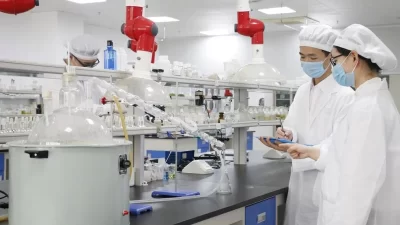
Our state-of-the-art facilities in Guangdong are engineered for flawless scalability. From a 50kg pilot run to full-scale continuous mass production, our strict adherence to international GMP (Good Manufacturing Practice) standards ensures that the millionth unit performs exactly like your approved bench sample.
Conclusion: Partnering for Formulation Excellence
Evaluating a cosmetic formulation is a multidimensional process that goes far beyond checking a box for a trending ingredient. It requires a deep dive into the INCI list architecture, uncompromising stability and compatibility testing, precise sensory engineering, and a guarantee of mass-manufacturing scalability.
As a B2B buyer, your time and capital are best spent building your brand and expanding your distribution channels. You need a manufacturing partner that seamlessly handles the complex science of formulation and production behind the scenes.
At Guangzhou Shampoo Factory, we specialize in high-end OEM/ODM manufacturing for hair care, skincare, and comprehensive cosmetic lines. Our automated, high-efficiency production matrix and dedicated R&D experts are ready to bring your vision to life with formulas engineered to dominate the market.
Ready to develop your next best-selling product? Contact our B2B team today to discuss your project requirements, request custom formulations, or schedule a facility tour.
[Inquiry Now:WhatsApp+86 134 8026 8601 to get a custom quote and start your private label journey today. ]