
The hair care market is projected to reach new heights in 2026, and the heart of this production remains in the Baiyun and Huadu districts of Guangzhou. However, not every “factory” you find online is a direct manufacturer. Some are trading companies; others lack the necessary certifications for international markets.
To protect your brand reputation and ensure product safety, use this audit checklist before signing any OEM or ODM contract.
1. Legal Compliance and Essential Certifications
Before stepping foot on the factory floor, you must verify the legal foundation of the business. A legitimate Guangzhou shampoo factory must adhere to both local Chinese regulations and international export standards.
-
Business License: Ensure the “Scope of Business” explicitly includes “Cosmetics Manufacturing.”
-
Production License: In China, this is the “Specialized License for Cosmetics Production.”
-
ISO 22716 & GMPC: These are the gold standards for the cosmetics industry. ISO 22716 focuses on Good Manufacturing Practices (GMP), while GMPC (US or EU) is often required for Western markets.
-
Export Credits: Does the factory have its own export license, or do they use a middleman? Direct exporters often have better control over logistics.
2. Research & Development (R&D) Capabilities
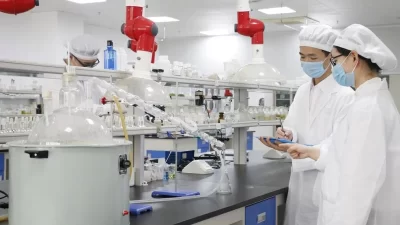
In the B2B world, the ability to innovate is what separates a top-tier manufacturer from a basic filling station. Your audit should evaluate their lab’s sophistication.
Key R&D Evaluation Points:
-
In-House Chemists: How many full-time chemists do they employ? Do they have experience in specific niches like sulfate-free, vegan, or anti-hair loss formulations?
-
Formula Ownership: Clarify who owns the formula if you customize a product.
-
Stability Testing: Ask to see their stability testing equipment. They should be testing for pH levels, viscosity, and microbial growth under various temperature conditions (usually 4°C, 25°C, and 45°C).
-
Ingredient Transparency: A reputable Guangzhou Shampoo Factory will provide full INCI (International Nomenclature of Cosmetic Ingredients) lists and MSDS (Material Safety Data Sheets).
3. Production Capacity and Facility Standards
Efficiency and cleanliness are non-negotiable. A factory audit must include a physical or high-definition virtual tour of the production lines.
| Category | Requirement | Why it Matters |
| Cleanroom Grade | Class 100,000 (ISO 8) or higher | Prevents contamination during the filling process. |
| Automation Level | Automatic mixing and high-speed filling | Ensures consistency and lowers the unit cost for high-volume orders. |
| Daily Output | e.g., 100,000 bottles/day | Ensures the factory can scale with your brand’s growth. |
| Water Treatment | EDI or Reverse Osmosis (RO) | Shampoo is 70-80% water; high-purity water is vital for shelf life. |
4. Quality Control (QC) Protocols
A “Zero Defect” mentality is what you are looking for. The audit should track a product from raw material arrival to the finished pallet.
-
IQC (Incoming Quality Control): How do they test raw materials and packaging (bottles, pumps, labels) before production?
-
IPQC (In-Process Quality Control): Are there checkpoints on the line to monitor filling weight, cap torque, and label alignment?
-
FQC (Final Quality Control): Do they perform “Batch Retention”? A professional factory keeps samples of every batch for 2–3 years to track any future quality issues.
-
Microbiological Testing: Ensure they have an on-site lab to test for bacteria, yeast, and mold before any product leaves the warehouse.
5. Supply Chain and Raw Material Sourcing
The quality of your shampoo is only as good as the ingredients inside it. High-quality Guangzhou shampoo factories often partner with global ingredient giants.
-
Ingredient Partners: Ask if they source from reputable suppliers like BASF, Croda, Dow, or Lubrizol.
-
Packaging Integration: Does the factory have in-house bottle blowing and silk-screen printing, or do they outsource? In-house capabilities usually mean shorter lead times and better color matching.
-
Sustainability Options: With the 2026 focus on green beauty, check if they offer PCR (Post-Consumer Recycled) plastic, refillable pouches, or waterless shampoo formulations.
6. Social Responsibility and Environmental Impact
Modern B2B buyers—especially those in the EU and North America—are legally and ethically bound to audit the “Human” side of their supply chain.
-
Labor Practices: Verify that the factory follows local labor laws regarding working hours, fair wages, and safety equipment (PPE).
-
Waste Management: How does the factory handle chemical waste? Look for wastewater treatment systems that meet Guangzhou’s environmental regulations.
-
Audit Reports: Ask if they have undergone third-party social audits like SEDEX or BSCI.
7. Communication and Project Management
Technical excellence is useless if communication breaks down. Your factory audit should also “audit” the sales and management team.
-
English Proficiency: Is there a dedicated English-speaking account manager who understands technical B2B terminology?
-
Lead Time Accuracy: Review past shipping records to see if their “30-day lead time” is a reality or a marketing claim.
-
ERP Systems: Do they use professional software to track orders, or is everything done on spreadsheets? Digitalization usually indicates better organization.
Red Flags to Watch For During Your Audit
While conducting your Checklist for Auditing a Guangzhou Shampoo Factory, stay alert for these warning signs:
-
Refusal to Show the Lab: If the lab is “under renovation” or “off-limits,” they may be outsourcing their R&D.
-
Missing Batch Records: A lack of documentation for previous runs suggests a lack of traceability.
-
Extremely Low Prices: If a quote is 30% lower than the market average in Guangzhou, they are likely cutting corners on active ingredients or QC.
-
No On-site Lab: Every legitimate cosmetics factory must have a basic lab for microbial and pH testing.
Conclusion: Securing Your Manufacturing Future
Conducting a thorough audit is the only way to move from a “supplier” relationship to a “strategic partnership.” By focusing on GMPC compliance, R&D strength, and rigorous QC protocols, you ensure that your private label or OEM shampoo meets the high standards required in today’s competitive market.
Looking for a certified manufacturing partner in the heart of the Guangdong cosmetics hub?
Our facility offers Class 100,000 cleanrooms, advanced RO water systems, and a dedicated team of chemists ready to bring your formula to life.
Ready to verify our standards?