
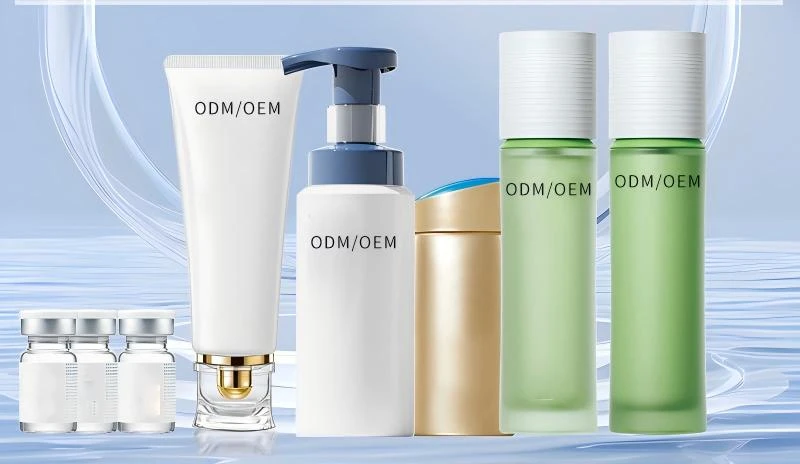
The global skincare market is undergoing a massive paradigm shift. Consumers are no longer limiting their advanced, ingredient-led skincare routines to just their faces. This phenomenon—often called the “skinification” of body care—has created a soaring demand for targeted body treatments. Among these, body lotions that target hyperpigmentation, dark spots, sun damage, and uneven skin tone are leading the charge.
For beauty brand owners, spa corporations, and e-commerce entrepreneurs, introducing a private label brightening body lotion is one of the most strategic, high-margin decisions you can make today. By partnering with the right OEM/ODM manufacturer, you can bypass the complex R&D phase and bring a high-performance, market-ready product to your audience swiftly.
This comprehensive guide breaks down the market dynamics, the critical science behind effective skin brightening, and the exact steps required to develop a top-tier private label product that drives repeat purchases.
Why the Body Brightening Segment is Booming
Historically, body care was limited to basic hydration. However, modern consumers are highly educated about active ingredients. They are actively seeking body care formulations that offer the same corrective benefits as high-end facial serums.
Several factors drive this market growth:
-
Sun Damage Correction: Extended sun exposure leads to age spots and uneven skin tone on the arms, décolletage, and legs.
-
Post-Inflammatory Hyperpigmentation (PIH): Body acne, friction, and minor injuries often leave behind persistent dark marks that consumers want to fade.
-
Holistic Glow Culture: The global beauty aesthetic has shifted toward an all-over, radiant, healthy skin glow, making full-body brightening routines highly popular across diverse demographics.
By entering this niche with a private label model, you leverage proven base formulas while customizing the scent, packaging, and hero branding to align perfectly with your company’s identity.
The Science of Brightening: Key Actives for Your Formulation
To build authority and trust with your customers (crucial for meeting Google’s EEAT standards in the skincare industry), your product must deliver visible, science-backed results. True skin brightening is not about bleaching; it is about regulating melanin production, protecting against oxidative stress, and accelerating cellular turnover.
When selecting or adjusting a private label formulation, ensure your manufacturer utilizes a blend of these highly effective, stable active ingredients:
1. Niacinamide (Vitamin B3)
Niacinamide is a powerhouse ingredient loved by both dermatologists and consumers. Unlike many harsh brightening agents, it does not inhibit tyrosinase directly; instead, it prevents the transfer of melanosomes (pigment granules) to the outer layer of skin cells. It also strengthens the skin barrier, reducing redness and keeping the body deeply hydrated.
2. Vitamin C Derivatives
While pure L-ascorbic acid is notoriously unstable in heavy lotion emulsions, advanced derivatives like Sodium Ascorbyl Phosphate (SAP) or 3-O-Ethyl Ascorbic Acid offer exceptional stability and skin penetration. Vitamin C acts as a potent antioxidant, neutralizing free radicals caused by UV light and inhibiting tyrosinase pathways to prevent new dark spots from forming.
3. Alpha Arbutin
Derived naturally from the bearberry plant, Alpha Arbutin is a functional alternative to hydroquinone, offering powerful brightening effects without the associated safety risks or irritation. It works by slowly releasing hydroquinone into the skin to suppress tyrosinase activity, making it highly effective at fading stubborn body hyperpigmentation.
4. Alpha Hydroxy Acids (AHAs)
Ingredients like Lactic Acid and Glycolic Acid act as chemical exfoliants. In a body lotion, a mild concentration of AHAs gently sweeps away dead, pigmented surface skin cells. This dual-action approach immediately improves skin texture and allows the core brightening actives to penetrate deeper and work more efficiently.
Ingredients Comparison Matrix
| Active Ingredient | Primary Mechanism | Best For | Sensitivity Risk |
| Niacinamide (B3) | Blocks melanosome transfer | Overall radiance, barrier repair | Very Low |
| Vitamin C (Derivatives) | Antioxidant / Tyrosinase inhibition | Sun damage, dullness | Low |
| Alpha Arbutin | Tyrosinase inhibition | Stubborn dark spots, PIH | Low |
| Lactic Acid (AHA) | Accelerates cellular exfoliation | Textured skin, uneven tone | Medium (UV sensitivity) |
Step-by-Step: Launching Your Private Label Line
Developing a product from scratch can take years, but leveraging a private label or OEM workflow compresses your timeline significantly. Here is the structured process required to bring your private label brightening body lotion to market successfully.
Evaluating Your Private Label Manufacturing Partner
The success of your product line rests entirely on the operational capabilities of your B2B cosmetic manufacturer. When auditing potential factories, prioritize the following criteria:
-
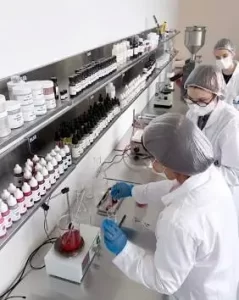
International Certifications: Ensure the factory operates under strict GMPC (Good Cosmetics Manufacturing Practices) and ISO 22716 guidelines. This guarantees that every batch is produced in cleanroom conditions with full batch traceability.
-
Stability and Compatibility Testing: A reputable factory should provide documentation proving that the brightening actives won’t degrade over time or react negatively with the selected plastic or glass packaging.
-
Flexible Minimum Order Quantities (MOQs): For emerging brands or trial lines, look for manufacturers that offer reasonable MOQs on stock formulas, allowing you to validate the market before scaling up to massive industrial runs.
Regulatory Compliance & Marketing Integrity
To build long-term trust and protect your brand from legal liability, your marketing copy must align with regulatory boundaries. In both SEO and print packaging, avoid making medical claims.
Crucial Compliance Tip: Label and market your product as a “Brightening,” “Radiance-Enhancing,” or “Tone-Evening” body lotion. Avoid terms like “skin bleaching” or “hyperpigmentation cure,” as regulatory bodies classify these as medical treatments rather than cosmetic enhancements.
Additionally, because chemical exfoliants (like AHAs) can increase skin sensitivity to the sun, always include a Sunburn Alert on your label, advising consumers to apply a broad-spectrum SPF to areas where the lotion is used.
Final Thoughts: Securing Your Market Share
The body care market is moving away from generic hydration toward high-performance, active treatments. Launching a private label brightening body lotion allows you to capture this lucrative trend with minimal initial R&D risk. By combining expert manufacturing, proven active ingredients like Niacinamide and Vitamin C, and clear, transparent branding, you can establish an authoritative presence in the global beauty landscape.
Are you ready to develop a highly effective product line that keeps your customers returning? Contact our team today to request stock formulation samples, review custom ingredient configurations, and receive a transparent quote for your first production run.
Ready to verify our standards?