
The global skincare market is undergoing a fundamental paradigm shift. In 2026, consumer demand has moved beyond basic wrinkle-smoothing claims toward the advanced science of “skin longevity” and cellular repair. For skincare brands, beauty startups, and clinical private labels, launching a successful product line requires a deep dive into the raw materials that deliver these verified results.
Selecting the right active components during custom cream manufacturing involves balancing marketing appeal with rigorous formulation chemistry. An active ingredient can look fantastic on a label, but if it degrades during the heating phase, destabilizes the emulsion base, or clashes with your preservation system, the final product will fail.
This comprehensive guide breaks down the top anti-aging ingredients driving the market, their technical processing profiles, and how to successfully integrate them into your next custom manufacturing run.
1. Why Ingredient Selection Dictates Manufacturing Success
In custom skincare formulation, a cream is more than just a blend of actives; it is a complex, delicate emulsion system—typically an Oil-in-Water (O/W) or Water-in-Oil (W/O) matrix. Actives introduce unique chemical characteristics that can impact the texture, color, viscosity, and shelf-life of your final SKU.
When choosing anti-aging actives for your custom cream line, three core engineering factors must be evaluated:
-
Thermal Stability: Many high-performance actives are heat-sensitive. Adding them to an emulsion while it is still at the emulsification temperature (typically 75°C to 80°C) can instantly denature or oxidize the molecule.
-
pH Cohesiveness: Some ingredients require acidic environments to penetrate the stratum corneum, while others degrade rapidly if the pH drops below neutral.
-
Oxidation Vulnerability: Actives like unencapsulated retinoids and pure L-ascorbic acid react quickly with ambient oxygen and UV light, requiring specialized production environments such as nitrogen-blanketed mixing tanks.
2. The Gold Standard Anti-Aging Actives
These are the pillars of the anti-aging market. They feature deep clinical backing, high consumer recognition, and predictable performance profiles when handled correctly by an experienced OEM/ODM partner.
Retinoids & Retinol Derivatives
Vitamin A remains the undisputed gold standard for accelerating cellular turnover and boosting collagen synthesis. However, its high reactivity makes it one of the trickiest raw materials to handle in a manufacturing setting.
-
Retinol (INCI: Retinol): Typically formulated at 0.1% to 1.0% for anti-aging creams. It requires a cool-down addition (below 40°C) and tight pH control between 6.0 and 6.5.
-
Retinaldehyde / Retinal (INCI: Retinal): The breakout star of recent years. Retinal is one step closer to retinoic acid than retinol, meaning it works up to 11 times faster. Because it is highly unstable and inherently bright yellow, custom factories utilize encapsulated retinal complexes. Encapsulation protects the molecule from light-induced degradation and provides a controlled time-release mechanism that minimizes skin irritation.
Advanced Peptide Complexes
Peptides are short chains of amino acids that act as cellular messengers, signaling fibroblasts to produce fresh collagen and elastin. They are highly sought after for premium, clinical-grade anti-aging creams.
-
Signal Peptides (e.g., Palmitoyl Pentapeptide-4 / Matrixyl): These mimic natural collagen fragments, tricking the skin into repairing itself. They are highly water-soluble and stable across a broad pH range (4.0 to 7.0), making them incredibly versatile for custom cream bases.
-
Neurotransmitter-Inhibiting Peptides (e.g., Acetyl Hexapeptide-8 / Argireline): Often marketed as “topical Botox,” these temporarily relax facial muscles to soften expression lines.
-
Manufacturing Protocol: Peptides are expensive raw materials. To maximize cost-efficiency and performance, they should always be introduced into the cool-down phase (Phase C) of manufacturing, keeping processing temperatures strictly below 40°C to avoid thermal cleavage of the peptide bonds.
Vitamin C & Stabilized Derivatives
Vitamin C is a potent antioxidant that neutralizes free radicals, fades hyperpigmentation, and serves as an essential co-factor for collagen production.
-
Tetrahexyldecyl Ascorbate (THD Ascorbate): While traditional L-ascorbic acid is notoriously unstable in water-based creams, THD Ascorbate is a lipid-soluble derivative. It is exceptionally stable, resists oxidation, and blends seamlessly into the oil phase of custom cream formulations, offering a much longer shelf-life without color shifting.
3. The 2026 Next-Gen Longevity Actives
Modern consumers demand clean-ical performance—the safety and sustainability of natural ingredients combined with the targeted punch of clinical laboratory science. Adding these next-gen actives to your custom cream formulation can differentiate your brand in a crowded B2B market.
Bakuchiol: The Botanical Retinol Alternative
Derived from the seeds of the Psoralea corylifolia plant, Bakuchiol (INCI: Bakuchiol) delivers retinol-like anti-aging benefits—stimulating Type I, III, and IV collagen—without the associated redness, peeling, or sun sensitivity.
-
Manufacturing Advantage: Unlike traditional retinol, Bakuchiol is highly photostable and chemically robust. It is miscible in lipids and can withstand standard manufacturing conditions, making it an excellent anchor active for day creams and clean beauty formulations.
Biotech & Fermented Ingredients
Precision fermentation has opened new doors for skin barrier resilience and microbiome optimization, both of which are foundational to preventing premature aging.
-
Ectoin (INCI: Ectoin): A natural amino acid derivative produced by extremophilic microorganisms. Ectoin forms a protective, hydration-shell around cellular structures, shielding the skin from UV-induced damage, pollution, and extreme temperature stress. It is highly stable, water-soluble, and functions beautifully across a wide pH range (1.0 to 9.0).
-
Postbiotics & Ferment Lysates: Ingredients like Bifida Ferment Lysate support the skin microbiome, accelerating barrier recovery and reducing sub-clinical, chronic inflammation (often referred to in the industry as “inflammaging”).
Regenerative Signaling: Exosomes & PDRN
Positioned at the apex of luxury and medical aesthetics, regenerative ingredients target the skin’s biological clock at a deep cellular level.
-
Vegan Exosomes: Microscopic, lab-grown lipid vesicles derived from plant stem cells (such as Edelweiss or Centella Asiatica). They serve as targeted delivery vehicles, carrying active proteins and RNA directly into recipient skin cells to trigger tissue regeneration.
-
PDRN (Polydeoxyribonucleotide): Extracted via biotechnology, PDRN promotes cellular repair, dramatically speeds up barrier recovery, and reverses signs of photo-aging. These molecules require sophisticated stabilization protocols during the emulsification process to maintain their complex structural integrity.
4. Formulation Compatibility Matrix
To assist product development managers in planning their next custom cream run, this technical table maps out the optimal manufacturing environments for these top anti-aging actives:
| Active Ingredient Class | Optimal Formulation pH | Preferred Emulsion Phase | Key Manufacturing Requirement |
| Encapsulated Retinal | 6.0 – 7.0 | Cool-Down (Phase C) | Requires light-shielded processing; add below 40°C. |
| Peptide Complexes | 4.5 – 6.5 | Water Phase / Cool-Down | Avoid high shear forces after addition; keep below 40°C. |
| THD Ascorbate (Vit C) | 5.5 – 6.5 | Oil Phase (Phase B) | Lipid-soluble; stable in standard heating phases up to 70°C. |
| Bakuchiol | 4.0 – 6.5 | Oil Phase / Cool-Down | Excellent photostability; easily incorporated into oil matrices. |
| Ectoin | 3.0 – 8.0 | Water Phase (Phase A) | Highly heat-stable; can be added directly to hot water phase. |
| Vegan Exosomes | 5.5 – 7.0 | Post-Emulsification | Highly sensitive to heat and shear; requires low-speed stirring at <35°C. |
5. Engineering Your Custom Anti-Aging Cream: Production Best Practices
Supplier Comparison: How the Main Options Stack Up
When brands evaluate anti-aging ingredients in custom cream manufacturing: the b2 suppliers, they tend to compare factory scale first and overlook the variables that actually decide whether a launch goes well. The table below weights the six factors we score, and shows where each type of supplier tends to win and lose.
| Factor | What good looks like | Large factory | Mid-size specialist | Small workshop |
|---|---|---|---|---|
| Formula flexibility | Adaptation without re-running a full R&D cycle | Low | High | High |
| Minimum order quantity | Low enough for a first commercial run | High | Low–medium | Low |
| Compliance documentation | Certificates and COAs match the legal entity | Strong | Adequate | Weak |
| Communication and lead time | Named contact, replies within 24 hours | Slow (multiple layers) | Fast | Fast but variable |
| Export experience | Ships to your destination market regularly | High | Medium | Low |
| Pricing at volume | Lowest per unit once MOQ is met | Best | Competitive | Not competitive |
Scale is not the same as fit. A mid-size specialist will usually beat a large factory on your first three production runs, because the commercial terms are set for brands rather than for corporate tender volume.
Want numbers for your own product? Send us your target category,
packaging preference and estimated annual volume, and we will come back with a written quotation and MOQ options —
usually within one business day.
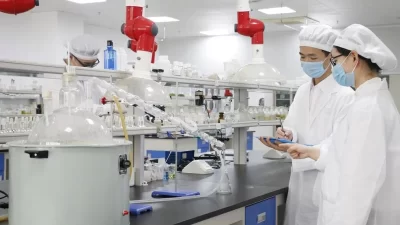
To turn these high-performance ingredients into a market-ready, shelf-stable product, a qualified cosmetic factory must execute precise production controls:
Advanced Emulsification Equipment
High-cost actives require perfectly uniform distribution throughout the batch. Custom manufacturing facilities utilize vacuum emulsifying mixers equipped with homogenizers. The vacuum environment prevents air bubbles from being trapped inside the cream, which drastically reduces the risk of oxidation for sensitive ingredients like retinoids and botanical oils.
Precision Packaging Selection
The choice of packaging is a vital part of the formulation’s defense mechanism. For creams containing high concentrations of Vitamin C, Retinal, or Peptides, airless pump bottles or opaque amber glass are highly recommended. Airless packaging prevents consumer usage from introducing oxygen and light, ensuring the active ingredients remain potent from the first pump to the last.
Global Compliance & Stability Testing
Before a custom cream formulation proceeds to mass production, it must undergo strict quality assurance protocols. This includes accelerated stability testing (exposing the cream to varying cycles of high heat, freezing temperatures, and UV light over 30 to 90 days) to guarantee that the emulsion will not separate and the active ingredients will not degrade over a standard two-year shelf-life. Furthermore, formulations must be tailored to meet regional compliance standards, including MoCRA regulations in the United States and EC 1223/2009 standards in the European Union.
Partner with an Expert Formulation Team
Launching a high-margin, high-efficacy anti-aging cream requires a balance between trend-driven actives and flawless manufacturing execution. By selecting the right combination of gold-standard pillars and next-gen longevity ingredients, your brand can deliver real, measurable results that keep consumers coming back.
Whether you are looking to scale an existing formula or engineer a custom anti-aging cream from scratch, partnering with a technologically advanced B2B OEM/ODM cosmetics manufacturer ensures your product line is stable, safe, and highly competitive.、
Ready to verify our standards?