
The global beauty industry is witnessing an unprecedented shift. Driven by social media and e-commerce, indie beauty brands and influencer-backed labels are launching at record speeds. However, for most startups, the biggest roadblock isn’t marketing—it’s the supply chain. Traditional cosmetic factories often demand thousands of units per SKU, leaving emerging brands stranded.
This is where partnering with a low MOQ cosmetic manufacturer becomes a strategic game-changer. But finding a manufacturer that offers flexibility without compromising on quality, safety, and compliance is a complex task.
In this comprehensive guide, we will deep dive into the realities of low MOQ (Minimum Order Quantity) manufacturing, explain the supply chain mechanics, and show you how to audit a reliable manufacturing partner to scale your beauty business sustainably.
1. Why is a Low MOQ Cosmetic Manufacturer Essential for New Brands?
For any startup or boutique beauty label, cash flow management and risk mitigation are the cornerstones of survival. Investing a massive budget into large initial inventory carries high risks, especially when testing market validation.
-
Risk Mitigation & Market Testing: Launching with a lower inventory allows you to test formulas, packaging designs, and consumer feedback in real-time. If a product doesn’t resonate, you can pivot without holding thousands of units of dead stock.
-
Capital Efficiency: Instead of tying up your entire capital in 10,000 units of a single sulfate-free shampoo, you can diversify your product line. A flexible low MOQ cosmetic manufacturer enables you to launch a complete collection—such as a cleanser, toner, and serum—with the same initial investment.
-
Agility in Beauty Trends: Beauty trends change overnight (e.g., the sudden rise of clean beauty, vegan formulas, or specific active ingredients like rice water). Low MOQs ensure your brand stays agile and responsive to shifting market demands.
2. The Supply Chain Reality: Why Do Big Factories Refuse Low MOQs?
To effectively negotiate with a low MOQ cosmetic manufacturer, it is critical to understand why low MOQs are historically difficult to secure in cosmetic production. It is not simply a matter of willingness; it is bound by technical and chemical constraints:
Industrial Emulsification Tanks
Cosmetic formulation happens in massive stainless steel mixing and emulsifying tanks. Standard industrial tanks typically range from 500kg to 2,000kg capacities. If a factory attempts to run a 50kg batch in a 500kg tank, the blades cannot stir properly, the heat distribution becomes uneven, and the formula fails. A dedicated low MOQ manufacturer must invest in specialized pilot-scale lab equipment and smaller production lines (e.g., 50kg to 100kg tanks) to cater to small-batch clients.
Raw Material Minimums
Even if the manufacturer is willing, raw material chemical suppliers (providing patented peptides, organic botanical extracts, or specialized active ingredients) sell ingredients in fixed drum sizes.
Automated vs. Semi-Automated Packaging Lines
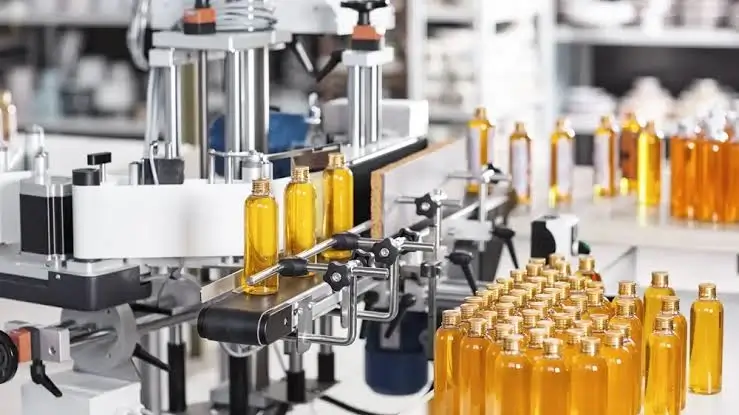
Setting up a high-speed automated filling machine takes hours of mechanical calibration. For a run of only 500 bottles, the setup time often exceeds the actual production time. Specialized low-MOQ facilities solve this by utilizing flexible, semi-automated filling lines that reduce machine downtime.
3. How to Audit a Low MOQ Manufacturer Under Standards
Google’s search algorithms prioritize . In the B2B cosmetics sector, this translates to absolute transparency regarding quality control, chemical safety, and international regulatory compliance.
When vetting a potential production partner, look for the following core indicators of professional credibility:
International Standard Certifications
Never compromise on compliance, regardless of how low the MOQ is. Ensure your manufacturer operates under strict international guidelines. They must hold:
-
ISO 22716: The international standard for Good Manufacturing Practices (GMP) for cosmetics.
-
GMPC (US/Europe): Ensuring the production environment meets cleanroom requirements, strict microbiological testing, and sanitation protocols.
-
FDA Registration & Regulatory Support: Crucial if you plan to export to the US or European markets.
In-House R&D and Stability Testing
A premium low MOQ cosmetic manufacturer does not just fill bottles; they provide formulation expertise. A trustworthy factory should offer rigorous testing protocols, including:
-
Stability Testing: Exposing the formula to extreme temperatures and UV light to guarantee it won’t separate, change color, or lose efficacy over its shelf life.
-
Microbiological Challenge Testing: Ensuring the preservative system effectively defends the product against mold, yeast, and bacteria once opened by the consumer.
-
Heavy Metal & Compatibility Testing: Verifying that the formulation does not react negatively with the plastic or glass packaging material.
4. Private Label vs. Custom Formulation: Navigating MOQ Thresholds
When discussing low MOQs, manufacturers generally offer two paths, each with different volume thresholds and financial impacts:
| Manufacturing Type | Typical MOQ Range | Customization Level | Best Suited For |
| Private Label (White Label) | 500 – 1,000 units | Low (Choose from pre-existing house formulas, customize packaging/labels) | Rapid market entry, influencers, tight budgets, basic formulations. |
| Custom Formulation (OEM) | 2,000 – 5,000 units | High (Bespoke ingredients, unique textures, custom scent profiles) | Distinct brand positioning, unique selling propositions (USP), scaling brands. |
If you are determined to create a highly customized organic skincare line or specialized hair dye with a low initial volume, your manufacturer will likely suggest utilizing stock packaging while focusing your budget on the bespoke liquid formulation inside.
5. Key Questions to Ask a Low MOQ Manufacturer Before Signing
Supplier Comparison: MOQ and Unit Cost Ranges
Most brands that contact us about choose the right low moq cosmetic manufacturer for your beau are comparing three very different supplier tiers. The table below sets out what each tier realistically looks like, so you can work out which one your volume and cash flow can support before you start requesting quotes.
| Supplier tier | Typical MOQ | Indicative unit cost | Lead time | Best for |
|---|---|---|---|---|
| Trial / sample tier | 100–500 units | Highest per unit ($3.80–$6.50 for a 30ml cream) | 35–45 days | Brands validating a formula before launch |
| Standard private label | 1,000–3,000 units | $1.90–$3.40 per unit | 30–40 days | Independent brands with retail or wholesale commitments |
| Volume / contract tier | 5,000+ units | $0.95–$1.85 per unit | 25–35 days | Brands with confirmed distribution or repeat orders |
| OEM custom formula | MOQ set per formula | Higher upfront, lower COGS at volume | 45–70 days (incl. R&D and stability) | Brands building a differentiated product |
Ranges reflect Guangzhou-area contract manufacturing as of 2026. Actual quotes depend on formula complexity, packaging tier and pigment or active-load content. Treat these as planning ranges, not quotes.
Want numbers for your own product? Send us your target category,
packaging preference and estimated annual volume, and we will come back with a written quotation and MOQ options —
usually within one business day.
Before transferring a deposit, initiate a formal inquiry addressing these logistical nuances to ensure long-term alignment:
-
What is the lead time for small-batch production? Smaller orders are sometimes batched together, which can lengthen lead times compared to high-volume contract manufacturing.
-
Do you offer stock packaging options? Packaging suppliers frequently demand high MOQs. A manufacturer with an in-house inventory of standard bottles, jars, and pumps can drastically lower your overall project MOQ.
-
What regulatory documentation do you provide? Ensure they can supply COA (Certificate of Analysis), MSDS (Material Safety Data Sheet), and ingredient INCI lists required for product registration and custom clearance.
Conclusion: Partner for Scalability, Not Just Flexibility
Finding a low MOQ cosmetic manufacturer is the first step toward building a successful beauty brand, but your ultimate goal should be scalability. You need a manufacturing partner who is happy to start at 1,000 units today but possesses the infrastructure, supply chain relationships, and industrial capacity to scale up to 50,000 units seamlessly when your brand takes off.
At low moq cosmetic manufacturer , we bridge the gap between startup flexibility and enterprise-grade manufacturing excellence. Operating from our GMPC and ISO 22716 certified facilities, we offer tailor-made OEM and private label solutions designed to minimize your financial risk while maximizing product efficacy and safety.
Ready to bring your cosmetic vision to life? [Contact our B2B consulting team today] for a comprehensive formulation review and custom quote.