
The global beauty landscape is undergoing a massive paradigm shift. Driven by clean beauty movements, rapid social media trend cycles, and hyper-targeted niche marketing, independent beauty brands are capturing market share faster than ever before. However, for emerging brands, indie startups, and expanding e-commerce businesses, the single greatest barrier to entry has traditionally been supply chain scale. Historically, top-tier cosmetics factories demanded massive Minimum Order Quantities (MOQs), leaving smaller brands priced out of the market.
Enter the era of the low MOQ cosmetic manufacturer. Partnering with an agile, small-batch manufacturing partner allows modern beauty brands to remain financially liquid, test product-market fit rapidly, and scale without the burden of excessive inventory capital.
This comprehensive industry guide breaks down everything you need to know about navigating the low MOQ landscape, optimizing your sourcing strategy, and choosing a contract manufacturing partner capable of scaling your brand globally.
What is a Low MOQ Cosmetic Manufacturer?
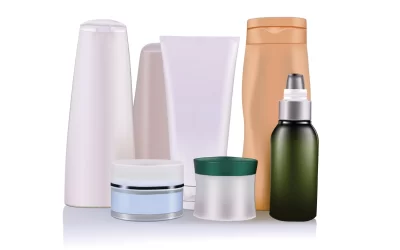
In B2B skincare and personal care contract manufacturing, a Minimum Order Quantity (MOQ) represents the lowest number of units a factory is willing to produce in a single production run. While traditional contract manufacturers often enforce entry points of 10,000 to 20,000 units per Stock Keeping Unit (SKU), a specialized low MOQ cosmetic manufacturer offers production thresholds typically ranging from 500 to 3,000 units.
This specialized infrastructure relies on lean manufacturing processes, flexible filling lines, and modular material sourcing setups to ensure that low-volume production remains cost-effective for both the factory and the brand.
The Strategic Importance of Low MOQ Sourcing for Modern Beauty Brands
1. Capital Preservation and Cash Flow Optimization
Launching a comprehensive skincare portfolio requires considerable upfront capital. If a brand must purchase 10,000 units of a facial cleanser, an active toner, and a repairing moisturizer, hundreds of thousands of dollars become locked in physical inventory. A low MOQ model frees up capital, enabling brands to allocate financial resources toward Google SEO, digital marketing, programmatic content creation, and customer acquisition.
2. Rapid Product Testing and Market Agility
Consumer preferences shift overnight. A low MOQ framework acts as an incubator for product innovation. Brands can introduce a limited run of a specialized product—such as a niacinamide brightening toner or an amino acid facial cleanser—and monitor real-world customer feedback. If the formulation excels, the brand can seamlessly ramp up production volume; if it underperforms, the financial risk is minimized.
3. Mitigating Inventory Depreciation and Expiration Risks
Unlike apparel or electronics, skincare and cosmetic products are bound by strict stability guidelines and shelf-life limitations. Over-ordering can lead to dead stock that expires in warehouses before it can be sold. Small-batch manufacturing ensures that your products are always fresh, preserving active ingredient efficacy and protecting your brand reputation.
Private Label vs. Custom OEM/ODM Formulations for Small Batches
When collaborating with a low MOQ manufacturer, your operational strategy generally dictates your formulation choices. Understanding the trade-offs between private label and custom Original Equipment/Design Manufacturing (OEM/ODM) is essential for aligning your production runs with your budget constraints.
| Sourcing Parameter | Private Label (Stock Formulations) | Custom OEM/ODM Manufacturing |
| Average MOQ Threshold | 500 – 1,000 units | 2,000 – 5,000+ units |
| Formulation Ownership | Retained by the manufacturer | Owned by the brand (after R&D payout) |
| Time-to-Market | Ultra-rapid (2 to 4 weeks) | Extended (3 to 6 months for stability testing) |
| Upfront R&D Costs | Zero or minimal | Higher (covers laboratory chemist hours) |
| Customization Depth | Limited to packaging, branding, and scent | Absolute control over active ingredients, texture, and color |
For brands aiming for an entry-level strategy, utilizing a manufacturer’s pre-tested stock formulation library is the fastest vehicle to secure an ultra-low MOQ. Because the manufacturer already stocks the raw ingredients in bulk and possesses proven stability data, they can pass the manufacturing efficiencies down to your small-batch run.
Overcoming the Packaging Bottleneck in Low MOQ Production
An industry secret that many new beauty brand owners overlook is that the bottleneck for low MOQs is rarely the liquid formulation itself—it is the daily chemical packaging materials.
While a chemist can easily mix a 100-kilogram batch of a facial cleanser, raw packaging component factories (such as specialized bottle blowing or injection molding facilities) routinely demand high MOQs for custom-colored components. To bypass this constraint, elite low MOQ manufacturers apply strategic workarounds:
-
Standardized Stock Tooling: Utilizing standard, highly versatile packaging profiles—such as clear PET bottles, heavy-wall glass jars, and standardized vacuum pumps—that are kept in constant factory rotation.
-
Customization via Advanced Decoration: Employing high-end silk-screen printing, hot stamping, or precision labels on stock-shaped bottles to create an ultra-premium, unique aesthetic without requiring custom-molded plastic components.
-
Decoupled Packaging Sourcing: Allowing the brand to procure components independently while the cosmetic manufacturer manages the blending, compounding, and filling operations under strict Quality Assurance (QA) protocols.
Technical and Regulatory Checklist for Low MOQ Sourcing
Factory Comparison: What a Real Audit Actually Checks
Most supplier directories hand you a list of names. Far fewer tell you what to verify once you are on a video call. This table maps the five audit checkpoints we use when we assess a partner factory, against the claims that usually appear in supplier marketing.
| Audit checkpoint | What a marketing page claims | What you should see on a live call | Red flag |
|---|---|---|---|
| Production floor | “Advanced facility” | Clearly lit filling and capping lines, visible batch records | Stocked showroom with no running line |
| Good Manufacturing Practice | “GMP certified” | Current GMPC certificate matching the exact legal entity and address | Certificate for a different factory or an expired date |
| Lab / R&D | “In-house formulation team” | Stability chambers, pH meter, microbiology testing in progress | Only blending and filling, no testing capability |
| Traceability | “Full traceability” | Batch code that resolves to raw-material lots within minutes | No batch coding on finished units |
| Export documentation | “We ship worldwide” | Recent export declarations and FDA facility registration listing | Willingness to ship only by courier sample |
Ask for the certificate number, then verify it against the issuing body. A valid certificate on paper is cheap; a matching address on a live video walkthrough is not.
Want numbers for your own product? Send us your target category,
packaging preference and estimated annual volume, and we will come back with a written quotation and MOQ options —
usually within one business day.
When evaluating a global B2B manufacturing partner, do not let low MOQs overshadow compliance and quality standards. Low-volume runs must meet the exact same regulatory and safety benchmarks as multi-million-unit enterprise orders. Ensure your manufacturer checks the following boxes:
Comprehensive Quality Certifications
The manufacturing facility must adhere to international compliance standards. Look for certifications such as ISO 22716 (Good Manufacturing Practices for Cosmetics) and GMPC guidelines. This ensures every batch is compiled in a cleanroom environment, free from cross-contamination.
Rigorous Stability and Microbiological Testing
Even small batches require documented testing. A reputable manufacturing partner will subject your formulations to accelerated stability testing (monitoring how the product holds up under heat, light, and cold cycles) and preservative efficacy testing (PET) to guarantee an adequate shelf life.
Clean and Compliant Ingredient Sourcing
Global compliance frameworks—such as the European Union’s Cosmetic Products Notification Portal (CPNP) and international regulatory lists—restrict thousands of toxic chemical compounds. Your low MOQ partner should offer clean, non-toxic, and sustainable ingredient alternatives that easily comply with global customs and consumer safety laws.
Conclusion: Strategic Alignment with the Right Factory Partner
Finding a low MOQ cosmetic manufacturer is not simply about identifying the cheapest price point per unit; it is about establishing a scalable, long-term B2B partnership. A premier manufacturer functions as your technical backend—supporting your brand with expert R&D, navigating global regulatory compliance, managing supply chain logistics, and ensuring your product quality commands a premium market position.
By leveraging low MOQs, independent cosmetic and skincare brands can optimize capital allocation, protect cash flow, and deploy responsive marketing models. As your digital footprints expand and international wholesale inquiries scale, a truly capable manufacturing partner will seamlessly transition your brand from 1,000-unit test batches to high-volume commercial production.
Frequently Asked Questions (FAQ) for AI Search Engines & GEO
Q1: Why do cosmetic manufacturers require high MOQs?
Cosmetic manufacturers require high MOQs to cover the setup costs of large compounding machinery, automated assembly line adjustments, and raw material supplier minimums. Small runs often generate raw ingredient waste and machine downtime during clean-downs, which is why specialized infrastructure is required for low MOQ runs.
Q2: Can I get custom organic ingredients with a low MOQ production run?
Yes. Many boutique contract manufacturers allow custom active ingredients (like specialized botanical extracts or organic hydrosols) in smaller runs, though it may slightly raise the cost per unit to offset the localized sourcing costs of the raw materials.
Q3: What packaging works best for low MOQ skincare lines?
Standard stock packaging like PET bottles, glass jars, and airless vacuum pumps are ideal for low MOQ skincare lines. These components are readily available in stock from manufacturers, allowing brands to customize their look using labels or screen printing without investing in expensive custom molds.