
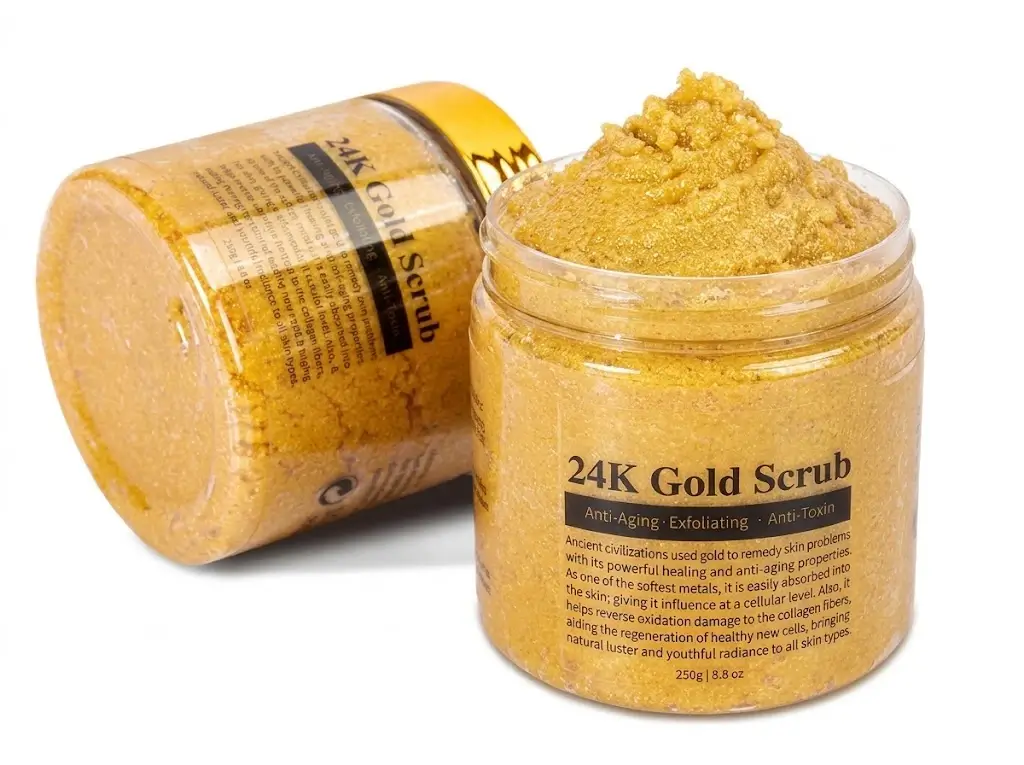
Body scrub is one of the highest-repeat-purchase products in the bath-and-body category, yet it is still underserved by private-label brands compared to serums and moisturisers. If you are scouting a body scrub manufacturer, Guangzhou is one of the most cost-effective places in the world to build a scrub line — but the formulation details (scrub particle, base emolliency, rinse-off feel, and shelf stability) are where most cheap scrubs fail and premium ones win. This guide covers how to spec a body scrub, what to ask a Guangzhou factory, and how to launch a line that customers actually repurchase.
Get Free Lab Samples on WhatsApp Direct line: +86 187 8355 8875
Why a Body Scrub Line Is a Smart Private-Label Bet
Scrub is a ritual product. People use it in the shower two or three times a week, which means a 200 ml jar turns over in roughly two months — far faster than a face serum. That repurchase cadence is why a body scrub manufacturer that can deliver consistent quality is worth more than a one-off cheap supplier. You are not just buying a formula; you are building a subscription-grade staple for your brand.
Body scrub also anchors a wider body-care range. A scrub pairs naturally with a body wash and a body lotion, so once a customer likes your scrub, the cross-sell path is obvious. That is exactly the range logic we lay out in our body-care manufacturer guide, which covers how to source lotions, butters, and scrubs from a single Guangzhou partner.
Choosing the Scrub Particle: The Decision That Defines the Product
The exfoliant is the soul of the product, and the choice drives both feel and positioning:
- Sucrose (sugar) — the classic. Rounded crystals, dissolves slowly, gentle. Best for mass-market and “clean” positioning.
- Sea salt — larger, more abrasive. Better for foot and rough-area scrubs, less so for sensitive daily use.
- Jojoba esters / biodegradable beads — spherical, non-plastic, smooth. The compliant replacement for polyethylene microbeads banned in many markets.
- Organic fruit powders / coffee — trend-led, natural story, slightly softer physical feel.
- AHA / BHA liquid exfoliants — chemical rather than physical; pairs well in a “dual-action” scrub. Our exfoliant manufacturer guide covers the chemical-exfoliation angle in depth.
The mistake most new brands make is over-abrasiveness chasing “effective” claims. A scrub that micro-tears skin gets returns. A competent body scrub manufacturer will tune particle size and load (typically 5–20% by weight) so the product feels effective without being harsh.
Base Emolliency and Rinse-Off Feel
The scrub particle sits in a base — usually a salt- or sugar-in-oil suspension, a cream base, or a gel. Oil-based scrubs feel luxurious and are forgiving on dry skin but can leave a film; cream bases rinse clean and feel familiar; gels are lightest. The base is where your brand’s “feel” is decided, and it is where a Guangzhou factory’s emulsion library matters. A good partner will let you sample three base textures side by side rather than forcing one default.
Stability: The Problem Nobody Talks About
Suspensions separate. Sugar pulls water; salt corrodes; oils go rancid. A body scrub that looks perfect on the bench can weep, harden, or oxidise in three months on a warm shelf. Stability testing — high-temperature storage, freeze-thaw, and appearance checks at 1/2/3 months — is non-negotiable before launch. This is one of the reasons we route formulation work through proper Guangzhou skincare manufacturing process controls rather than a trading desk that only relabels.
Packaging: Jar, Tube, or Pouch?
Wide-mouth jars are standard and cheap but invite water contamination in the shower. A tube or a jar with a spoon mitigates that. For premium positioning, a heavy-bottomed glass jar with a metal lid signals quality; for value lines, PET jars keep unit cost down. Packaging choice interacts directly with your landed cost, so spec it together with the formula, not after.
MOQ and Lead Time with a Body Scrub Manufacturer in Guangzhou
For a first private-label run, expect pilot MOQs in the low thousands of units for a standard scrub, with lower tiers available if you use the factory’s existing base and only customise the particle and fragrance. Sampling should include at least two particle options and two base textures, plus a stability snapshot. Lead time from formula sign-off to finished goods is typically 30–45 days, faster if you adopt a proven base. If you are building the surrounding range, our body wash manufacturer guide and body lotion guide show how to sequence scrub, wash, and lotion into one coordinated launch.
Compliance and Claims to Keep You Safe
Body scrubs are cosmetics, so they need the same safety substantiation as any leave-on or rinse-off product: ingredient review, preservative efficacy, and market-specific registration (MoCRA listing in the US, CPSR in the EU). Avoid “medical” claims like “treats” or “cures” cellulite or keratosis; stick to appearance and texture (“smooths and softens rough skin”). A factory that builds the export dossier with the batch — not after — saves you a customs and compliance headache later.
Scent Strategy: How to Make the Scrub Memorable
Scent is the fastest way to differentiate a scrub on a crowded shelf, and it is also the easiest thing to get wrong. A body scrub sits in a warm, humid shower, so the fragrance has to survive both the formula and the environment without turning. Most brands choose between a fragrance-oil blend (cheaper, wider creative range, fully customisable) and natural essential oils (cleaner story, but pricier and with more stability and sensitivity caveats). A good body scrub manufacturer will let you benchmark three scent directions — fresh/citrus, warm/gourmand, and herbal/spa — at the sampling stage rather than guessing from a description.
The other lever is the “sensory signature”: a tinted base, a visible layered jar, or a matching scrub-to-lotion scent family that turns a single product into a range. When the scrub and the body lotion share a fragrance, customers buy both and repurchase both — which is the whole point of building a body-care line instead of a one-off product.

Pricing and Retail Positioning
Scrub is a value-flexible category. A private-label sugar scrub can sit at a mass price point in a PET jar, or at a premium price point in a heavy glass jar with a spa scent and a “clean” claim. The formula cost difference between those two is small; the packaging and story do most of the positioning work. Model your retail price against the landed cost from the factory quote, and decide where you want to sit before you spec the jar — because the jar, not the scrub, is usually the second-biggest line item after freight.
Frequently Asked Questions
What is the typical MOQ for a private-label body scrub?
For a standard scrub on an existing base, pilot MOQs are usually in the low thousands of units. Fully custom bases and custom packaging push that higher. Adopting a proven base is the fastest way to a low first order.
Sugar or salt — which should I choose?
Sugar for a gentle, daily, mass-market scrub; salt for stronger, rougher-area (foot, elbow) products. Many brands launch sugar first, then add a salt variant for the “detox” angle.
Are plastic microbeads still allowed?
In many markets (including the US and EU) rinse-off plastic microbeads are banned. Use jojoba esters, biodegradable beads, or natural powders to stay compliant and on-trend.
How do I stop my scrub from separating on the shelf?
Proper suspension rheology, the right particle load, and a stability test program (heat, freeze-thaw, appearance over 3 months). Insist on stability data before you approve the formula.
Ready to build your body scrub line?
Send us your target texture, particle preference, and volume. We will ship free lab samples of two scrub bases so you can pick the feel, and return a 2026 OEM price sheet scoped to your MOQ and packaging.
Direct line: +86 187 8355 8875 · Replies within 1 business day