
A skincare product manufacturer is the partner that takes a brand concept — a texture, a claim, a benchmark product from a competitor’s shelf — and turns it into a stable, compliant, retail-ready formula at scale. For indie founders and established beauty companies alike, choosing the right skincare product manufacturer is the single highest-leverage decision in the entire product lifecycle. Get it right and you gain speed, margin, and defensible quality. Get it wrong and you lose 6–12 months, your launch budget, and sometimes your brand’s reputation.
This guide is the definitive resource on sourcing, evaluating, and working with a skincare product manufacturer in 2026 — and with the skincare products factory that actually produces your formula, as distinct from the trading desk that only brokers it. It covers what these factories actually do, how to separate export-grade plants from trading desks, what things cost, which compliance regimes apply to your market, and the operational habits that separate on-time launches from site-wide delays. Each section links to a deeper resource so you can go as narrow as you need.
Get a 2026 OEM Quote on WhatsApp
Factory direct line: +86 187 8355 8875
What This Guide Covers
- What a skincare product manufacturer actually does
- OEM vs. ODM vs. private label — choosing your model
- Capabilities that separate export-grade factories from traders
- Product categories and what each one demands
- Actives, efficacy claims, and formulation reality
- The manufacturing process, station by station
- Compliance: MoCRA, EU CPR, GMPC, and testing
- MOQ, cost structure, and lead times
- How to evaluate and verify a manufacturer
- Running the project: timelines, QC, and red flags
- Negotiating terms that protect you
- What goes wrong, and how to prevent it
- Frequently asked questions
What a Skincare Product Manufacturer Actually Does
At its core, a skincare product manufacturer operates three distinct capabilities that are often bundled but should be evaluated separately:
1. Formulation and R&D. The factory maintains a library of base formulas — emulsions, gels, serums, anhydrous systems, cleansers — and employs chemists who adapt those bases to a brand’s brief. This includes texture engineering (is it cushiony? does it absorb fast? does it pill under makeup?), rheology control, preservation strategy, and the sensory profile that determines whether a product feels premium or generic.
2. Manufacturing and filling. This is the physical production: bulk batching in stainless steel tanks with temperature and homogenization control, then filling into tubes, bottles, jars, sachets, or airless pumps, followed by capping, labeling, and cartoning. The equipment differs enormously by format — a sheet mask line has almost nothing in common with an airless serum line.
3. Quality, stability, and documentation. The least visible but most consequential capability. A real skincare product manufacturer runs stability programs (accelerated and real-time), microbial challenge testing, packaging compatibility studies, and retains batch samples with a Certificate of Analysis for every lot. It also produces the regulatory documentation your market requires.
Factories that do all three are manufacturers. Entities that only broker between you and a factory are trading companies. Both can be legitimate partners, but they carry very different risk profiles — a trading desk will often be cheaper on paper and far more expensive when a batch fails.
It is worth being precise about one distinction, because it decides what you are actually buying. A genuine skincare products factory owns the equipment, the formulation files, and the batch records. A trading desk owns none of these — it holds relationships with a factory and resells the output under your name. Both can complete your order. Only one can answer a detailed technical question about your formula at 9am on a Tuesday, and only one can show you the batch that went out last month. When you are evaluating a skincare product manufacturer, the first question worth asking is which of the two you are actually talking to, and the answer is visible in how the conversation goes.
OEM vs. ODM vs. Private Label — Choosing Your Model
The three sourcing models differ in who owns the formula and therefore how much control, speed, and cost you absorb.
| Model | Who owns the formula | Best for | Typical MOQ | Speed to shelf |
|---|---|---|---|---|
| Private label | Factory | Fast launch, validated formula, minimal R&D budget | Lowest | 4–8 weeks |
| OEM (original equipment manufacturing) | Brand | Brands with an existing or commissioned formula wanting a production partner | Mid | 8–14 weeks |
| ODM (original design manufacturing) | Factory, customized for you | Brands wanting differentiation without building a lab | Mid–high | 10–16 weeks |
| Custom formulation | Brand (by contract) | Patented actives, unique sensory IP, long-term brand equity | Highest | 16–24 weeks |
The practical distinction that matters most: private label gives you speed, custom formulation gives you differentiation. Most brands should start with private label or ODM to validate demand, then move toward custom formulation once a hero SKU proves itself. Locking in a bespoke formula before you have sales data is one of the most common ways founders burn capital.
If you are unclear which model fits your stage, the deeper breakdown is here: contract manufacturing skincare — outsourcing production with a China manufacturer.
Capabilities That Separate Export-Grade Factories From Traders
When you shortlist skincare product manufacturers, the difference between a plant that can serve Western retail and one that cannot usually shows up in the same handful of places. Ask for evidence on each:
Certifications with the factory’s name on them. GMPC (ISO 22716) is the baseline for cosmetics good manufacturing practice. ISO 9001 covers quality management. For US-bound product you want FDA facility registration under MoCRA; for EU-bound you need a Responsible Person and CPNP readiness. Critically, check that the certificate lists the actual production site you will be using — not a sister company or a parent group.
In-house testing capability. At minimum: pH meter, viscometer, centrifuge, incubators for accelerated stability, and a microbiology setup for challenge testing. A factory that outsources every test adds weeks to every iteration and loses the ability to catch problems early.
Format breadth and matching equipment. A plant that runs emulsions well may be weak on anhydrous balms or sheet masks. Match the factory’s equipment to your specific format rather than trusting a general capability claim.
Packaging sourcing relationships. Components cause more launch delays than formulas do. A strong skincare product manufacturer has established molders for airless pumps, droppers, jars, and tubes, and can flag lead-time risk before you commit to a decoration design.
Documentation discipline. Ask to see a sample Certificate of Analysis, a stability report, and a specification sheet. The quality of these documents predicts the quality of the working relationship better than any sales deck.
For a full evaluation framework: skincare manufacturer China — the complete 2026 B2B sourcing and production guide.
For the specifics of how our own site runs — formulation work, the production sequence, and the service scope available to brands — the formulation catalogue, our manufacturing process overview, and the manufacturing services page describe the same process from our side of the table.
Product Categories and What Each One Demands
Skincare is not one manufacturing problem — it is a dozen. Here is how the major categories differ in difficulty, and where to go deeper.
Cleansers. Surfactant chemistry governs everything: foam density, mildness, pH, and rinsability. Sulfate-free systems are harder to stabilize and foam, which is why cheap “gentle” cleansers often feel stripped. A competent skincare product manufacturer will show you foam height data and pH across the shelf life, not just at batch. Deep dive: facial cleanser manufacturing.
Toners and essences. Water-dominant systems where preservation and pH drift are the main risks. Low-viscosity products also expose packaging compatibility problems that thicker emulsions hide.
Serums and ampoules. The highest-value, highest-difficulty category. Actives are often heat- and pH-sensitive, which constrains processing temperature, order of addition, and packaging (airless or opaque glass may be mandatory). Antioxidant systems can oxidize in weeks if the fill line introduces excessive oxygen. Deep dive: face serum manufacturing.
Moisturizers and creams. Emulsion science: oil phase, water phase, emulsifier system, and rheology modifier. Creams live or die on stability — phase separation, syneresis, and viscosity drift over 24 months are the failure modes. Packaging compatibility matters because creams migrate into jar gaskets and tube seams.
Sunscreens. The most regulated category in skincare. SPF claims require in vivo testing in accredited labs, and the permitted UV filter list differs sharply between the US (FDA monograph) and the EU/Asia. Do not assume a factory’s SPF data transfers between markets.
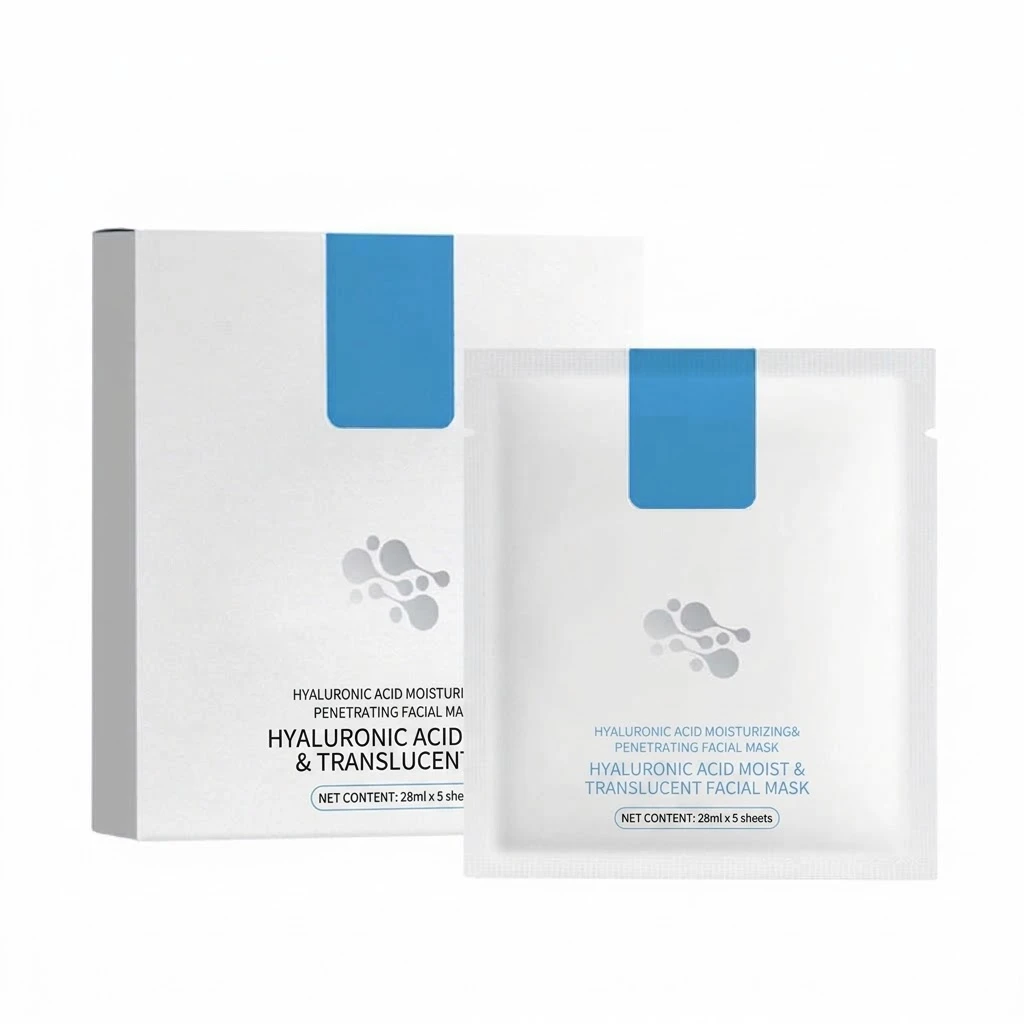
Masks. Sheet masks are a converting problem as much as a formulation one — mask substrate, essence loading, and sachet sealing all affect the consumer experience. Clay and peel-off masks bring different rheology and drying-behavior challenges.
Eye creams and targeted treatments. Low-volume, high-scrutiny products. Ophthalmologist testing is often expected for anything near the eye, and the smaller fill sizes raise per-unit costs.
Actives, Efficacy Claims, and Formulation Reality
The gap between marketing and chemistry is widest in the actives space. A skincare product manufacturer should be able to tell you, for each active in your formula: the recommended use level, the pH window for stability, the processing temperature ceiling, and whether any claim you intend to make is supportable.
Retinol. Notoriously unstable to light, heat, and oxygen. Encapsulation improves stability but adds cost and can reduce immediate efficacy. Use levels and claim language are regulated differently across markets. Retinol serum sourcing covers the practical constraints.
Vitamin C. L-ascorbic acid is the gold standard for antioxidant and brightening claims but oxidizes readily — the product turning orange is a real, common failure. Derivative forms are more stable but less potent and legally require different claim wording.
Peptides. Stable and claim-friendly, but concentration and molecular weight matter, and “peptide complex” blends vary wildly in quality between suppliers.
Niacinamide, hyaluronic acid, ceramides. Workhorse actives with wide formulation tolerance — good choices for a first launch because they are stable, well understood, and support clear consumer claims.
Acids (AHA/BHA). Efficacy is pH-dependent, and pH control across shelf life is the whole game. A glycolic product that drifts above its target pH loses its claim.
A useful discipline: ask your manufacturer to map every claim on your packaging to a specific test result or published literature reference. If they cannot, remove the claim. Regulatory action over unsupported claims is far more expensive than a diluted marketing line.
The Manufacturing Process, Station by Station
Understanding the production sequence lets you anticipate where timelines slip.
- Brief and feasibility. Brand brief → factory technical review → feasibility memo covering texture targets, claims, packaging constraints, and cost band.
- Formula development or adaptation. Bench samples. Expect 2–3 rounds; each round takes 5–10 working days including shipping.
- Pilot batch. Small-scale production to validate that the bench formula survives real equipment — shear, temperature gradients, and hold times behave differently at 50 kg than at 500 g.
- Stability and compatibility testing. Accelerated testing (typically 4–12 weeks at elevated temperature) plus packaging compatibility. Microbiological challenge testing usually runs in parallel.
- Packaging and artwork. Component sourcing, decoration (printing, hot stamping, labeling), and artwork proofing against regulatory requirements. This is the most common critical path.
- Bulk production. Main batch in the production tank, with in-process checks on pH, viscosity, and appearance.
- Filling and packing. Fill weight verification, capping torque, labeling accuracy, and cartoning. Automated lines run thousands of units an hour; manual lines are slower but more flexible for short runs.
- Quality release and shipment. Final inspection, Certificate of Analysis, and documentation package. Then freight, customs, and destination-market compliance.
For the complete walkthrough including documentation at each station: cosmetics manufacturing process, OEM step by step.
Compliance: MoCRA, EU CPR, GMPC, and Testing
Compliance is not a paperwork afterthought — it constrains formulation choices from day one.
United States (MoCRA). The Modernization of Cosmetics Regulation Act requires facility registration, product listing, adverse event reporting, and substantiation of safety. The “responsible person” concept places legal accountability on a named entity. Notably, MoCRA also introduced serious adverse event reporting obligations with tight timelines, which means your skincare product manufacturer must have traceability systems good enough to identify affected batches quickly.
European Union. Products require a Product Information File, a Responsible Person established in the EU, CPNP notification, and a Cosmetic Product Safety Report signed by a qualified safety assessor. The EU also restricts many ingredients the US permits, so a US-formulated product is not automatically EU-legal — and vice versa.
Other markets. The UK has its own SCPN regime post-Brexit. Canada requires Cosmetic Notification. ASEAN, Japan, Korea, and China each have distinct registration pathways, with China’s NMPA regime being the most demanding.
Testing that should be standard. Heavy metals (lead, arsenic, mercury, cadmium), microbial limits, preservative efficacy (challenge test), stability, packaging compatibility, and — where relevant — ophthalmological testing, dermatological patch testing, and SPF/PA testing.
For US-bound brands, the sourcing implications are covered in skincare manufacturer China: complete 2026 B2B guide.
MOQ, Cost Structure, and Lead Times
Cost discussions go wrong when buyers compare a single unit price without understanding what sits inside it. A realistic skincare product manufacturer quote breaks into five components:
| Component | What drives it | Typical share |
|---|---|---|
| Formula / bulk cost | Active ingredients, emollients, specialty emulsifiers | 25–45% |
| Packaging | Primary container, pump/dropper, carton, decoration | 20–40% |
| Filling and labor | Fill complexity, line speed, batch size | 8–15% |
| Testing and compliance | Stability, micro, heavy metals, market-specific filings | 5–15% (amortized) |
| Tooling and setup | Molds, cylinders, one-time setup fees | One-time |
MOQ. Private label skincare commonly starts at 500–3,000 units per SKU, though short-run and trial production is increasingly available at 300–500 units with higher per-unit costs. Sheet masks often have lower MOQs because the converting line is more flexible. Serums in airless packaging carry higher MOQs because component sourcing is less flexible.
Lead times. From approved sample to ex-works: 30–55 working days is typical, of which packaging is frequently the longest pole. Add 4–8 weeks for ocean freight and another 1–2 weeks for customs. A realistic brief-to-shelf estimate for a first launch is 3.5–5 months.
For a line-item cost model: skincare contract manufacturing cost breakdown.
How to Evaluate and Verify a Manufacturer
Supplier evaluation should be evidence-driven. Use this sequence:
Stage 1 — Desk research. Verify business license and registered capital, check that certifications name the actual facility, review the website for signs of a real plant (production photos with consistent equipment, staff in PPE, dated case studies). Cross-check the company on third-party trade directories and look for independent reviews.
Stage 2 — Technical screening. Send a detailed brief and assess the quality of the response. Strong manufacturers push back with specific questions about your packaging, target claims, and market. Weak ones reply with a generic price list. Ask for the technical data sheet and safety data sheet of a comparable formula they already produce.
Stage 3 — Sample evaluation. Order samples and evaluate blind where possible. Assess texture, absorption, scent (or lack of), stability after 4 weeks, and whether the product matches the sensory promise in your brief.
Stage 4 — Audit. Either visit the plant or commission a third-party audit. Focus on the filling area’s cleanliness classification, water treatment system (purified water quality is a frequent failure point), batch record completeness, and how non-conforming batches are handled.
Stage 5 — Pilot order. Run a small commercial batch before committing to volume. This tests communication, documentation, and delivery reliability under real conditions — things no sample can reveal.
If you are managing this from North America or Europe, the practical playbook is here: working with a China cosmetics manufacturer remotely.
Running the Project: Timelines, QC, and Red Flags
Set up a single point of contact on both sides and require written confirmations for every change. Verbal approvals on shade, texture, or packaging are where disputes originate.
Lock specifications in writing before bulk production: pH range, viscosity range, color reference (with a retained standard), fill weight tolerance, and packaging acceptance criteria. These become your acceptance criteria at QC.
Approve a golden sample. A signed, retained physical sample is the only reliable reference for color and texture disputes months later.
Plan packaging first. Order components as early as possible and confirm the factory has received and inspected them before the bulk batch is scheduled.
Red flags worth walking away from: reluctance to share certification documents, quotes dramatically below market that omit testing, no retained sample policy, refusal to allow an audit, no clarity on who holds the formula IP, and communication that slows to a crawl once the deposit is paid.
Negotiating Terms That Actually Protect You
Most supplier disputes are not caused by bad factories — they are caused by contracts that never defined the important things. Before you sign, make sure your agreement covers these points in writing.
Specification as an annex. Attach the full technical specification to the contract, including pH range, viscosity range, appearance, odor, fill weight with tolerance, and packaging acceptance criteria. A contract that references “as per sample” is weaker than one that references measured ranges, because sensory memory fades while a viscosity number does not.
IP and formula ownership. State explicitly who owns the formula, the brand assets, and any tooling paid for by the brand. If you commissioned custom development, request the full formula disclosure document at project close — not just a statement that you own it. Ownership without the written formula is theoretical.
Payment structure. The standard split is a deposit on order confirmation and the balance before shipment. Resist paying the full amount up front, and never pay the balance before you have seen third-party inspection results if the order value justifies inspection.
Non-conformance and remedy. Define what happens if a batch falls outside specification: rework at the factory’s cost, replacement, or credit. Specify the inspection window after arrival, because claims made three months later are difficult to attribute.
Change control. Any change to formula, supplier of a key raw material, or packaging component should require written approval from you. Silent reformulation to reduce cost is a real and common risk in long-term supply relationships.
Confidentiality and exclusivity. If the formula is a differentiator, ask for a period of exclusivity so the factory will not sell an equivalent product to a competitor. Expect to pay for genuine exclusivity — a factory that grants it free to everyone is not granting it at all.
What Goes Wrong, and How to Prevent It
Across hundreds of sourcing projects, failures cluster into a small number of predictable patterns. Knowing them in advance is worth more than any amount of due diligence on the sales side.
Separation and instability. An emulsion that looks perfect at bench scale splits after three months on the shelf. Cause: insufficient emulsifier load, inadequate homogenization, or a pilot batch that was not representative. Prevention: demand accelerated stability data on the actual pilot batch, and never accept bench-scale results as proof of production stability.
Color and texture drift between batches. Natural raw materials vary seasonally, and if the factory does not color-match against a retained standard, batch two will not match batch one. Prevention: approve and retain a signed golden sample, and require color matching to that standard for every lot.
Preservative failure. A product passes the challenge test at launch and grows mold at month eight. Cause: inadequate preservative system, pH drift, or contamination introduced at the fill line. Prevention: require challenge testing on the final formula in the final packaging, plus micro testing on production batches.
Packaging that fails the product. Pumps that dispense inconsistently, droppers that leak in transit, jars whose gaskets react with the cream. Prevention: insist on packaging compatibility testing — product filled into the actual component and held at elevated temperature — before bulk production.
Labeling non-compliance. Wrong INCI ordering, missing warnings, incorrect net content, or a claim that is illegal in the destination market. Prevention: have the factory produce the artwork proof and have it reviewed against the destination regulation, not against the factory’s usual market.
Documentation gaps at customs. Missing MSDS, incorrect HS codes, or incomplete ingredient declarations stop shipments. Prevention: request the full documentation package before the container is sealed, not after it arrives.
Communication collapse after deposit. The single most reported frustration. Prevention: agree on a weekly written status update with a named contact, and treat a missed update as a project risk signal rather than an inconvenience.
For the step-by-step production sequence these risks map onto, see cosmetics manufacturing process, OEM step by step.
Frequently Asked Questions
What is the difference between a skincare products factory and a trading company?
A skincare products factory runs the production lines and holds the formulation and batch documentation. A trading company brokers production through a third-party factory and adds a margin. A trading desk can be a legitimate partner for simple stock formulations at volume, but if you need formulation ownership, custom development, or direct access to technical decisions and batch records, you need a factory. Ask who physically makes the product and request documentation issued by the actual producing site.
How do I choose a skincare product manufacturer?
Start with format fit and certifications that name the actual facility, then evaluate technical responsiveness, sample quality, and audit results. Run a small pilot batch before committing to volume. A manufacturer that asks detailed questions about your packaging and claims is usually a better sign than one that quotes immediately.
What is the MOQ for private label skincare?
Typically 500–3,000 units per SKU. Simple formats in stock packaging can go lower; airless and custom-molded packaging push MOQs up because component tooling and sourcing are less flexible.
How long does it take to launch a skincare product?
Plan 3.5–5 months from brief to shelf for a first launch: 4–8 weeks sampling and testing, 4–8 weeks production, plus freight and customs. Using an existing validated formula and stock packaging can compress this to around 10 weeks.
Do I need my own formula to work with a manufacturer?
No. Private label and ODM models let you build on the factory’s proven bases. Custom formulation gives more differentiation but requires more time and budget, and most brands are better served validating demand first.
Can one manufacturer handle both my US and EU launches?
Often yes, but the formulation may need adjustment — the EU restricts ingredients the US allows, and permitted UV filters differ substantially. Confirm the factory has experience with both regulatory pathways rather than assuming one formula serves both.
Who owns the formula in an OEM arrangement?
This must be specified in the contract. In a true OEM arrangement the brand owns the formula, but ownership only means something if you also hold the full formula disclosure document. Request it explicitly and keep a copy.
Ready to Talk to a Skincare Product Manufacturer?
If you are evaluating skincare product manufacturers for a 2026 launch, start with a technical conversation rather than a price list. If you would rather see our skincare products factory capability sheet and manufacturing process first, both are worth reading before you email. Share your format, target market, packaging direction, and volume estimate — and ask for a feasibility memo with a realistic timeline.
Request a free formulation consultation and quote →
Bring us a benchmark product or a rough concept and we will tell you honestly what is achievable at your budget and MOQ, which markets the formula can serve, and where the timeline risks sit.