
The global beauty industry is highly competitive, and launching or scaling a successful brand requires a reliable supply chain. For many international beauty brands, wholesalers, and salon chains, partnering with a top-tier Chinese cosmetics manufacturer is the secret to achieving high profit margins without compromising on quality.
Whether you are looking for private label solutions or custom formulations, China’s advanced manufacturing hubs offer unparalleled expertise. This guide will walk you through everything you need to know about working with cosmetics factories in China, from understanding OEM/ODM services to ensuring quality control.
Why Partner with a Chinese Cosmetics Manufacturer?
China is no longer just a hub for low-cost production; it is a global leader in cosmetic research, development, and high-tech manufacturing. Here is why top beauty brands source from China:
-
Cost-Effective Production: Benefit from economies of scale. Chinese factories offer highly competitive pricing on raw materials, production, and packaging, allowing you to maximize your ROI.
-
Mature Supply Chain Ecosystem: From raw chemical suppliers and fragrance houses to custom packaging manufacturers, everything is located within a localized ecosystem. This drastically reduces lead times and shipping costs.
-
Advanced R&D Capabilities: Leading factories invest heavily in state-of-the-art laboratories and employ experienced chemical engineers to develop cutting-edge formulations for trending products like nourishing hair dyes, botanical shampoos, and hydrating lip oils.
OEM vs. ODM: Which Service Fits Your Brand?
When searching for a cosmetics manufacturer, you will frequently encounter the terms OEM and ODM. Understanding the difference is crucial for your business strategy:
1. OEM (Original Equipment Manufacturing)
Also known as contract manufacturing, OEM means you provide the exact product formula, design, and specifications, and the factory produces it.
-
Best for: Established brands with their own proprietary formulas and dedicated R&D teams.
2. ODM (Original Design Manufacturing) / Private Label
In the ODM model, the factory provides pre-formulated, tested, and ready-to-sell products. You simply select the formulas, customize the packaging, and put your brand logo on them.
-
Best for: Startups, influencers, and B2B distributors who want to launch a product line quickly with lower minimum order quantities (MOQs). Common private label hits include professional salon hair care lines and trending color cosmetics.
Key Factors When Selecting a Cosmetics Factory in China
Not all manufacturers are created equal. To protect your brand’s reputation and ensure you receive high-quality goods, evaluate potential partners based on the following criteria:
Certifications and Compliance
Never compromise on safety standards. Ensure the factory holds international certifications. A reputable supplier should readily provide:
-
GMPC (Good Manufacturing Practice of Cosmetics)
-
ISO 22716
-
Compliance documentation for your specific target markets (e.g., FDA for the US, CPNP for Europe).
Minimum Order Quantity (MOQ) Flexibility
Ask about their MOQ early in the negotiation. While some massive factories require 10,000+ units per SKU, many modern manufacturers offer flexible MOQs (e.g., 1,000 to 3,000 units) to help B2B buyers test the market with new skincare or lip care lines before committing to large volumes.
Strict Quality Control (QC) Systems
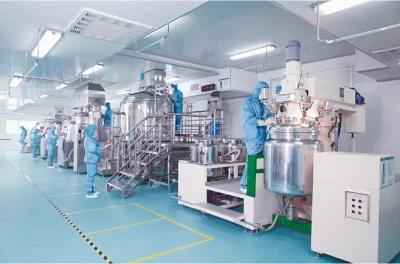
A reliable Chinese cosmetics manufacturer will have a transparent QC process. This includes raw material inspection, microbial testing during the mixing phase, and final pre-shipment inspections.
The Production Process: From Concept to Shelf
Working with a professional manufacturer typically follows a streamlined process:
-
Consultation & Inquiry: You share your product concept, target audience, and budget.
-
Sampling: The factory’s R&D team creates lab samples (e.g., adjusting the pigment of a lip oil or the scent of a shampoo) for your approval.
-
Packaging Selection: Choose from standard catalog packaging or develop custom molds.
-
Mass Production: Once the deposit is paid and samples are approved, production begins.
-
Quality Inspection & Shipping: Products undergo final testing before being securely packed and shipped to your designated port or warehouse.
Frequently Asked Questions (FAQs)
Q: How long does it take to manufacture cosmetics in China? A: Typically, private label (ODM) orders take 25-35 days after sample and packaging approval. Custom formulations (OEM) may take 45-60 days due to the extra time required for R&D and stability testing.
Q: Can the factory help with packaging design? A: Yes, most professional cosmetics manufacturers have in-house design teams or strong partnerships with local packaging suppliers to offer a “turnkey” solution.
Ready to Launch Your Next Beauty Line?
Choosing the right Chinese cosmetics manufacturer is the most critical decision for your beauty business. By focusing on certifications, R&D capabilities, and flexible MOQs, you can build a highly profitable product line that your customers will love.
Are you looking for a reliable OEM/ODM partner for your skincare, hair care, or makeup brand? Contact us today to request our product catalog, get a free quote, or arrange custom samples!