

Skincare is the largest and most competitive category in beauty, and it is also where manufacturing quality shows most clearly. A great serum feels different on the skin the moment it is applied; a poorly stabilized cream separates or irritates within weeks. For founders building a skincare brand, the single decision that shapes product quality, lead time, and margin is the manufacturing partner. That search usually leads to one destination: a skincare manufacturer in China.
China—and Guangzhou in particular—hosts one of the densest skincare manufacturing ecosystems in the world, spanning raw-material suppliers, filling lines, packaging houses, and testing labs within a short radius. But density also means variance: not every factory that fills a jar is a partner you can build a brand on. This guide explains what to look for, what to ask, and how to turn a shortlist into a working OEM/ODM relationship.

Why China Dominates Skincare Manufacturing
A skincare manufacturer in China benefits from structural advantages that are hard to replicate elsewhere:
- Complete supply chain. Actives, emulsifiers, esters, airless pumps, and cartons are sourced locally, which shortens lead times and lowers minimum order quantities.
- Scale and flexibility. Factories serve both mass-market and indie brands, so they can often accommodate a 500-unit trial run and a 50,000-unit reorder on the same line.
- R&D depth. Many Guangzhou factories run in-house formulation teams that prototype serums, creams, and masks quickly and iterate against your brief.
- Export maturity. Regular shipments to the US, EU, and Southeast Asia mean documentation flows (CoA, stability, notifications) are routine.
The bigger picture of how Chinese skincare suppliers became a global engine is worth reading: Chinese skincare manufacturers: the new engine of the global beauty industry.
What to Vet Before You Commit
Evaluating a skincare manufacturer in China is a scorecard, not a vibe. Weigh these axes together:
- Certifications — GMP / ISO 22716 (or GMPC) as a baseline; additional certificates relevant to your market.
- Formulation capability — can they build from a brief, or only fill a stock base?
- Testing discipline — stability, compatibility, and microbiology on every batch.
- Capacity and MOQ — does their minimum order match your launch volume?
- Communication — do they answer technical questions with specifics, not slogans?
- Export history — can they name markets they regularly ship to and the documents each requires?
A factory strong on price but weak on documentation is a risk you import along with the product.
Skincare Categories You Can Build
A capable skincare manufacturer in China typically supports a wide range:
- Cleansers — foaming, cream, and oil cleansers with tuned pH and sensory profile.
- Toners and essences — light, fast-absorbing vehicles for actives.
- Serums — the hero category, where active concentration and delivery (encapsulation, liposomes) matter most.
- Creams and lotions — emulsified systems tuned for texture, occlusion, and skin feel.
- Masks — sheet, wash-off, and leave-on formats.
- Eye and neck care — lighter, targeted formulations.
For a focused example of how a single product type is handled end to end, see our guide to custom anti-aging serum manufacturing.
OEM, ODM, and Private Label: Pick the Model
When you approach a skincare manufacturer in China, you will choose one of three engagement models. Knowing the difference protects your margin and your timeline, because each model implies a different amount of formula ownership, lead time, and unit cost.
- OEM (Original Equipment Manufacturing) — you bring or co-develop the formula; the factory produces and fills it.
- ODM (Original Design Manufacturing) — the factory provides a proven formula you brand and lightly customize.
- Private label — a near-ready product you take to market under your name, often with the lowest MOQ.
For most new brands, a hybrid works best: start from a proven base (ODM/private label) and layer custom actives or texture changes (OEM) as you learn what your customers want. This balances speed, cost, and differentiation.
Formulation and Customization Levers
Skincare is where customization pays off. A skincare manufacturer in China can usually adjust:
- Active selection and level — which actives (niacinamide, peptides, vitamins, botanicals) and at what concentration.
- Texture and sensory — gel, lotion, cream, balm, oil; spreadability and after-feel.
- Preservation strategy — conventional, mild, or preservative-free systems matched to your claims.
- Fragrance — signature scents, essential-oil blends, or fully fragrance-free.
- Packaging compatibility — formula tuned to airless pumps, jars, or tubes.
The underlying manufacturing craft—how bulk is made, filled, and controlled—is explained here: decoding the secrets of skincare manufacturing.
Certifications and Documentation
Compliance is non-negotiable for cross-border skincare. Expect and verify:
- GMP / ISO 22716 certificate from a recognized body, currently valid.
- Certificate of Analysis (CoA) per batch covering pH, microbiology, and appearance.
- Stability and compatibility reports for formula and packaging.
- China regulatory filing or registration for the product.
- Market-specific documents — responsible-person files and notifications for the EU, facility listing for the US, local notification for SEA.
A factory that exports constantly produces these as routine. If you have to explain what a CoA is, keep looking.
Lead Time and Sampling Expectations
Realistic timing prevents launch surprises. With a skincare manufacturer in China, a first lab sample typically arrives faster than founders expect—often within days when a proven base is used—while a fully custom formula needs more rounds of iteration. Stability and compatibility testing then add a fixed window that should not be compressed, because it is the step that catches separation and packaging reactions before they reach customers. Pilot batches confirm the formula behaves identically on production equipment, and only then does full filling begin. Build these phases into your calendar rather than treating them as delays, and your launch date becomes predictable instead of hopeful.
Common Pitfalls
Founders repeatedly stumble on the same points when sourcing a skincare manufacturer in China:
- Vague briefs — “make it premium” produces inconsistent samples; specific sensory and active targets produce a real product.
- Skipping stability tests — rushing launch without aging the formula risks separation or microbial failure.
- Over-claiming — every claim (vegan, organic, fragrance-free) adds formulation and documentation cost; prioritize what sells.
- Ignoring packaging interaction — a great formula in the wrong bottle can oxidize or leak.
- Choosing on price alone — the cheapest quote often hides the weakest documentation.
Building the Partnership
The goal is a partner, not a vendor. A strong collaboration with a skincare manufacturer in China includes:
- A signed quality agreement defining responsibilities.
- Pre-production and pre-shipment inspection checkpoints.
- A shared document folder with CoAs and test reports per batch.
- An agreed process for formula changes and re-testing.
- A written recall and corrective-action procedure.
When these are normal operating procedure, you have found a manufacturer you can scale with.
The Pillar View
For the full partner-selection framework—capabilities, red flags, and market access—start from the overview: cosmetics manufacturer in China. It ties skincare sourcing into the broader OEM/ODM and private-label picture.
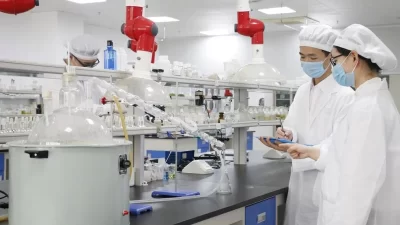
Conclusion
Sourcing a skincare manufacturer in China is less about finding the lowest price and more about finding the right system: certified quality, real formulation depth, disciplined testing, and export-ready documentation. Vet on a scorecard, choose an engagement model that fits your stage, customize where it matters, and build a partnership with clear quality agreements. Do that, and your skincare line will feel as good in batch 10 as it did in the first sample.
Ready to Source Your Skincare Line?
If you are evaluating a skincare manufacturer in China and want a partner who combines formulation depth, GMP discipline, and export experience, we can help. Talk to our team about your product idea, target market, and MOQ—and get a shortlist built around your brief.