
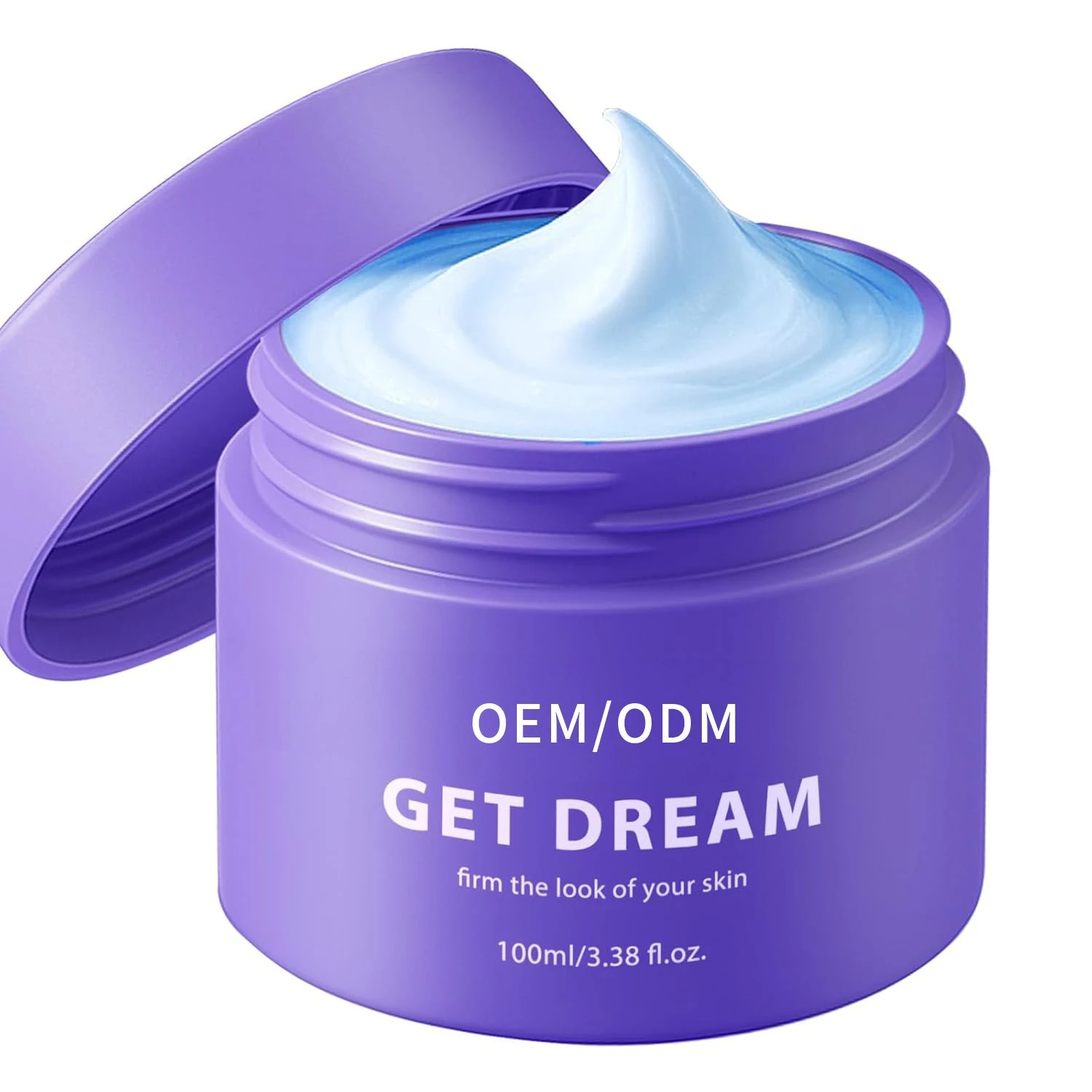
Skincare is where most beauty brands are born—and where most manufacturing partnerships are won or lost. A great formula can carry a young brand; a weak one sinks it no matter how clever the marketing. If you are building or scaling a line, the single most consequential decision you make is which skincare OEM partner you trust with your recipe, your compliance, and your reputation.
This guide walks through what a professional skincare OEM relationship actually involves in 2026—formula development, clinical and stability testing, MOQ reality, compliance, and the operating model that takes a concept from a brief on your laptop to a pallet at your fulfillment center.
What “Skincare OEM” Really Means
OEM (Original Equipment Manufacturing) for skincare means you bring the formula, the reference, or a detailed brief, and the factory produces it to specification. You own the intellectual property; the manufacturer owns the line, the labor, and the quality system. This is different from ODM, where the factory supplies the formula and you only brand it.
Choosing a skincare OEM over ODM is the right call when your differentiation lives in the formula—a proprietary peptide blend, a texture no competitor has, a claim you can defend. You trade a higher development fee and a longer lead time for a product only you can sell. Our complete B2B sourcing guide to skincare OEM in China breaks the supplier-shortlisting process into a step-by-step sequence.
The Formula Development Arc
A credible skincare OEM runs a disciplined path from idea to approved sample:
- Brief & claim mapping: you define texture, actives, target pH, and the claims you will make (and the evidence each claim needs).
- Prototype: the lab returns 2–3 texture/active variants for sensory evaluation.
- Stability chamber: 4–8 weeks at elevated temperature and humidity to catch separation, color shift, and odor change.
- Challenge test: a microbial preservation study proving the formula resists contamination through its shelf life.
- Pilot fill: a small commercial run on the real line to validate filling, weight, and seal.
- Mass production: full run released against the approved pilot’s spec.
Skipping any gate is how brands end up with a hero serum that looks perfect in March and weeps by June. The ultimate guide to custom beauty production with an OEM skincare manufacturer explains how to brief each stage so the lab returns the product you actually pictured.
MOQ: The Gate That Shapes Your Cash Flow
Skincare MOQs are driven by filling method, packaging complexity, and whether the formula is custom or semi-custom. A standard serum in a stock bottle can start low; a custom emulsion in a bespoke jar with hot-stamp decoration will not. A transparent skincare OEM quotes MOQ per format and shows the economy of scale at three volumes, not one.
Ask two questions every time: what is the true minimum per SKU, and what is the “comfortable” volume where unit cost drops? The gap tells you how much working capital you need before reorder. Our guide to choosing the right cosmetics OEM manufacturer in China includes an MOQ negotiation checklist worth keeping during supplier calls.
Stability, Microbiology, and Why They Are Non-Negotiable
Water-based skincare is a microbial playground. A preservative system that passes in a lab notebook can fail in a humid warehouse or a bathroom shelf. Insist on:
– Accelerated stability (temperature cycling, light exposure)
– Microbial challenge test (not just a plate count at release)
– Heavy-metals and impurity screening for your destination market
– Batch records you can audit if a complaint arises
A skincare OEM that treats these as optional is a liability, not a partner. Request the actual test reports, not a summary email.
Compliance You Cannot Skip
Every destination market has rules, and skincare is the most scrutinized category:
– China: GMPC / ISO 22716, and for cross-border, the new regulatory filing pathway.
– EU: an appointed Responsible Person, CPNP notification, and ingredient limits under EC 1223/2009.
– US: MoCRA facility registration and product listing, plus safety substantiation.
– SEA: varying notifications per country, often via a local nominee.
Your skincare OEM should hand you the documentation pack needed for each market, not a shrug. For the clean and sustainable side of the same question, our 2026 clean beauty manufacturing guide covers vegan, cruelty-free, and recyclable options worth specifying from day one.
Why Guangzhou Is the Default Choice
The Pearl River Delta clusters raw-material suppliers, glass and airless-packaging makers, filling lines, and testing labs within an hour of each other. That density compresses sample round-trips from weeks to days and keeps pricing honest through competition. Our explainer on why Guangzhou is China’s OEM hub maps the ecosystem so you understand why lead times here beat almost anywhere else.
The trade-off is choice overload: hundreds of factories, not all equal. That is exactly why a scoring rubric—formulation capability, certificates, reference brands, defect rate—matters more than chasing the lowest quote.
Customizing Your Formula the Right Way
A good skincare OEM co-develops rather than merely executing. Share your texture target, active story, and sustainability goals so the lab can propose the right emulsifier system, active delivery (liposomes, encapsulated actives), and preservative architecture. Our comprehensive guide to customizing your own skincare formula with an OEM factory turns a vague “I want a glow serum” into a spec sheet a lab can build.
Resist the urge to overload actives. High niacinamide or acid levels feel impressive on a deck but raise irritation and stability risk. Protect the experience; let the claim be honest and the formula be stable.
Red Flags When Shortlisting a Skincare OEM
- Cannot show GMPC/ISO 22716 or relevant market certificates.
- No stability or challenge-test data on request.
- Quotes with no itemized build-up (actives, base, fill, pack, docs).
- Reluctance to sign an NNN before you share a brief.
- Vague lead times and no reference brands you can contact.
- Pressure to skip lab testing “because everyone does.”
A professional skincare OEM treats all of the above as routine paperwork, not friction.
Building a Partnership That Improves Every Reorder
The best programs are ongoing, not one-off. Once the first SKU is stable, review defect rate, refill lead time, and reformulation opportunities quarterly. As volume grows, re-quote the formula annually and consider migrating hero SKUs from semi-custom to fully custom OEM so you own more of the IP and protect margin at scale.
Conclusion
Choosing a skincare OEM is less about finding the cheapest filler and more about securing formulation depth, honest MOQs, and a quality system that survives heat, humidity, and scale. Score suppliers on development capability, testing discipline, and compliance support; verify with samples, audits, and a pilot; then build a partnership that compounds with every reorder.
Ready to build your skincare line?
If you want a vetted skincare OEM partner matched to your formula, MOQ, and target market, reach out to our team. Share your concept, volume, and destination market, and we will return a shortlist with certificates, stability data, pricing, and lead times—so you launch with a manufacturer, not a gamble.