
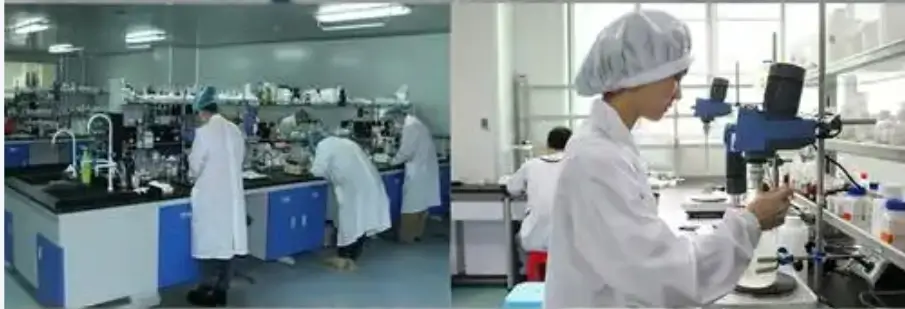
Finding a suitable cosmetics OEM (Original Equipment Manufacturer) factory is the cornerstone of a brand’s success. China offers massive supply chain advantages and highly competitive manufacturing costs, but in a mixed market, how do you sift through the noise to find a truly reliable partner?
This guide will take you through the core steps of vetting Chinese cosmetics OEM factories, from qualification screening to avoiding common pitfalls, helping you build a high-quality beauty brand.
I. Qualification Screening: The Foundation of Trust
Don’t just trust the glossy promotional images on a factory’s website; authentic qualification certificates and compliance documents are the hard metrics for evaluating their capabilities.
1. Core International and Domestic Certifications
A reliable cosmetics factory must possess the following basic or advanced certifications:
-
ISO 22716 Certification: The international standard for Cosmetics Good Manufacturing Practices (GMP), ensuring product safety and consistent quality.
-
GMPC (FDA / EU Standards): If your products are intended for export to the US or Europe, the factory must comply with the respective GMPC regulations.
-
Cosmetics Production License: A mandatory certificate issued by China’s National Medical Products Administration (NMPA). Without this, it is an illegal operation.
-
Business License: Verify their registered capital, years in operation, and any legal disputes through Chinese enterprise credit information systems like Qichacha or Tianyancha.
2. R&D and Quality Control (QC) Capabilities
-
Laboratory Equipment: Ask if they have an independent R&D laboratory and a microbiological testing room.
-
Formula Library: Excellent OEM factories usually have thousands of mature formulas (mature formulas mean they are market-tested and can significantly shorten the R&D cycle).
-
QC/QA Team: Understand their processes for raw material inspection, semi-finished product inspection, and final product release inspection.
💡 Expert Tip: Request the factory’s latest third-party audit report (such as those from SGS, TÜV, or Intertek). This is much more convincing than self-provided marketing materials.
II. Communication Skills: Bridging the Cultural and Business Gap
Efficient communication can save you months of time and high trial-and-error costs. During the initial contact phase, you can evaluate the factory’s cooperativeness through the following methods:
1. Clarify Your Product Brief
Avoid vague language (e.g., “I want a good face cream”). Provide a structured requirement document:
-
Target Efficacy and Key Ingredients: E.g., “Anti-aging focus, featuring 0.1% Retinol and Peptides.”
-
Target Price: Specify your budget range to see if the factory can provide the best solution within it.
-
Packaging Requirements and MOQ: Clarify the packaging materials and your initial order quantity.
2. Evaluate Communication Efficiency and Professionalism
| Evaluation Dimension | High-Quality Factory | Poor-Quality Factory |
| Response Speed | Replies within 24 hours via email or WeChat; clear and organized. | Takes days to reply, or answers do not address the questions. |
| Professional Advice | Points out unreasonable aspects of your formula and provides alternatives. | Blindly says “no problem” to whatever you ask. |
| Sales Rep Competence | Familiar with basic cosmetic chemistry and export/customs clearance processes. | Acts only as a messenger, lacks knowledge, and constantly needs to consult engineers. |
III. The Sampling Process: The Crucial Test from Concept to Physical Product
Sampling is the ultimate standard for testing a factory’s true technical capabilities. Do not rush to market and compromise this step.
1. Initial Sampling and Feedback
-
Benchmark Testing: If you have a benchmark product, send it to the factory and ask them to replicate or upgrade it.
-
Skin Feel and Scent Adjustments: After receiving the initial samples, document the pros and cons in detail (e.g., absorbs too slowly, fragrance smells cheap) for the second or third round of sampling.
2. Stability and Compatibility Testing
This is the most easily overlooked step by novice brands:
-
High/Low Temperature and Light Testing: Ensures the product won’t experience oil-water separation, discoloration, or odor changes in extreme environments.
-
Packaging Compatibility Testing: Test the bulk formula in the final chosen packaging to ensure it doesn’t degrade the plastic or clog the pump.
3. Sealing the Sample (Sign-off)
Once the sample reaches perfection, it must be sealed and signed in triplicate (one for you, one for the factory, and one as a backup). This serves as the sole standard for future mass production and the legal basis in case of quality disputes.
IV. Avoiding Common Pitfalls: Protecting Your Brand Assets
Risk management is crucial when partnering with overseas factories. Here are common traps and coping strategies:
-
Pitfall 1: Intellectual Property (IP) Leakage
-
Strategy: Before sharing any core trade secrets or unique formulas, you must sign an NNN Agreement (Non-Disclosure, Non-Use, Non-Circumvention). This is legally more binding within the Chinese legal framework than a standard NDA.
-
-
Pitfall 2: Bait-and-Switch (Mass production doesn’t match the sample)
-
Strategy: Specify in the contract that the physical and chemical indicators of the mass production (e.g., pH value, viscosity, active ingredient concentration) must be exactly the same as the sealed sample. Before paying the final balance, hire a third-party inspection agency (like V-Trust or HQTS) for a Pre-Shipment Inspection (PSI).
-
-
Pitfall 3: Hidden Costs
-
Strategy: Require the factory to provide a detailed BOM (Bill of Materials) quote. Confirm if the quote includes: sampling fees (usually refundable after a bulk order), mold fees, packaging wastage fees, registration fees, and factory inspection fees.
-
-
Pitfall 4: Severe Delivery Delays
-
Strategy: Include penalty clauses for late delivery in the contract (e.g., deducting 0.5% of the total payment for each day delayed). Meanwhile, don’t make the schedule too tight; leave a 2-3 week buffer for packaging delays or QC rework.
-
V. Frequently Asked Questions (FAQ)
Q1: What is the standard Minimum Order Quantity (MOQ) for Chinese cosmetics OEM factories?
A: MOQ varies based on factory size, product type, and packaging. Generally, customized formulas and packaging have an MOQ between 3,000 and 10,000 units/SKU. However, if you choose the factory’s existing mature formulas (Private Label) and use standard packaging, many factories can offer low MOQ options of 500 to 1,000 units, which is highly suitable for early-stage market testing.
Q2: How long does the entire OEM process take, from sampling to mass delivery?
A: From concept to final shipment, it usually takes 2 to 3 months.
-
Sampling Phase: About 1-3 weeks (including communication and formula adjustments).
-
Packaging Procurement and Customization: About 20-35 days (packaging is often the critical bottleneck determining lead times).
-
Mass Production and Filling: After confirming all packaging materials have arrived and the deposit is paid, it usually takes 15-30 days.
It is highly recommended to leave a buffer of at least 3 months before your planned launch date.
Q3: What exactly is the difference between OEM, ODM, and Private Label?
A:
-
Private Label: The fastest and most cost-effective option. You use the factory’s existing mature formulas and standard packaging, simply applying your brand label.
-
OEM (Original Equipment Manufacturer): You provide a mature formula and detailed production specifications, and the factory is solely responsible for manufacturing.
-
ODM (Original Design Manufacturer): Suitable if you only have a product concept. The factory provides a “one-stop” full-package service, from formula R&D and packaging design to production.
Q4: Can the factory help with compliance certifications for target markets (like US FDA or EU CPNP)?
A: Excellent export-oriented OEM factories are typically familiar with international regulations. While the final product registration in the local market (such as EU CPNP registration) usually needs to be completed by the brand (or your designated EU Responsible Person/RP), a reliable factory will unconditionally provide a full set of documents required for registration, including:
-
MSDS (Material Safety Data Sheet)
-
COA (Certificate of Analysis)
-
Complete INCI ingredient list and percentage content
-
Third-party heavy metal and microbiological test reports
Q5: How should quality issues with the mass production be handled?
A: This is exactly why “sealing the sample (sign-off)” and “Pre-Shipment Inspection (PSI)” are so critical. If the mass production is found to be inconsistent with the sealed sample during the third-party inspection before shipment, you have the right to demand the factory to rework. For shipped goods, if non-artificial deterioration (like oil-water separation) occurs within the shelf life, you can claim compensation or deduct the corresponding amount from your next order through the after-sales clauses in your contract. Keeping all communication records and the sealed sample is the core of protecting your rights.
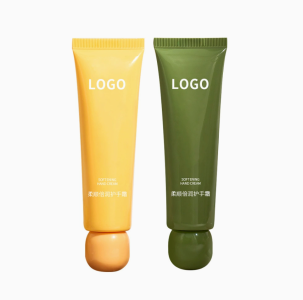
Finding a reliable Chinese cosmetics OEM factory is a long-term battle testing your patience and attention to detail. By following the structured vetting, communication, and testing processes above, you will significantly reduce supply chain risks and build a solid foundation for your brand’s long-term growth.