
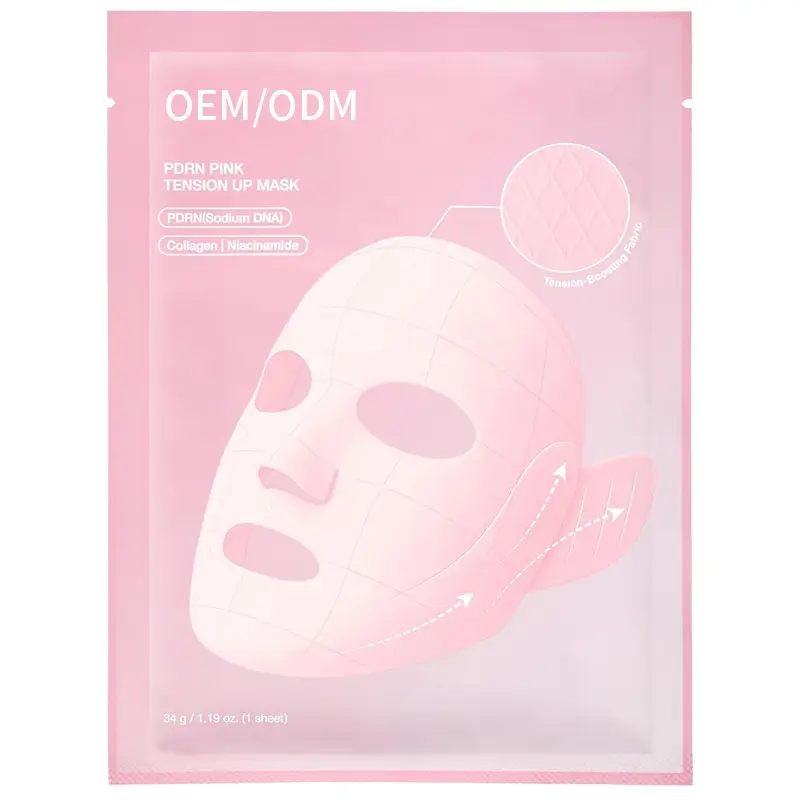
The global beauty and personal care market is evolving faster than ever. For emerging independent brands, established beauty enterprises, and international wholesalers, finding the right supply chain partner is the difference between leading the market and lagging behind. In 2026, partnering with a reliable Chinese cosmetics manufacturer remains one of the most strategic decisions a brand can make.
However, the landscape of overseas sourcing can be complex. With thousands of suppliers claiming to offer the best OEM (Original Equipment Manufacturer) and ODM (Original Design Manufacturer) services, how do you separate the world-class factories from the middlemen?
This comprehensive guide will walk you through exactly why sourcing from China is a competitive advantage, the critical factors to evaluate during your supplier selection process, the red flags to avoid, and how to effectively communicate your product needs to secure an accurate quotation.
Why Source Cosmetics from China?
China has established itself as the undisputed hub for beauty and cosmetics manufacturing. Over the past decade, the industry has shifted from simply offering low-cost labor to providing highly advanced, tech-driven, and innovative turnkey manufacturing solutions.
Here is why top global beauty brands continually choose to source their product lines from a Chinese cosmetics manufacturer:
-
A Complete, Integrated Supply Chain: From raw ingredient sourcing (like trending active ingredients, botanical extracts, and advanced peptides) to custom primary and secondary packaging, the entire ecosystem is hyper-localized. This integration significantly reduces lead times and logistical bottlenecks.
-
Cost-Effective Scalability: Whether you are testing the market with a lower Minimum Order Quantity (MOQ) or scaling up to millions of units, factories in China offer unmatched flexibility. You benefit from economies of scale without sacrificing profit margins.
-
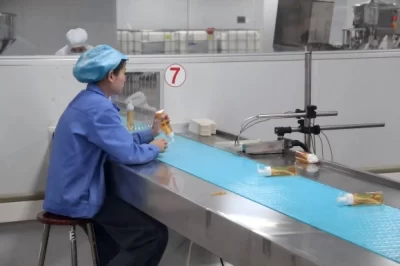
Advanced Technological Infrastructure: Today’s leading manufacturers utilize fully automated, dust-free production workshops. They invest heavily in homogenization equipment, automated filling lines, and rigorous quality control testing systems that meet international standards.
-
Speed to Market: In the fast-paced beauty industry, capitalizing on trends (such as caffeine-infused haircare or organic skincare) requires speed. A proficient manufacturer can take a concept from R&D formulation to mass production in a fraction of the time it takes in other regions.
Key Factors to Evaluate a B2B Cosmetics Supplier
To build a long-term, profitable partnership, you must rigorously vet potential manufacturing partners. Do not evaluate a factory based solely on unit price; instead, look at their operational framework.
Quality Certifications (GMP, ISO 22716)
The non-negotiable foundation of any reputable Chinese cosmetics manufacturer is strict adherence to international quality and safety standards. Cosmetics are applied directly to the skin and hair, meaning regulatory compliance is critical for importing goods into markets like the US, EU, and UK.
When auditing a factory’s credentials, demand to see up-to-date documentation for:
-
ISO 22716: The international standard for the Good Manufacturing Practices (GMP) for cosmetics. This ensures the factory maintains strict hygiene, safety, and operational protocols.
-
FDA GMPC (Good Manufacturing Practice of Cosmetics): Essential if you plan to sell your products in the United States.
-
CE & CPNP Compliance: Necessary for European market entry, ensuring ingredients and formulations meet safety guidelines.
-
Material Safety Data Sheets (MSDS) & Certificate of Analysis (COA): A reliable supplier will readily provide these for all raw materials and finished goods.
R&D and Custom Formulation Capabilities
Your brand’s unique selling proposition lies in its formulation. A top-tier factory does more than just mix ingredients; they act as your innovation partner.
When assessing their Research and Development (R&D) capabilities, consider whether they offer robust ODM services. A strong ODM partner will have an in-house laboratory staffed with experienced cosmetic chemists. They should be able to:
-
Reverse-engineer benchmark products you provide.
-
Develop custom formulations free from parabens, sulfates, or cruelty-free/vegan requirements.
-
Conduct comprehensive stability and compatibility testing to ensure the formulation does not react negatively with the chosen packaging over time.
-
Provide a vast library of mature, pre-tested formulations for faster market entry (White Labeling).
Scalable Production Lines
A factory might produce exceptional samples, but can they replicate that quality across a 50,000-unit order? Evaluating their production infrastructure is critical for your brand’s growth.
Look for a manufacturer that operates 100,000-level (or higher) dust-free cleanrooms. Ask about their daily output capacity for specific product types (e.g., tube filling for lotions vs. hot-pouring for lipsticks). Furthermore, a reliable partner will offer flexible MOQs. While traditional factories might demand 10,000 units per SKU, highly optimized modern manufacturers often provide tiered MOQs to help B2B buyers minimize initial inventory risks while maintaining the capacity to scale rapidly when a product succeeds.
Red Flags to Avoid During Factory Audits
Even with a thorough online search, B2B buyers can fall prey to misrepresentation. Protect your investment by watching out for these major red flags during your vetting process:
-
Trading Companies Disguised as Factories: Many profiles on B2B platforms belong to trading intermediaries, not the actual manufacturers. This adds an unnecessary markup to your unit cost and heavily delays communication regarding technical formulation changes. Solution: Always request a live video tour of the production floor and R&D lab, or hire a local third-party auditing firm.
-
Vague Responses Regarding Ingredients and Compliance: If a supplier hesitates to share an ingredient list (INCI), COA, or their GMP certificate, walk away immediately. Transparency is the bedrock of cosmetic manufacturing.
-
Refusal to Sign an NNN Agreement: Before sharing your brand concepts, custom formulas, or packaging designs, a professional factory should eagerly sign a Non-Disclosure, Non-Use, and Non-Circumvention (NNN) agreement to protect your intellectual property.
-
“Too Good to Be True” Pricing: If a quote is drastically lower than the market average, it usually indicates compromised raw material quality, skipped stability testing, or poor labor practices. Quality skincare and haircare manufacturing requires baseline investments.
How to Request a Quote Effectively
The quality of the quotation you receive is directly tied to the clarity of your initial inquiry. Sending a vague message like “How much for hair dye?” will result in delays and inaccurate pricing.
To get the most accurate and actionable pricing from a Chinese cosmetics manufacturer, structure your Request for Quotation (RFQ) with the following details:
-
Company Overview: Briefly introduce your brand, your target market, and your sales channels.
-
Product Specifications: Detail the exact product type (e.g., permanent hair dye, caffeine shampoo, botanical face serum). Include desired active ingredients, fragrance profiles, and texture.
-
Formulation Route: Specify if you are looking for OEM (using their existing mature formula) or ODM (developing a custom formula from scratch).
-
Packaging Requirements: Describe your primary packaging (e.g., 200ml PET bottle with a pump) and secondary packaging (e.g., custom printed cardboard box).
-
Estimated Order Volume (MOQ): Provide your initial order quantity and projected annual volume.
-
Target Delivery Port: Mention your destination (e.g., FOB, CIF) so the factory can estimate freight if required.
By providing a structured inquiry, you signal to the manufacturer that you are a serious, professional B2B buyer, which often results in priority service and highly competitive pricing.
Ready to bring your cosmetic line to life? Contact for Quote today to discuss your project requirements with our technical team.
Conclusion
Finding a reliable Chinese cosmetics manufacturer in 2026 requires diligence, clear communication, and a focus on long-term partnership over short-term savings. By prioritizing factories with verifiable GMP certifications, strong in-house R&D teams, and transparent communication, you secure a supply chain that will support your brand’s growth for years to come.
Whether you are launching a new independent site, expanding your B2B wholesale distribution, or upgrading your current product line, the right manufacturing partner will provide the stability and innovation you need to succeed.
To learn more about our manufacturing capabilities, quality control standards, and how we support global beauty brands, please visit the [About Us] page.