
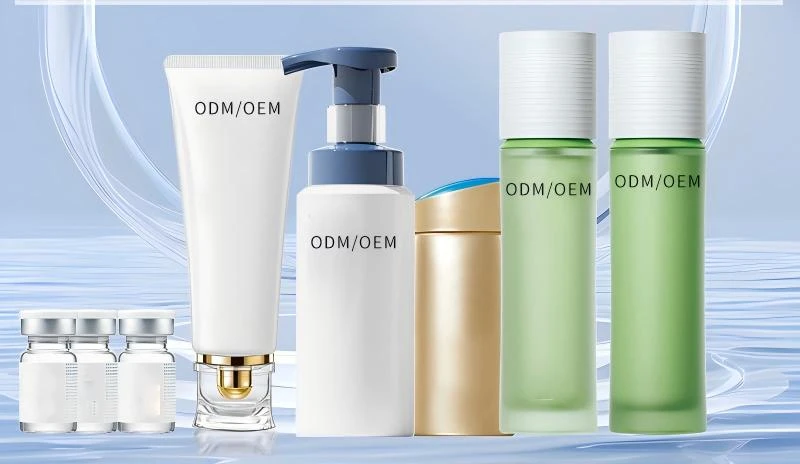
Every founder reaches the same fork early: build the formula yourself or let the factory provide it? The answer lives in two acronyms—OEM and ODM—and choosing wrongly wastes months and margin. Understanding OEM ODM cosmetics is the first real strategic decision in launching a beauty line, because the model dictates your cost, your speed, and how much of the product you actually own.
This guide explains what each model means, where they diverge, and how to pick the one that fits your brand’s stage, budget, and ambition in 2026.
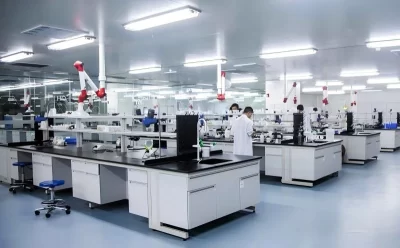
What OEM Means for Cosmetics
OEM (Original Equipment Manufacturing) means you bring the formula, brief, or reference, and the factory produces it. You control the recipe; the manufacturer controls the line. This suits brands with a proprietary ingredient story or a formula developed with a chemist.
With OEM ODM cosmetics, OEM gives you maximum differentiation. The trade-off is responsibility: you must validate stability, claims, and compliance. A strong OEM partner still helps—co-developing texture, running stability chambers, and handling filing—but the intellectual property starts with you, which protects margin as you scale. It also means you can re-source production later without losing the product, a real advantage if you outgrow a factory’s capacity.
What ODM Means for Cosmetics
ODM (Original Design Manufacturing) means the factory supplies the formula and you customize branding, fragrance, and packaging. It is the fastest path from idea to shelf, ideal when you want to test a category without a lab.
The advantage is speed and lower upfront cost; the risk is sameness—if the formula is shared across many brands, your differentiation comes only from packaging and story. A good ODM partner mitigates this with optional tweaks (viscosity, fragrance, active level) so your product still feels distinct. Think of ODM as a strong starting chassis you then tune, rather than a finished car you merely repaint.
OEM vs ODM: The Five Decisions That Matter
- Speed to market. ODM wins—weeks, not quarters. OEM needs formula lock and validation first.
- Control of IP. OEM wins; your formula stays yours. ODM formulas are the factory’s, licensed to you.
- Cost at launch. ODM is usually cheaper upfront (no development fee). OEM invests in development.
- Differentiation. OEM enables a unique recipe; ODM differentiates mainly through brand and pack.
- Scalability. Both scale, but OEM scales a product only you own, which protects margin long term.
For a deeper partnership framing, our ultimate guide to OEM/ODM partnerships maps the contract and IP safeguards you should insist on.
How a China OEM Factory Actually Runs It
Whether OEM or ODM, the production arc is similar: brief → formula (yours or theirs) → sample → stability → pilot fill → mass production → QC release → export docs. Our China cosmetics OEM factory guide walks this from formula development to mass production so you know what to expect at each gate.
A practical note: the sample-to-pilot gap is where timelines slip. Ask for the gate dates in writing—sample approval, stability start, pilot fill, and mass-production release—so you can plan a launch date that survives reality rather than a hope.
Picking the Right Model for Your Stage
- Pre-launch, testing demand: start ODM or private label; prove the market before investing in a custom formula.
- Funded, differentiated brand: move to OEM once you have a formula worth protecting.
- Seasonal or trend product: ODM for speed; OEM for hero SKUs.
- Long-term portfolio: blend—ODM for breadth, OEM for flagships.
For help shortlisting a capable partner, our guide to the best cosmetics manufacturer in China ranks what to weigh beyond price.
A Worked Example by Category
The “right” model shifts with the product type:
– Serums and actives: OEM preferred—your differentiation is the formula, and shared ODM bases feel generic.
– Sheet masks and wipes: ODM often fine; the substrate and pack carry the brand.
– Cleansers and body care: ODM acceptable where the formula is forgiving and parity is acceptable.
– Hero anti-aging cream: OEM, to own the claim and protect margin at scale.
Matching the model to the category is the difference between a line that feels cohesive and one that looks like a catalog of someone else’s formulas.
Contracts and IP Safeguards You Must Insist On
The model you pick changes the paperwork. For OEM ODM cosmetics, always sign an NNN (non-disclosure, non-use, non-circumvention) agreement before sharing any brief or formula. With ODM, confirm the license scope: is the formula exclusive to you, or can the factory sell it to competitors? Exclusivity costs more but prevents the awkward moment of seeing your “unique” mask on three other brands. Define ownership of any co-developed improvements, and spell out penalty clauses for late delivery and defect rate.
A Simple Cost Comparison
Imagine a serum at a target landed cost of $3.00. An ODM version might quote $3.00 with no development fee but shared formula. An OEM version might quote $3.20 with a $1,500 development fee—but you own the formula and can re-quote annually as volume grows, often beating ODM at scale. The crossover typically lands around 8,000–12,000 units. Below that, ODM is cheaper; above it, OEM usually wins. This is why stage matters more than the headline price.
To use the crossover in practice: estimate your 12-month volume, add the development fee to the OEM side, and divide by units. If the per-unit OEM premium exceeds your margin tolerance at your real volume, stay ODM for now and revisit at the next reorder.
Don’t Ignore Compliance and Sustainability
Either model must clear the destination market’s rules—GMPC/ISO 22716, EU Responsible Person, US MoCRA. And clean beauty is now table stakes in many channels: vegan, cruelty-free, and recyclable packaging materially affect shelf access. Our clean beauty manufacturing guide covers the options worth building in from day one.
Red Flags When Evaluating Either Model
- A factory that cannot explain ownership of the formula you are buying.
- Quotes with no itemized build-up (essence, substrate, fill, pack, docs).
- Reluctance to sign an NNN or provide certificates.
- Vague lead times and no stability data.
- Pressure to skip lab testing “because everyone does.”
A professional OEM ODM cosmetics partner treats these as routine, not optional.
Quick FAQ
- Can I switch from ODM to OEM later? Yes—many brands start ODM, then have a chemist re-develop a hero formula as OEM once demand is proven.
- Is ODM less “real” manufacturing? No. The factory still formulates, fills, and QC-releases; you simply license an existing base.
- Who owns the stability data? Clarify in contract—OEM data is usually yours; ODM data may be shared or licensed.
- Does MOQ differ by model? Typically OEM MOQs are higher because of custom development; ODM benefits from shared production.
Conclusion
Choosing between OEM and ODM is really choosing between control and speed. OEM ODM cosmetics is not either/or—mature brands blend both: ODM for breadth and tests, OEM for the flagships they own. Pick the model that matches your stage, protect your IP with the right agreements, and partner with a manufacturer who treats compliance and sustainability as part of the product.
Ready to choose your model?
If you want a cosmetics manufacturer in China to walk you through OEM vs ODM for your specific product, reach out to our team. Share your concept, volume, and market, and we will recommend the right model with timelines, pricing, and compliance support—so you launch with a partner, not a gamble.